
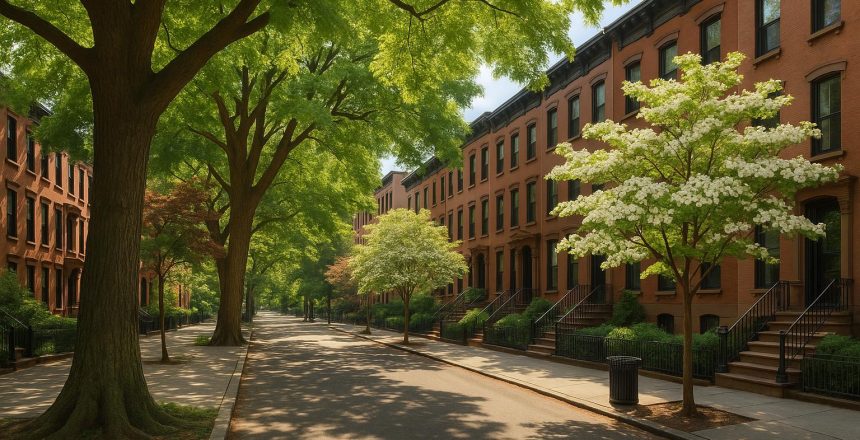
Brooklyn’s urban challenges – pollution, compacted soils, and limited space – make native trees the perfect choice for resilience and ecological benefits. These trees thrive in local conditions, support wildlife, and reduce maintenance needs. Here’s a quick guide to Brooklyn’s top 7 native trees and why they’re worth planting:
- Red Maple: Handles pollution, drought, and poor soil; provides nectar and food for wildlife; stunning fall colors.
- River Birch: Thrives in fluctuating moisture; peeling bark adds charm; supports birds and insects.
- Flowering Dogwood: Seasonal beauty with spring blooms and fall berries; attracts pollinators but needs care.
- Eastern Red Cedar: Evergreen, tolerates tough conditions; shelters birds and produces berries.
- Sweetgum: Dazzling fall colors; seeds feed birds; great for parks but requires space.
- Northern White Cedar: Evergreen ideal for wet soils; offers bird shelter and privacy screening.
- Sugar Maple: Iconic fall hues; supports pollinators and wildlife; needs well-drained soil and extra care.
Quick Tip: For expert guidance, local services like Tarzan Tree Removal can help you choose, plant, and maintain these trees for Brooklyn’s unique urban landscape.
Table of Contents
ToggleNative plant nursery flourishes amid pollution under bridge in Brooklyn
1. Red Maple (Acer rubrum)
The Red Maple is well-suited to Brooklyn’s urban environment, handling compacted soils and air pollution with ease.
Urban Resilience and Tolerance
This tree is a true survivor, enduring everything from flooding to drought while managing to thrive in poor soils and polluted air. It typically grows to a height of 40–60 feet with a spread of 30–40 feet, so choosing a spot with enough room for its canopy and roots is essential. Its ability to adapt to challenging urban conditions makes it an excellent choice for enhancing the local environment.
Wildlife Support and Ecological Benefits
In early spring, the Red Maple’s small flowers provide much-needed nectar for pollinators when other plants are still dormant. As the season progresses, its seeds and leaves become a food source for birds and small mammals, while its branches offer nesting sites. These contributions to local ecosystems can be seen in Brooklyn’s green spaces like Prospect Park and the Brooklyn Botanic Garden.
Maintenance and Care
Once established, Red Maples are low-maintenance. They grow best in full sun to partial shade on moist, well-drained soil. During the early stages, regular watering, mulching, and pruning of dead branches help develop a strong root system. For more complex care, such as pruning or health assessments, local experts like Tarzan Tree Removal can provide services tailored to Brooklyn’s specific needs. Proper planting techniques, such as avoiding planting the tree too deeply, can prevent problems like leaf discoloration and root girdling.
Aesthetic Appeal
Red Maples bring beauty to urban landscapes year-round. Their early blooms mark the arrival of spring, while their brilliant fall foliage creates a stunning display. Beyond their visual charm, these trees provide ample shade, helping to cool urban areas and making them a practical and attractive addition to Brooklyn properties.
2. River Birch (Betula nigra)
The River Birch is a standout among Brooklyn’s native trees, admired for its ability to handle urban conditions and its striking, peeling bark that adds year-round charm to any landscape.
Urban Resilience and Pollution Tolerance
This tree is well-suited to Brooklyn’s cityscape, thriving in compacted soils, handling fluctuating moisture levels, and tolerating moderate pollution. It reaches a height of 40–70 feet with a spread of 40–60 feet, making it a great option for USDA zones 4–9.
Wildlife Support and Ecological Benefits
The River Birch does more than just survive – it actively supports the local ecosystem. Its seeds and leaves serve as a food source for birds, caterpillars, and other insects. The tree’s peeling bark also provides shelter for insects and small mammals. In places like Prospect Park, the River Birch contributes to a diverse canopy that benefits Brooklyn’s wildlife.
Maintenance Requirements and Care
Young River Birches need consistent watering and a layer of mulch to help retain moisture and suppress weeds. Pruning is best done in late summer or fall to reduce sap bleeding. While the tree is generally resistant to pests, occasional issues like birch leafminer or aphids may arise, but these can usually be managed with proper care. For the best results, plant it in full sun to partial shade, ensuring enough space for its mature size. If you’re in Brooklyn and need help with planting or care, professional services like Tarzan Tree Removal (https://tarzantreeremovalservice.com) can provide expert assistance.
Aesthetic and Seasonal Appeal
One of the River Birch’s most striking features is its peeling bark, which reveals shades of salmon to cinnamon brown, adding visual interest throughout the year. In spring, its light green leaves emerge, later turning a vibrant yellow in the fall. Its multi-stemmed growth habit adds texture and movement to urban landscapes. Notably, the River Birch is one of the few native birches that thrives in the heat and humidity typical of the eastern United States.
3. Flowering Dogwood (Cornus florida)
The Flowering Dogwood is a standout among Brooklyn’s native trees, known for its seasonal beauty and role in supporting local wildlife. As an ornamental understory tree, it requires thoughtful placement in urban landscapes to thrive.
Urban Resilience and Pollution Sensitivity
While Flowering Dogwood can handle partial shade and compacted soils, it struggles with air pollution and road salt. Typically growing to a height of 15–30 feet with a similar spread, it’s best suited for carefully chosen spots in the city environment.
For successful growth, avoid planting it near heavily salted roads. Instead, opt for locations with morning sunlight and some afternoon shade. These conditions help the tree adapt to urban challenges and ensure its longevity.
A Haven for Wildlife
Flowering Dogwood plays a vital role in Brooklyn’s urban ecosystem. Its vibrant red berries provide food for birds in late summer and fall, while its spring blossoms attract bees and other pollinators. This makes it a key player in supporting urban wildlife.
At the Brooklyn Botanic Garden’s Native Flora Garden, Flowering Dogwood is showcased as part of a native woodland habitat, emphasizing its importance to local biodiversity. Similarly, in Prospect Park, these trees enhance the park’s seasonal beauty while offering essential resources like food and shelter for wildlife.
Care and Maintenance Tips
Proper care is essential for the health of Flowering Dogwood. It thrives in well-drained, slightly acidic soil and benefits from a layer of mulch to retain moisture and protect its roots. During dry periods, regular watering is crucial to keep the tree healthy.
However, this species is vulnerable to diseases like dogwood anthracnose and powdery mildew. To minimize risks, ensure good air circulation around the tree and avoid overhead watering. Pruning should be kept to a minimum, focusing only on removing dead or diseased branches. For added protection, consider planting disease-resistant cultivars, which are better suited to Brooklyn’s humid climate.
If urban tree care feels overwhelming, seeking advice from local arborists can help. Professional services, such as Tarzan Tree Removal (https://tarzantreeremovalservice.com), offer expertise in planting, pruning, and managing diseases for native trees like Flowering Dogwood.
Seasonal Beauty and Visual Appeal
Flowering Dogwood earns its place in any garden with its year-round charm. In spring, its striking white or pink bracts – often mistaken for petals – steal the show before the tree fully leafs out. These bracts frame the tree’s small, understated flowers, creating a stunning display.
During summer, its glossy green leaves provide shade, while fall brings a dramatic transformation with foliage turning vibrant shades of red or purple. Even in winter, the tree’s unique branching and clusters of red berries offer visual interest and a splash of color to the otherwise muted landscape.
This ability to shine in every season makes Flowering Dogwood an excellent choice for residential gardens and smaller urban spaces, where every tree is expected to deliver beauty throughout the year.
4. Eastern Red Cedar (Juniperus virginiana)
The Eastern Red Cedar, despite its name, is actually a juniper and stands out as one of Brooklyn’s toughest and most visually appealing native trees. This evergreen is a natural fit for urban environments, combining resilience, ecological benefits, and year-round beauty. Let’s dive into what makes this tree a standout choice for city landscapes.
Urban Resilience and Pollution Tolerance
The Eastern Red Cedar thrives where many trees falter. It can handle poor soil, drought, and heavy pollution, making it a go-to option for challenging urban conditions. This tree is particularly tolerant of compacted soils and road salt, often used during icy winters. In urban settings, it grows to heights of 40–50 feet with a spread of 8–20 feet, making it a practical choice for both public spaces and private yards. Its ability to endure urban stressors has been proven in places like Prospect Park, where it supports wildlife while standing strong against tough conditions.
Wildlife Support and Ecological Benefits
Eastern Red Cedar is a lifeline for Brooklyn’s wildlife. Its dense evergreen foliage offers critical shelter and nesting areas for birds, while its blue berries provide an essential winter food source. Over 50 bird species, including cedar waxwings and robins, rely on this tree for sustenance. Beyond birds, it supports beneficial insects and helps sustain biodiversity in the city. Its thick canopy also serves as a natural windbreak and privacy screen, offering practical and environmental advantages for property owners.
Maintenance Requirements and Care
Once established, the Eastern Red Cedar is a low-maintenance tree. It prefers full sun but can tolerate partial shade and becomes drought-resistant after its first year. Pruning is rarely needed, except to remove dead or damaged branches, and it’s largely resistant to pests, with any issues easily managed by removing affected areas.
For planting, choose well-drained soil and leave enough space for its mature size. Mulch can help retain moisture and reduce weeds, but avoid piling it against the trunk. To prevent cedar-apple rust, avoid planting it near apple trees. If you need help with planting, pruning, or dealing with potential diseases, professional services like Tarzan Tree Removal can ensure your tree thrives in Brooklyn’s urban environment.
Aesthetic and Seasonal Appeal
The Eastern Red Cedar adds year-round charm to Brooklyn’s landscapes. Its dense, pyramidal shape and evergreen foliage bring structure and color to the city’s green spaces, even during the coldest months. Female trees produce striking blue berries in late summer and fall, adding a seasonal touch to their visual appeal. Its rugged texture and upright form make it a standout feature in both residential and commercial settings, contributing to Brooklyn’s unique urban character.
Beyond its visual appeal, the wood of the Eastern Red Cedar connects modern plantings to America’s landscape heritage. This blend of historical significance and practical benefits makes it a fantastic choice for anyone looking to enhance their property while supporting local wildlife and adding beauty to their neighborhood throughout the year.
sbb-itb-150e675
5. Sweetgum (Liquidambar styraciflua)
The Sweetgum tree is a favorite for parks and large green spaces, thanks to its striking seasonal colors and fast growth. It’s not just about looks, though – this tree brings a mix of beauty and practicality to urban landscapes.
Urban Resilience and Pollution Tolerance
Sweetgum trees handle Brooklyn’s urban environment fairly well. They can tolerate air pollution and compacted soils better than many native species, and their deep roots help stabilize soil and adapt to varying weather. That said, they’re less suited for areas with frequent drought or heavy salt spray, making parks and tree-lined streets the ideal spots for them. Because their roots are sensitive to construction damage and heavy foot traffic, picking the right location is key to their long-term health.
Wildlife Support and Ecological Benefits
Sweetgum trees play an important role in supporting Brooklyn’s urban wildlife. Birds like finches and sparrows are drawn to their seeds, while squirrels snack on their spiky seed pods. In spring, the tree’s small greenish flowers attract pollinators, which in turn benefit local insect and bird populations. As their leaves decompose, they enrich the soil and support ground-dwelling insects. You can see these benefits in action at places like Prospect Park and the Brooklyn Botanic Garden, where Sweetgum trees contribute to thriving ecosystems.
Maintenance Requirements and Care
To keep Sweetgum trees healthy, regular watering is essential, especially during Brooklyn’s dry summers. Adding mulch around the base can help retain moisture and reduce weeds, but be sure to keep the mulch away from the trunk. Pruning should be minimal – stick to removing dead or damaged branches, as over-pruning can lead to disease. One thing to keep in mind is the tree’s production of spiky seed pods, or "gumballs", which may require occasional cleanup in areas with heavy foot traffic. Additionally, Sweetgum trees can be prone to canker diseases, so it’s important to watch for signs like unusual bark damage or wilting. If issues arise, consulting a professional, such as Tarzan Tree Removal, can help address problems before they worsen.
Aesthetic and Seasonal Appeal
Sweetgum trees are renowned for their dazzling fall colors. Their glossy green summer leaves transform into a mix of red, orange, and purple in autumn, often displaying multiple hues on a single tree. The star-shaped leaves and pyramidal shape provide year-round visual interest. When fully grown, Sweetgum trees reach heights of 60–75 feet with a spread of 40–50 feet, making them a standout choice for parks and spacious areas. In spring, small greenish flowers appear before the leaves, followed by the development of their iconic spiky seed pods. Their rapid growth means you won’t have to wait long to enjoy their beauty, but it’s important to ensure there’s enough space to accommodate their mature size when planting.
6. Northern White Cedar (Thuja occidentalis)
The Northern White Cedar, often called Eastern Arborvitae, is a dependable evergreen that thrives year-round in Brooklyn. This native conifer not only adds greenery to cityscapes but also withstands the unique challenges of urban living.
Urban Resilience and Pollution Tolerance
Northern White Cedar is well-suited to Brooklyn’s urban setting, thanks to its remarkable ability to tolerate salt and pollution. It can handle the salt spray from snow removal, poor drainage, and varying light conditions – ranging from full sun to partial shade. Its preference for wet, poorly drained soils makes it ideal for low-lying areas prone to water accumulation. This adaptability ensures it can survive tough conditions while contributing to both the environment and the aesthetic appeal of the city.
Wildlife Support and Ecological Benefits
The dense, evergreen foliage of the Northern White Cedar provides essential winter shelter and nesting spots for birds. Additionally, its seeds and foliage serve as a food source for small mammals, fostering urban biodiversity in both parks and residential areas. In places like Prospect Park, this tree plays a key role in supporting wildlife by offering habitat and sustenance.
Maintenance Requirements and Care
To ensure healthy growth, water regularly during the establishment phase and apply mulch around the base – being careful to keep it away from the trunk. Pruning should be minimal, focusing on shaping and removing any damaged branches. Keep an eye out for common issues like bagworms and deer browsing. For pest concerns or urgent tree care, reach out to Tarzan Tree Removal.
Aesthetic and Seasonal Appeal
Beyond its ecological benefits, Northern White Cedar adds beauty to urban spaces. Its dense, pyramidal shape, soft aromatic foliage, reddish-brown bark, and delicate cones create year-round visual interest. Its columnar form makes it an excellent choice for privacy screens, windbreaks, or as a standalone feature. Over time, it can grow to a height of 30–50 feet, making it a lasting addition to Brooklyn’s urban forest.
7. Sugar Maple (Acer saccharum)
The Sugar Maple is a beloved native tree in Brooklyn, admired for its stunning seasonal colors and its role in supporting urban wildlife.
Adapting to Urban Environments
While the Sugar Maple can handle moderate urban air pollution, it’s less tolerant of compacted soils and road salt. Unlike tougher species like the Red Maple or River Birch, it thrives in areas with well-drained soils and partial-to-full sunlight. Parks, residential yards, and quieter streets away from heavy traffic are its ideal spots [12, 14, 6]. Given its sensitivity, extra care is crucial during its early growth stages.
A Haven for Wildlife
This tree is a vital resource for wildlife in Brooklyn’s urban setting. Its seeds, buds, and leaves provide food for birds and small mammals, while its thick canopy offers safe nesting spots. It also supports pollinators and caterpillars, which play a key role in maintaining local ecosystems. In places like Prospect Park, mature Sugar Maples, carefully maintained by arborists, enhance the canopy and contribute to urban biodiversity [4, 9, 11].
Caring for Sugar Maples
To keep a Sugar Maple healthy, regular care is essential. Water it consistently during dry spells, use mulch to retain soil moisture, and prune in late winter or early spring to remove dead or diseased branches. Saplings typically cost between $50 and $150, while professional care services, such as pruning or health evaluations, range from $100 to $500 per tree. For expert help, Tarzan Tree Removal offers specialized urban tree care, including pruning and emergency services.
Seasonal Beauty
The Sugar Maple is famous for its breathtaking fall colors, with leaves turning brilliant shades of orange, red, and yellow. From its vibrant spring growth to its fiery autumn display, this tree transforms Brooklyn’s green spaces throughout the year, offering both visual charm and ecological benefits.
Tree Comparison Chart
Here’s a handy chart to compare native trees based on key factors for urban settings.
| Tree Species | City Tolerance | Soil Requirements | Sunlight Needs | Wildlife Benefits | Common Problems |
|---|---|---|---|---|---|
| Red Maple | High | Wet to dry soils; prefers slightly acidic to neutral pH | Full sun to partial shade | Early spring nectar for bees; seeds attract birds and squirrels | Leaf spot, verticillium wilt, aphids, invasive roots |
| River Birch | High | Moist, acidic soils; tolerates clay and sand | Full sun; tolerates partial shade | Provides seeds for birds and shelter for small mammals | Bronze birch borer, leaf spot |
| Flowering Dogwood | Moderate | Well-drained, acidic soils | Prefers partial shade but tolerates full sun with enough moisture | Berries for birds; host plant for butterfly larvae | Dogwood anthracnose, powdery mildew |
| Eastern Red Cedar | High | Dry, rocky, sandy soils; neutral to alkaline pH | Full sun | Dense berries feed birds and provide nesting spots | Cedar-apple rust, bagworms |
| Sweetgum | Moderate | Moist, deep, acidic soils; adapts to clay | Full sun | Seeds are a food source for finches and squirrels | Leaf spot, webworms, spiky seed balls |
| Northern White Cedar | Moderate | Moist, calcareous (alkaline) soils | Full sun to partial shade | Offers winter cover for birds and mammals | Deer browsing, bagworms |
| Sugar Maple | Low to Moderate | Deep, well-drained, slightly acidic soils | Partial shade; tolerates full sun with sufficient moisture | Flowers support pollinators; seeds feed wildlife | Salt injury, verticillium wilt, tar spot fungus |
This chart gives a quick overview to help you decide which tree suits your urban landscape.
Size and Growth Considerations
When it comes to size and growth, Red Maple and River Birch are fast-growing and provide shade relatively quickly, though they require moderate upkeep. If you’re working with limited space, Flowering Dogwood is a great choice. For privacy, both Eastern Red Cedar and Northern White Cedar are excellent options. However, trees like Sweetgum and Sugar Maple need more room to thrive, so they’re better suited for open spaces away from buildings or infrastructure.
Maintenance Costs
Annual maintenance costs can range from $50–$200 for moderate care, but expenses may climb higher if professional services are needed. For example, tree pruning, pest control, or emergency care could add to the bill. Local services like Tarzan Tree Removal can provide expert advice on planting and ongoing care.
If you’re looking for trees that combine urban resilience with lower upkeep, River Birch and Eastern Red Cedar are solid choices. On the other hand, Sugar Maple and Flowering Dogwood bring stunning visual appeal but require thoughtful placement and consistent care. By selecting trees that match your site conditions and maintenance capacity, you can create a thriving urban forest that enhances your property while supporting local wildlife.
Conclusion
Native trees do more than just beautify Brooklyn properties – they’re a smart choice for the environment and urban living. Species like Red Maple, River Birch, Flowering Dogwood, Eastern Red Cedar, Sweetgum, Northern White Cedar, and Sugar Maple thrive in Brooklyn’s unique urban conditions. They’re low-maintenance compared to non-native options and bring a host of benefits.
For instance, native trees help support biodiversity. A single Red Maple, for example, can provide habitat for over 290 species of moths and butterflies. Beyond that, they improve climate resilience by cooling neighborhoods, managing stormwater, and cleaning the air. Their natural resistance to local pests and diseases minimizes the need for chemical treatments and emergency interventions. Deep-rooted species like River Birch even help prevent soil erosion and flooding, which is especially critical in Brooklyn’s flood-prone areas. Plus, they’re not just good for the planet – they’re good for your wallet, reducing upkeep costs and boosting property value.
Each of these trees plays a unique role in strengthening Brooklyn’s urban ecosystem. But to make the most of these benefits, expert guidance is key. Trained arborists can evaluate your property’s soil, space, and sunlight to recommend the best native species for your specific needs.
"Tarzan Tree Removal provides tree management services in Brooklyn, NY by trained and qualified professional tree doctors near you."
If you’re a Brooklyn resident looking to plant or care for native trees, Tarzan Tree Removal offers free consultations to guide you in selecting the right species. They also provide ongoing services like pruning, disease management, and emergency care. With their expertise in Brooklyn’s urban forestry, you can create a thriving, wildlife-friendly landscape that adds value to your property while making a positive environmental impact.
FAQs
What are the environmental benefits of planting native trees in Brooklyn’s urban areas?
Planting native trees in Brooklyn’s urban spaces offers a range of benefits that go beyond just beautifying the area. These trees play a crucial role in supporting local wildlife by providing habitats and natural food sources, which help maintain biodiversity. They also act as natural air purifiers, filtering out pollutants and releasing oxygen – something that’s especially valuable in a busy, crowded city.
Native trees also tackle stormwater challenges by soaking up rainfall, which helps reduce runoff and lowers the risk of flooding. Their deep roots stabilize the soil, keeping erosion in check and promoting healthier urban ecosystems. Plus, because these trees are adapted to Brooklyn’s climate, they need less upkeep and fewer resources to thrive, making them a smart and sustainable choice for the city.
What steps can I take to keep native trees healthy and thriving in an urban garden?
To ensure the native trees in your urban garden stay healthy and flourish, begin by selecting species that naturally thrive in your area. For example, you can refer to our guide on Brooklyn’s top native trees to find the best options. Once planted, consistent care is essential – this means watering them appropriately, pruning during the right seasons, and keeping an eye out for any signs of pests or disease.
If you need extra help, consider hiring a reliable tree management service. Professionals can assist with pruning, stump grinding, and even emergency tree care, helping to preserve the health and appearance of your trees for years to come.
What native tree thrives in small urban spaces with limited sunlight?
For small urban areas with limited sunlight, the Eastern Redbud is a fantastic pick. This native tree stays compact, reaching a height of around 20–30 feet, and thrives even in partial shade. In early spring, it bursts into life with striking pinkish-purple flowers, bringing a splash of color to your space.
Another solid choice is the Serviceberry. Perfect for tight spots and partial shade, this tree offers something to admire in every season – delicate blossoms in spring, edible berries in summer, and stunning fall foliage. Both trees are easy to care for and perfectly suited to Brooklyn’s urban landscape.
