
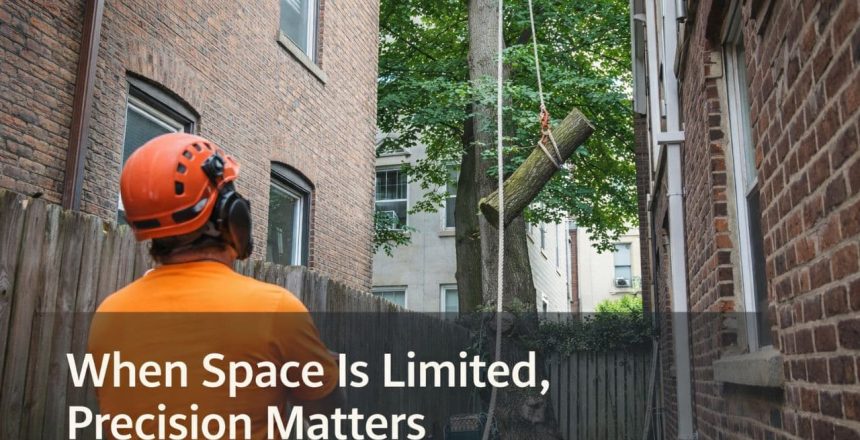
If you’re dealing with building proximity tree removal in New York City, the goal is simple: remove the tree without damaging roofs, siding, windows, fences, or neighboring property. That takes planning, controlled cutting, and the right equipment not guesswork. For fast help in the five boroughs, start with Tarzan Tree Removal (licensed, insured, and built for NYC’s tight access jobs).
Key Takeaways
- Tight-space removal is all about control: sectional cuts, rigging, and safe lowering especially with “zero drop zone” yards.
- The biggest risks are impact damage (roof/windows/fences), unpredictable limb swing, and hidden decay.
- In NYC, work on or within 50 feet of a street tree requires a Tree Work Permit confirm jurisdiction before starting. NYC Gov Parks+2NYC Gov Parks+2
- Crane- or bucket-assisted work can be the safest option when access is limited and the fall zone is basically nothing.
- Preventive pruning often reduces emergency calls and protects your property long-term.
Why tight-space tree removal is different in NYC
A professional assessment is the first step to safer tight-space tree removal near homes.
NYC lots create “no room to drop” conditions
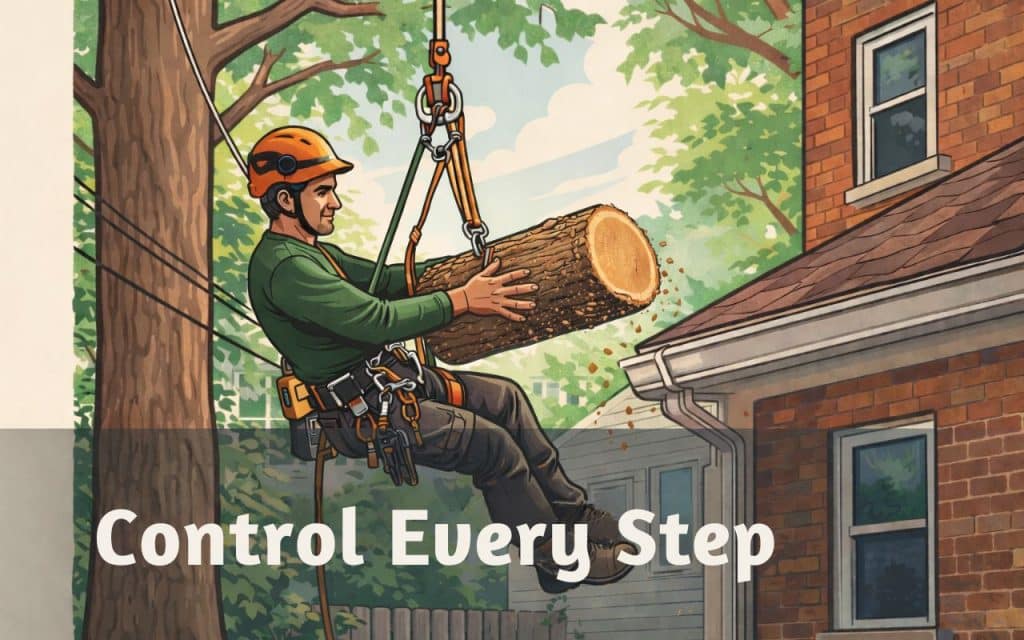
Brownstone backyards, side yards, shared driveways, and fence to fence property lines force a different approach. Instead of dropping large pieces, pros typically dismantle a tree in smaller, controlled sections and lower them carefully.
“Street tree” vs. “private tree” changes the rules
NYC Parks states that no work may be performed on or within 50 feet of a street tree without a permit. NYC Gov Parks+1 NYC Business repeats the same 50-foot rule and provides examples of work that triggers the permit requirement. MyCity Business
If you’re not sure what you have, it’s worth checking before any cutting starts.
Table: quick NYC permit check
| Question | If “Yes” | What to do |
| Is the tree on the sidewalk / city right-of-way? | Likely a street tree | Expect NYC Parks rules and permitting NYC Gov Parks+1 |
| Is your work site within 50 feet of a street tree? | Permit may be required | Confirm permit requirements before work NYC Gov Parks+1 |
| Is the tree fully inside your private yard? | Often not a Parks street tree permit scenario | Still hire pros tight access adds risk (and liability) |
Common risks when a tree is close to your home or structure
What gets damaged most often
- Roof edges, gutters, skylights
- Windows, siding, brick/stone
- Fences, decks, patios, pavers
- HVAC units, outdoor lighting, gardens
The “invisible” risk: decay and structural weakness
A decaying tree can look fine from the curb and still be compromised inside. When space is tight, you don’t get a second chance so crews plan conservative cuts and assume heavier sections until proven otherwise.
Graph 1: What drives risk in tight space jobs (relative impact)
(Longer bar = bigger driver of property risk)
How professionals handle tight-space removal safely
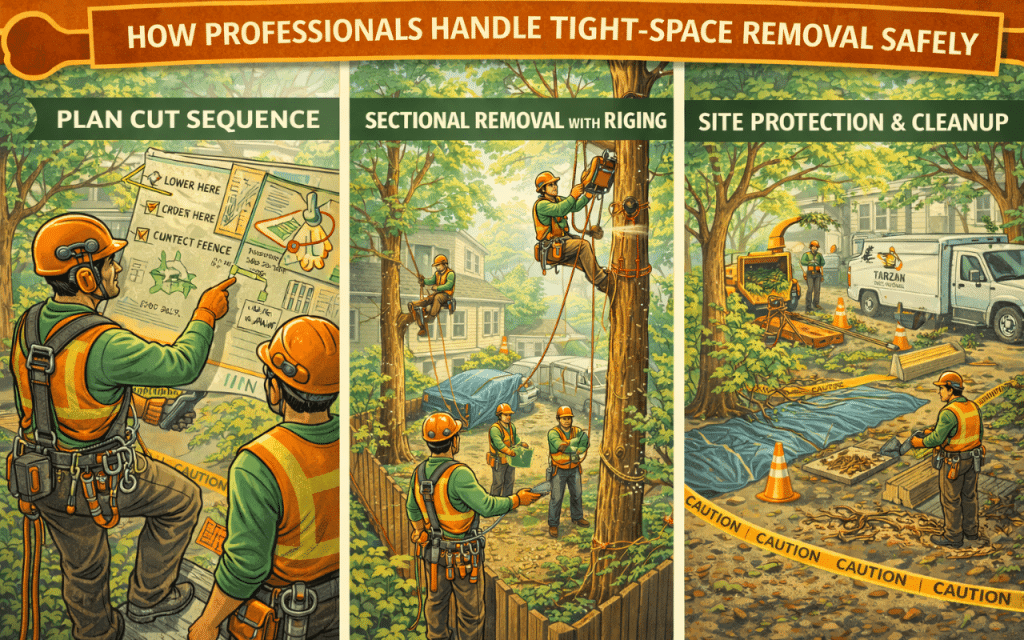
Step 1: plan the cut sequence (before a saw starts)
Pros map out:
- the safest direction to dismantle from
- where each piece will be lowered
- what must be protected (rooflines, windows, fences, landscaping)
- how cleanup and hauling will flow so the yard isn’t wrecked
Step 2: sectional removal with rigging
This is the “precision method” for tight spaces: limbs come down in manageable sections, controlled with ropes, friction devices, and spotters. The goal is predictable movement no uncontrolled swings.
If you want a service overview that matches this kind of work, see Tree Removal Service.
Step 3: site protection + clean finish
Good crews protect key impact zones and keep the site organized so debris doesn’t become a hazard. The result should feel clean and controlled, not chaotic.
When crane or bucket assistance is the right call
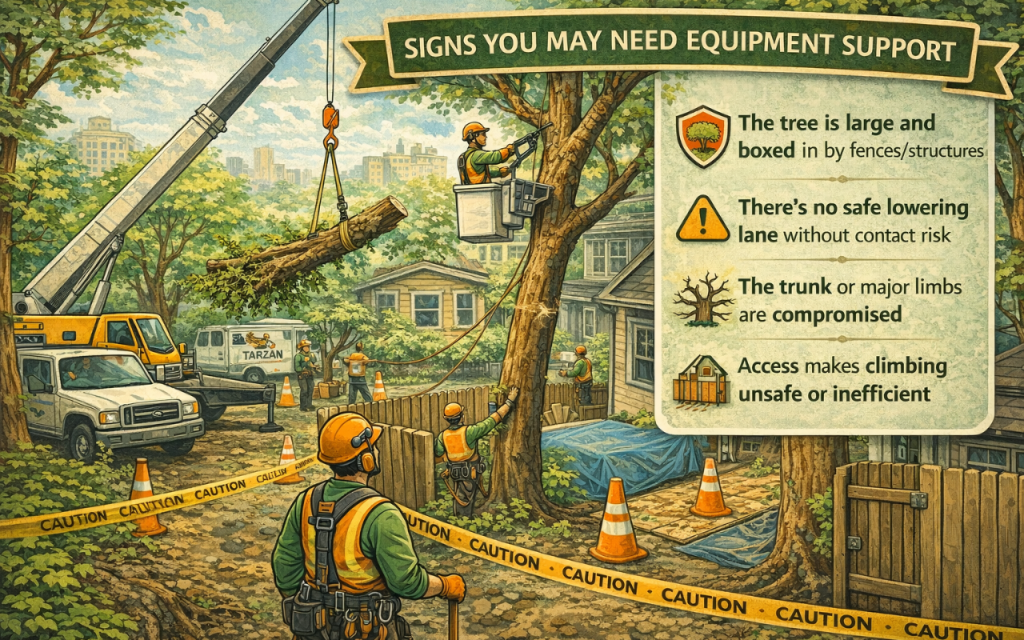
Signs you may need equipment support
- The tree is large and boxed in by fences/structures
- There’s no safe lowering lane without contact risk
- The trunk or major limbs are compromised
- Access makes climbing unsafe or inefficient
If you’re dealing with storm damage or a sudden hazard, go straight to Emergency Tree Removal and keep people away from the fall zone.
Table: equipment choice in NYC tight-space work
| Situation | Best-fit approach | Why it helps |
|---|---|---|
| Narrow yard + roof overhang | Rigging + sectional removal | Keeps pieces controlled and small |
| Zero drop zone | Crane/bucket assist | Removes pieces without swinging into property |
| Heavy dead limbs above walkway | Conservative dismantle + barriers | Reduces public-facing risk |
| Limited gate access | Smaller staging + careful lowering | Prevents collateral damage to fencing/landscape |
Cost and timeline: what usually changes the job scope
What makes the job “complex”
Tight-space work is priced around complexity, not just height. The biggest scope drivers are access, risk, and how controlled the lowering must be.
Don’t forget the stump (it’s part of “done right”)
A stump can block future landscaping and keep roots active. If you want the area fully cleared, add Stump Removal to the plan.
Prevention: trimming now can prevent a bigger removal later
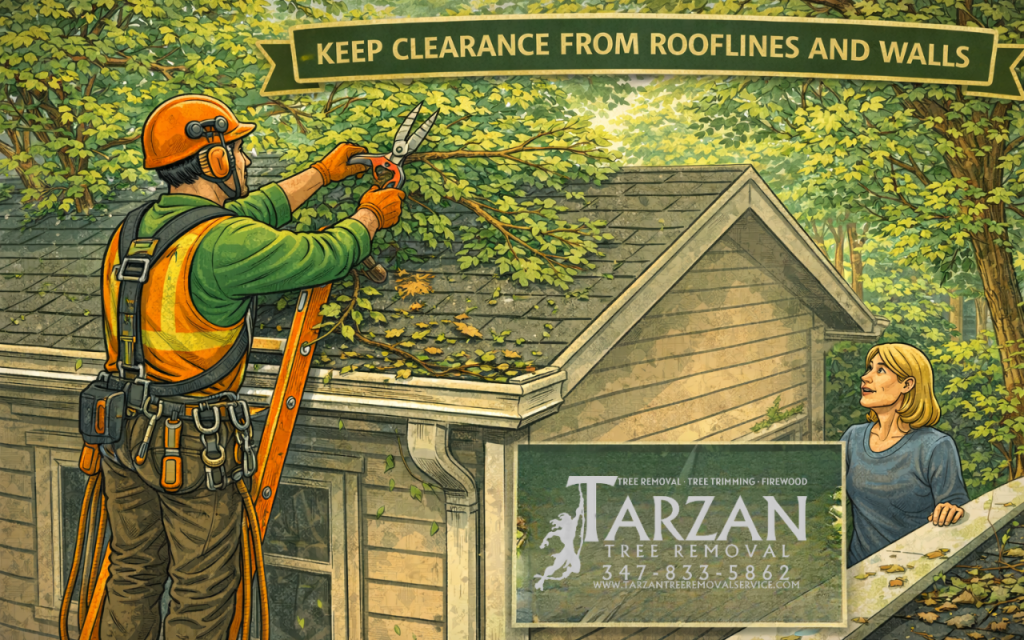
Keep clearance from rooflines and walls
When branches rub your home, hang over shingles, or crowd gutters, trimming can reduce future damage and emergency calls. For proactive care, see Tree Trimming.
Planting and species choices matter (especially in Brooklyn yards)
If you’re planning a new landscape, choose trees with mature size in mind and avoid crowding the foundation line. For ideas that fit Brooklyn’s environment, use this guide: Native Trees Brooklyn Picks.
FAQ: tight-space removal near structures in NYC
How much distance should be between the building and any tree?
A common guideline is planting a tree at least half of its mature canopy width away from the home (example: 40-ft canopy → plant ~20 ft away). Trees for Energy Conservation
What is the minimum distance between a building and a tree in meters?
There isn’t one universal “minimum,” but spacing guidance commonly lands around:
- small trees: 8–10 ft (2.4–3.0 m)
- medium trees: 15 ft (~4.6 m)
- large trees: 20+ ft (6.1+ m) Amazon Web Services
Table: spacing guide (practical planning ranges)
| Mature size | From wall (ft) | From wall (m) |
|---|---|---|
| Small | 8–10 | 2.4–3.0 |
| Medium | ~15 | ~4.6 |
| Large | 20+ | 6.1+ |
Choosing the right company for tight-space work
Near-structure work is where shortcuts get expensive. Look for licensed & insured crews that explain the removal plan clearly, protect surrounding property, and leave the site clean. If you want a quick checklist to vet contractors, use: How to Choose a Licensed Tree Service Company.
Next step: get a tight-space assessment from a NYC crew
If your tree is over your roofline, pressed against fencing, or creating a “no drop zone,” don’t wait until it becomes an emergency. Tarzan Tree Removal handles complex NYC jobs with the right equipment and a clean, controlled process. For a full overview of what we do across the boroughs, visit Services.
