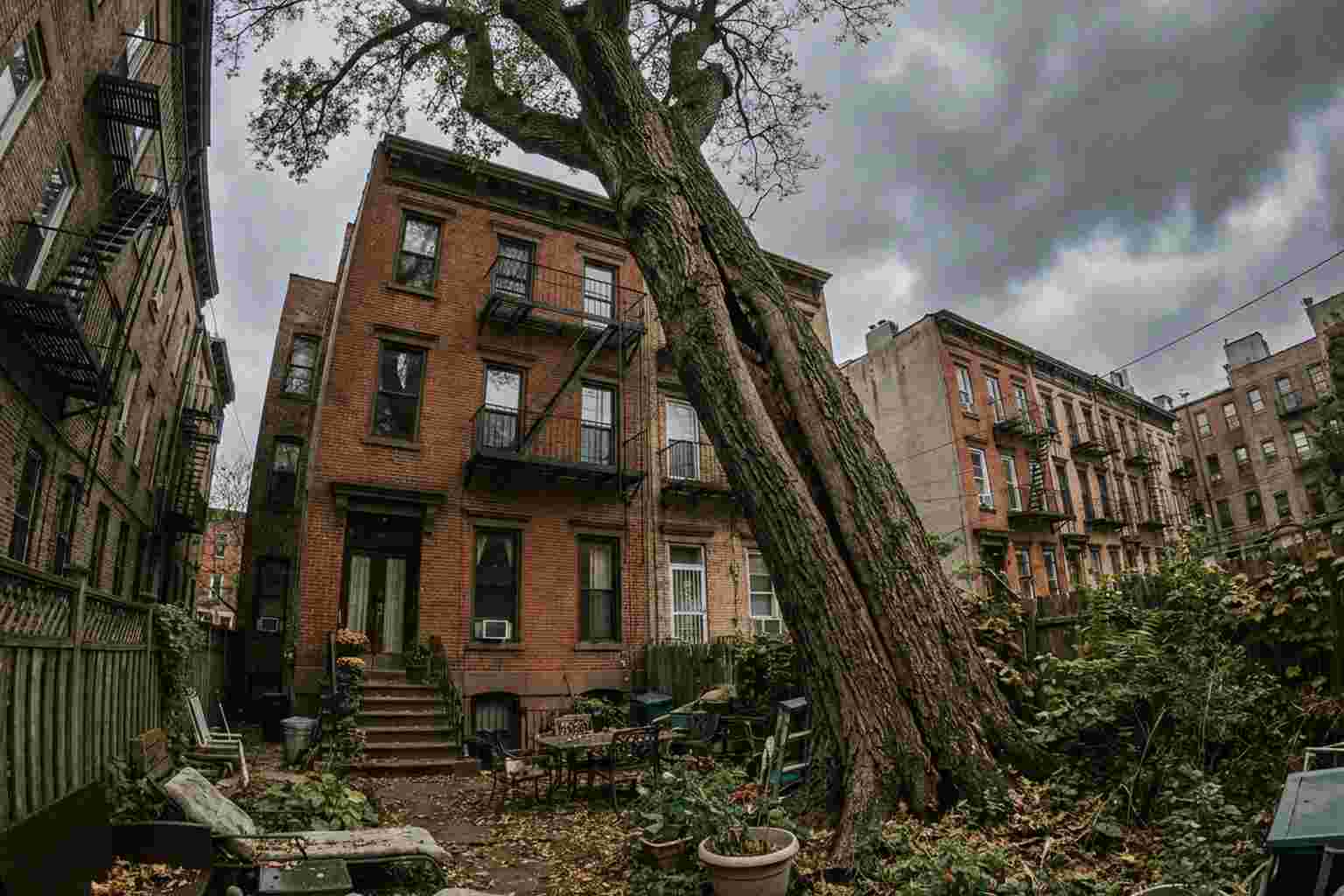
A tree that leans toward your roofline or drops limbs without warning is not a wait-and-see problem. Tarzan Tree Removal handles dangerous tree removal across Brooklyn and all five boroughs, and our tree removal crews respond fast when a trunk cracks or a canopy starts failing. This guide walks through the warning signs, the removal process, and what hazardous tree work costs in NYC. If a tree threatens people or property right now, call (347) 833-5862 for a rapid assessment.
What Makes a Tree Dangerous?
A tree becomes dangerous when its structure is compromised and it stands close enough to people or property to cause injury. Most hazardous trees in Brooklyn look fine from across the street. The failure points hide inside the trunk, at the root plate, or in the upper canopy where decay spreads quietly.
Warning Signs You Can Spot From the Ground
Any of these signs means the tree needs a professional opinion:
- Large hanging branches cracked but still caught in the canopy, often called widow makers
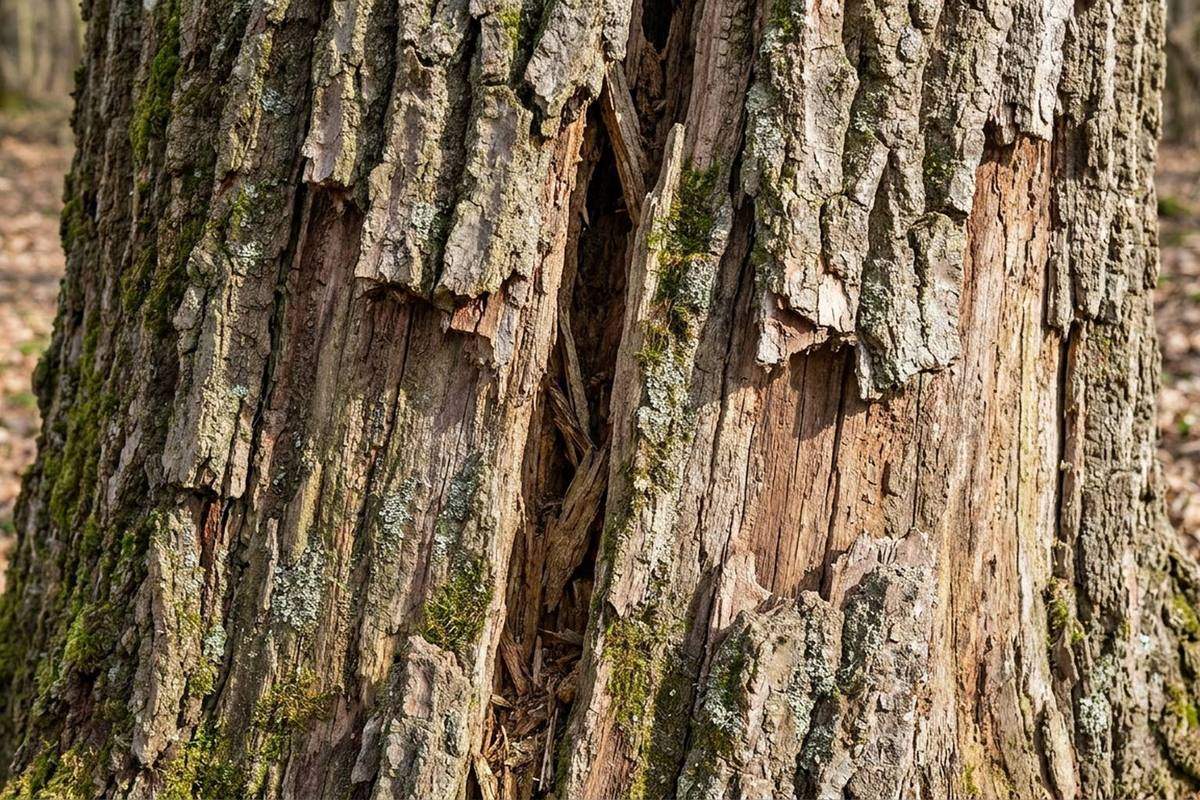
- Deep vertical cracks or splits running down the trunk
- A sudden lean or a lean that has visibly increased over recent weeks
- Fungal conks or mushrooms growing at the base, a sign of root rot
- Raised or cracked soil on one side of the trunk, meaning the root plate is lifting
- Hollow spots or cavities where wood has rotted out
What a Professional Hazard Assessment Includes
A trained eye goes beyond the visible signs. An arborist probes the stem for hidden decay with a resistance tool, checks the root flare for girdling and rot, measures the lean angle against the tree's height, and weighs what the tree could hit if it failed tomorrow. The written assessment says whether the tree can be saved with pruning and cabling or whether removal is the only safe call.
The Risks of Keeping a Dangerous Tree on Your Property
In New York City, the property owner is generally responsible for yard trees and the sidewalk injuries they cause. A single failing limb can smash a windshield, puncture a roof, or send a passerby to the hospital, and the property damage claim lands on your insurance record. During windstorms the stakes climb: saturated soil lets whole root systems tip over, and a tree that leaned slightly all summer can come down in one night.
When a Dangerous Tree Needs Emergency Removal
Some situations cannot wait for a scheduled estimate. Call an emergency tree service immediately if a tree has already fallen on a structure, if a hanging limb is suspended over a walkway or driveway, or if a cracked trunk is moving and groaning in the wind. Report the hazard as soon as it appears and keep children and pets clear until crews arrive.
How Professionals Remove Dangerous Trees in Tight NYC Spaces
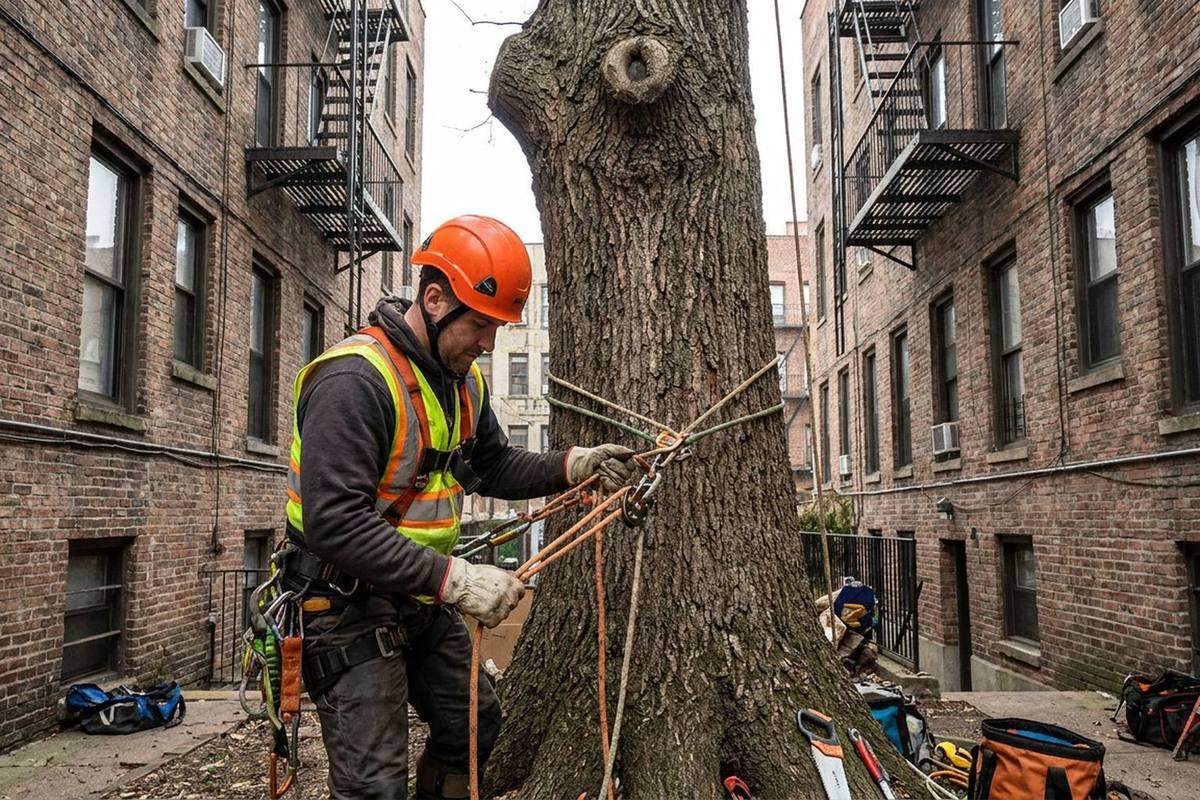
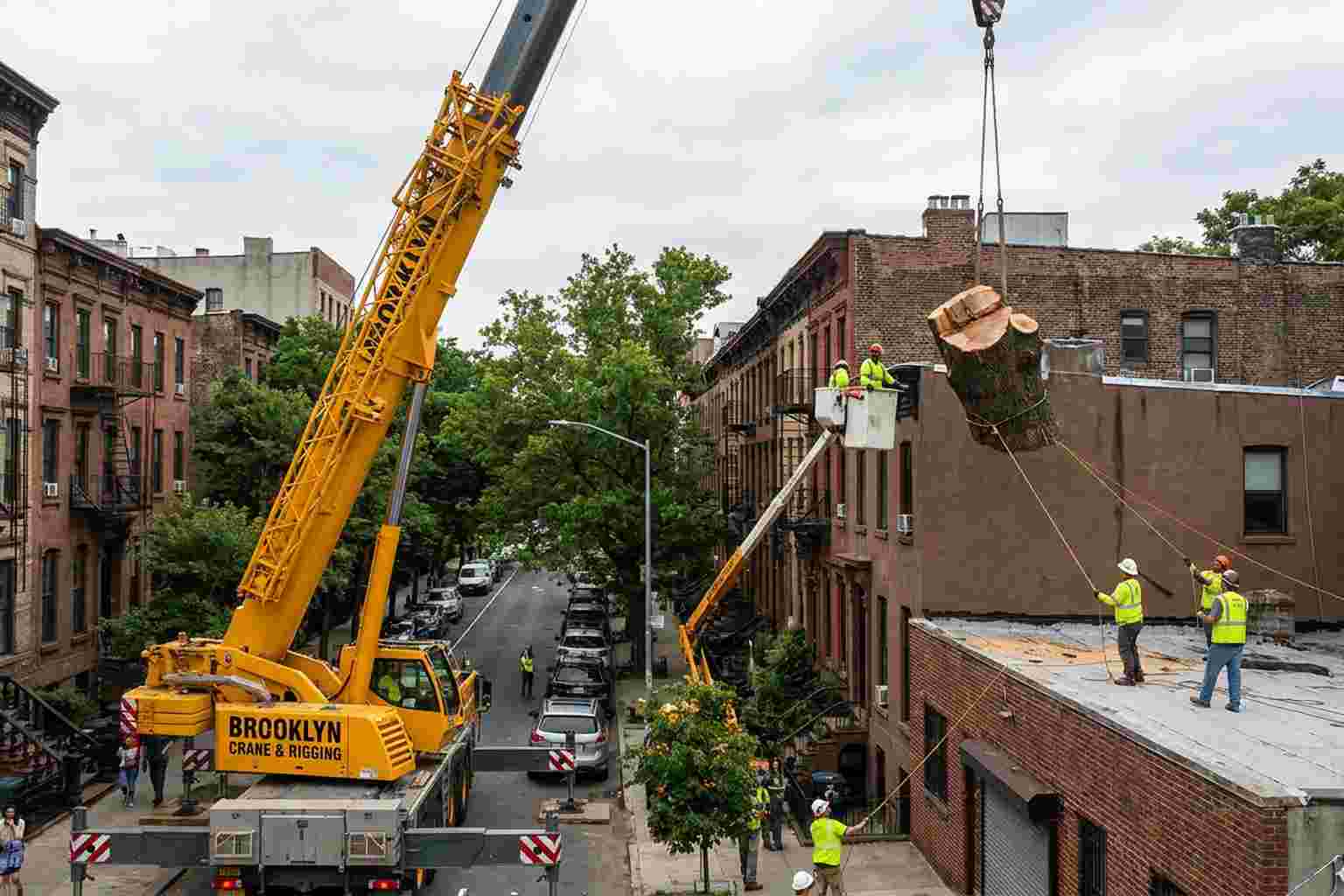
Dangerous tree removal in Brooklyn rarely allows a simple ground cut. Rowhouse yards are small, trees overhang neighboring roofs, and power lines thread through the canopy. Professional crews use sectional dismantling: a climber rigged in a harness cuts the tree down in small pieces, lowering each section on ropes so nothing drops free. When a tree towers over a brownstone or has no landing zone, a crane lifts sections clear of the buildings instead. Every piece is controlled from cut to ground.
What Dangerous Tree Removal Costs in NYC
Hazardous removal costs more than routine work because of the rigging time and risk involved. Most Brooklyn homeowners pay between $450 and $900 for a small tree with clear access, $1,200 to $2,500 for a large tree near structures, and $3,000 or more when a crane is required. Dead and unstable wood behaves unpredictably, adding labor hours healthy trees do not. Contact us at (347) 833-5862 for a free on-site quote before the problem gets more expensive.
Why DIY Removal Is a Bad Idea
Falling limbs, chainsaw kicks, and ladder falls put tree work among the most dangerous jobs in the country, and NYC adds a twist most homeowners forget: the power lines running through nearly every backyard canopy. A tree that is already failing is the worst possible one to learn on. The trunk can barber chair, the lean can shift as weight comes off, and one wrong cut sends wood where nobody planned. Leave hazardous work to insured crews with the right rigging instead of risking a hospital bill.
Stump Removal After the Tree Comes Down
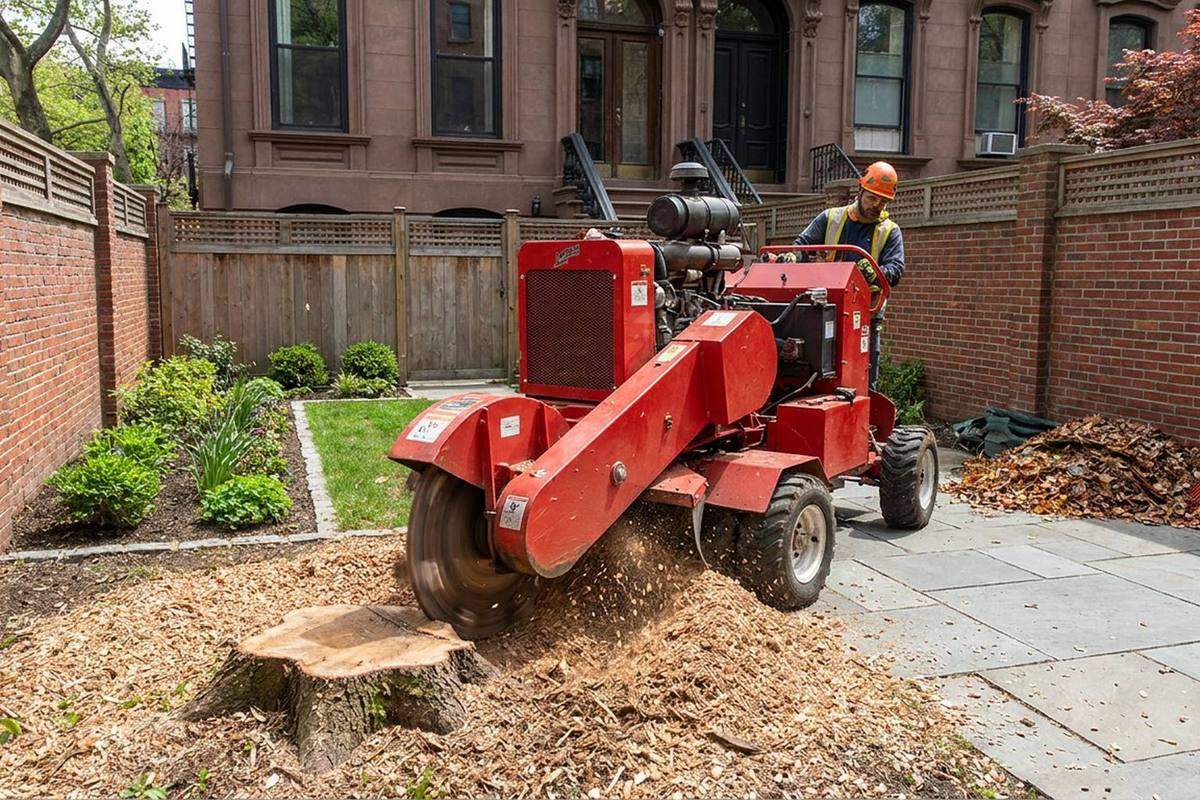
Once the tree is on the ground, the job is not finished. A leftover stump is a tripping hazard on a small Brooklyn lot, invites carpenter ants and termites toward your house, and sends up sucker shoots from surviving roots. Stump grinding chews the wood down below grade so you can replant, fence, or lay sod over the spot. Most grinding jobs take under an hour, and many removal quotes bundle the service at a discount.
Preventing the Next Hazardous Tree
The cheapest hazardous removal is the one that never becomes necessary. Schedule routine tree trimming every few years to remove deadwood before it falls, and have a certified arborist inspect mature trees after major storms, droughts, or nearby construction. A quick structural check costs far less than an emergency crane job and catches the lean, crack, or root lift years before it becomes an insurance claim.