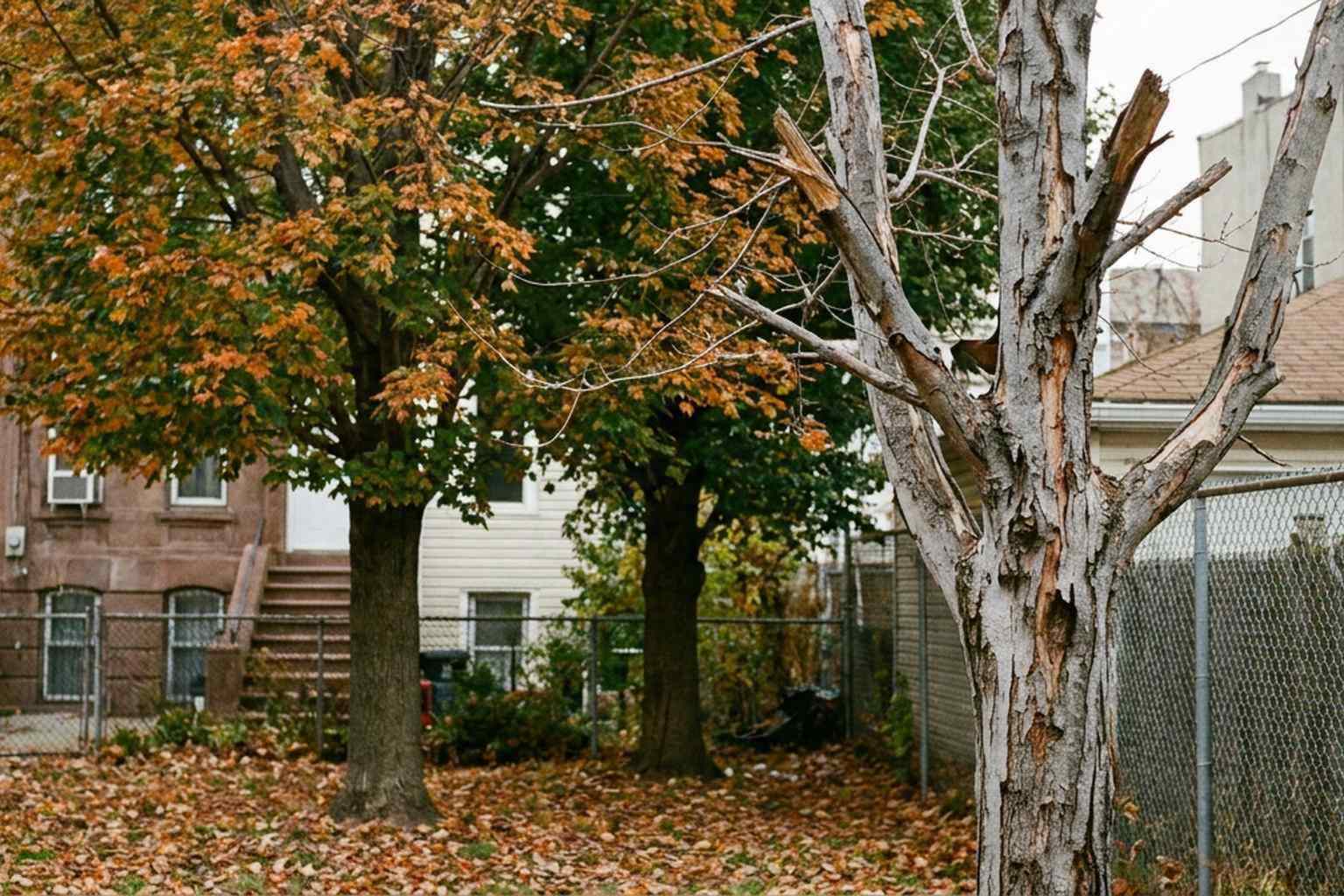
You look out the window in November and see one bare tree on your block while its neighbors still hold color. Is it dead, or just sleeping? That is one of the most common questions we get at Tarzan Tree Removal, and getting the answer right matters. A dead tree is a standing hazard. It can drop limbs on a sidewalk, crush a parked car, or pull down a power line. Our certified arborists handle tree removal across Brooklyn, Queens, and the Bronx every week because someone waited too long on a tree that was clearly dead.
This guide walks you through the tests professionals use, the warning signs of a dying tree, and the point where a weekend check turns into a call to (347) 833-5862.
What Does a Dead Tree Look Like?
A dead tree announces itself once you know what to look for. The canopy is sparse or empty during the growing season. The bark is loose, peeling bark that exposes dry wood. Branches are brittle with no new growth. The tree trunk may show deep cracks, cavities, or fungal conks.
A healthy tree, by contrast, puts on new leaves every spring, grows fresh twigs from its tips, and holds bark tightly against the trunk. Even in winter, a living tree shows small buds at the ends of its branches. Those buds are next year's leaves.
Dead or Dormant? The Question Every Winter
Here is where most homeowners get confused. Brooklyn is full of maples, oaks, and lindens that drop every leaf in fall and stand bare for five months. That leaf drop is normal. It is dormancy, the tree's version of hibernation.
Dormant trees still show life. Scrape a twig and you find green tissue underneath. Look closely at branch tips and you see firm buds. Bend a small stem and it flexes instead of snapping.
A dead tree gives you the opposite results. The scratch test shows brown or gray. The buds are dried out or missing. The stems that are brittle break with a dry crack instead of bending. If you are checking in winter, test several branches at different heights before you draw conclusions. One dead limb does not mean the whole tree is gone.
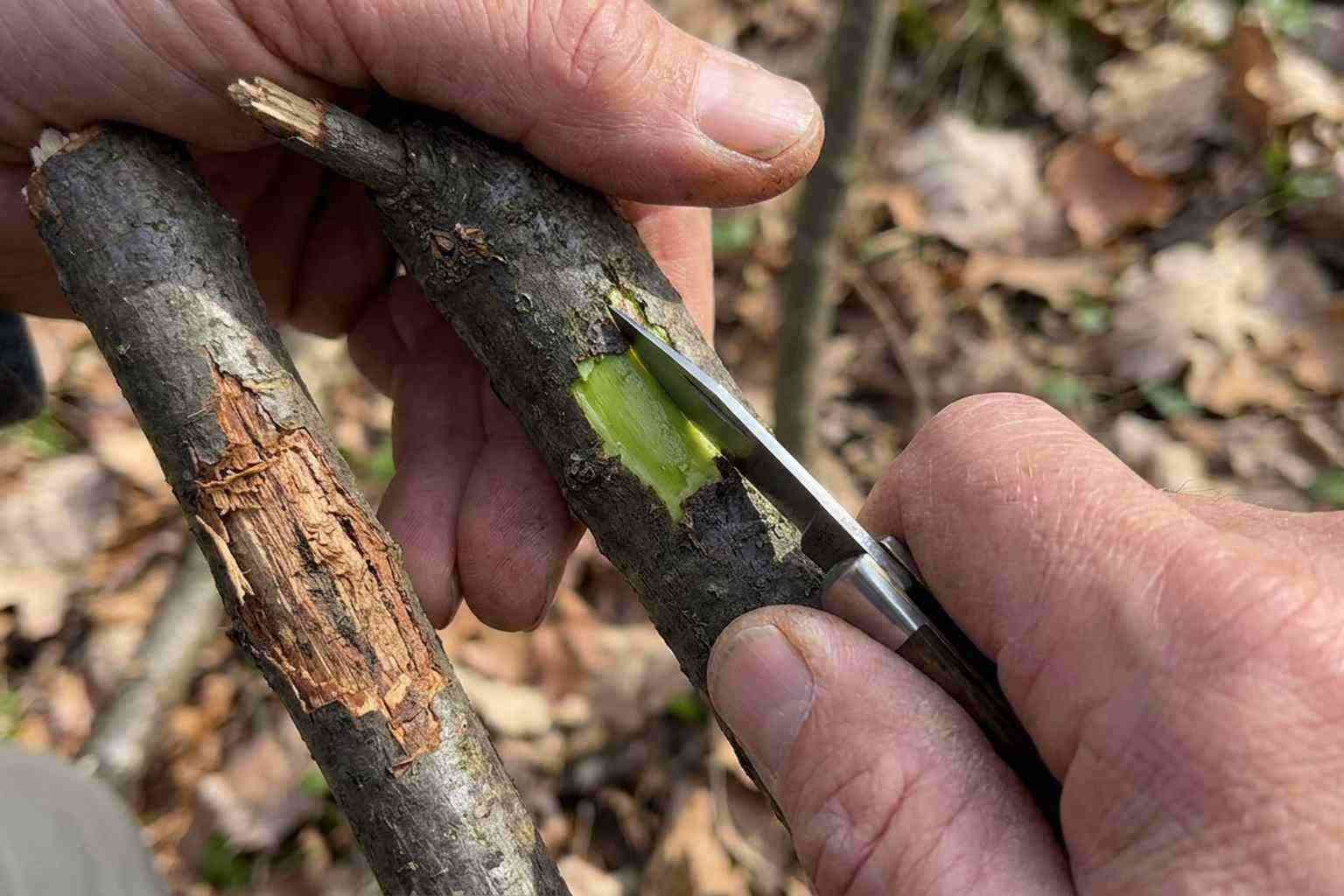
The Scratch Test: Check the Tissue Underneath
The scratch test takes under a minute and requires only a pocket knife or your fingernail.
Step by Step
- Pick a twig about the width of a pencil, near the branch tip.
- Scratch off a small patch of outer bark with the knife edge.
- Look at the tissue underneath. Green and moist means alive. Brown, gray, or dry means dead at that point.
- Work your way down the tree. Test a low branch, a mid branch, and the trunk itself if the limbs all fail.
What the Results Mean
If every branch shows brown but the trunk scratches green, the tree lost its canopy but lives at the base. If even the trunk shows brown, the tree is dead. Scratch two or three spots on the trunk before you call it. A small patch of damage can give a false reading in one spot.
7 Signs a Tree Is Dead or Dying
1. Dead Branches That Snap Clean
Live wood bends before it breaks. Dead branches snap clean with a dry crack and often fall in wind storms. When more than half the canopy is dead limbs, the tree is in serious decline and removal should be on your shortlist.
2. No Leaves During the Growing Season
A tree with no leaves in June is in trouble. A maple that leafed out last year and produces nothing this spring has either died or suffered massive root damage. Compare the tree to others of the same species on your block.
3. Peeling Bark and Bare Wood
Bark protects the living layer underneath. When bark falls off in sheets and leaves dry, cracked wood exposed, the tree is losing its armor. Small amounts of shedding are normal for birch and sycamore, but large bare sections on an oak or maple point to decline.
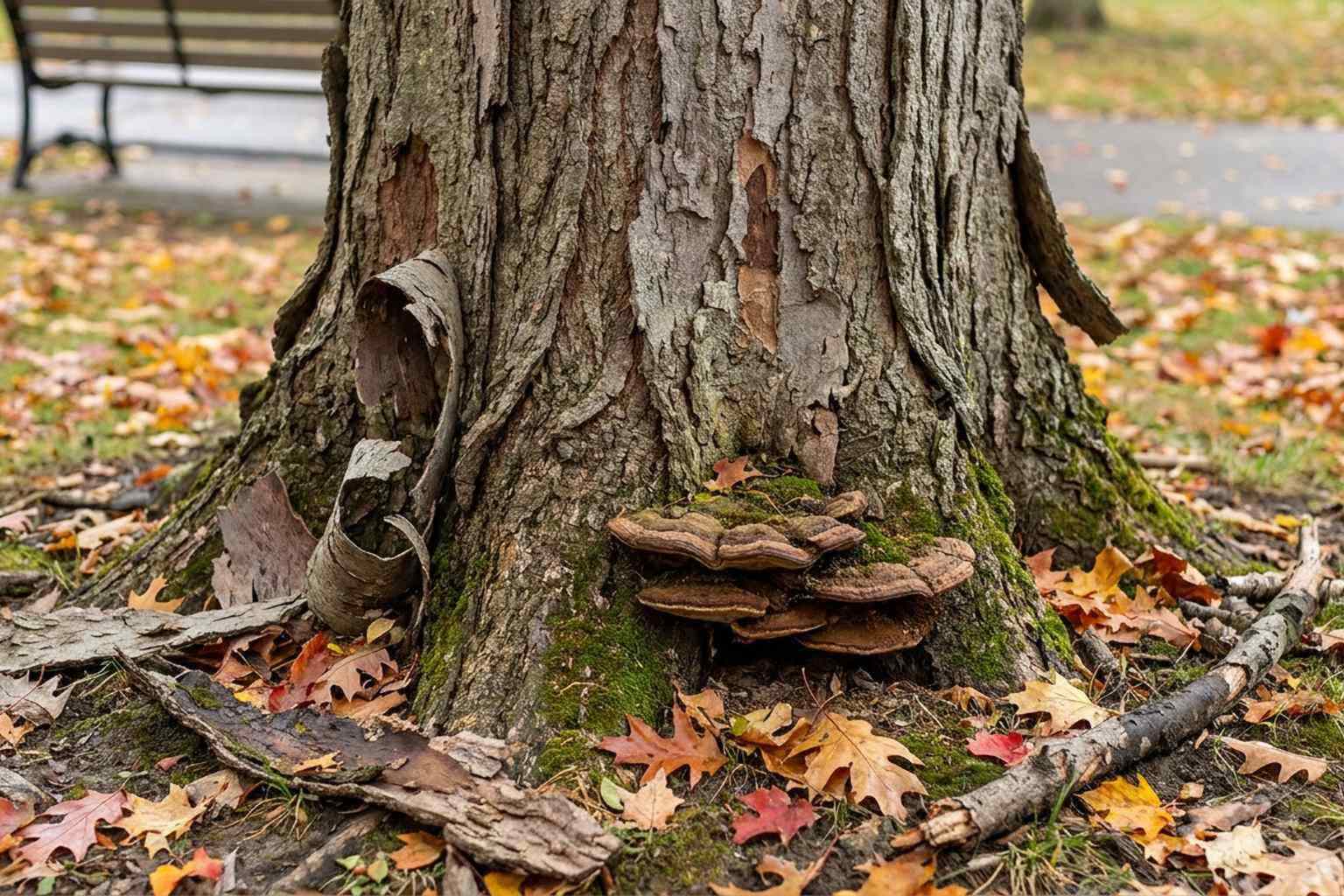
4. Fungi Growing on the Trunk
Mushrooms at the base or shelf conks sticking out of the trunk are signs of internal decay. Fungi feed on dead wood. By the time fruiting bodies appear, rot has already spread inside the tree trunk. A tree can look fully leafed and still be hollow.
5. Deep Cracks and Cavities in the Trunk
Vertical cracks, seams, and old wounds that never sealed over are weak points that become failure points in storms. Our emergency tree service crews see cracked trunks after every serious wind event in NYC.
6. A Sudden or Increasing Lean
A lean that appeared or worsened after a storm suggests the root system is failing. Combined with heaved soil on the side opposite the lean, this is the classic sign of a tree about to fall.
7. Root Damage and Heaving Soil
Construction trenching, new driveways, and sewer work sever and compact roots. If the soil around your tree lifts, cracks, or shows exposed roots after nearby work, the tree may be dying from below even while the canopy still looks green.
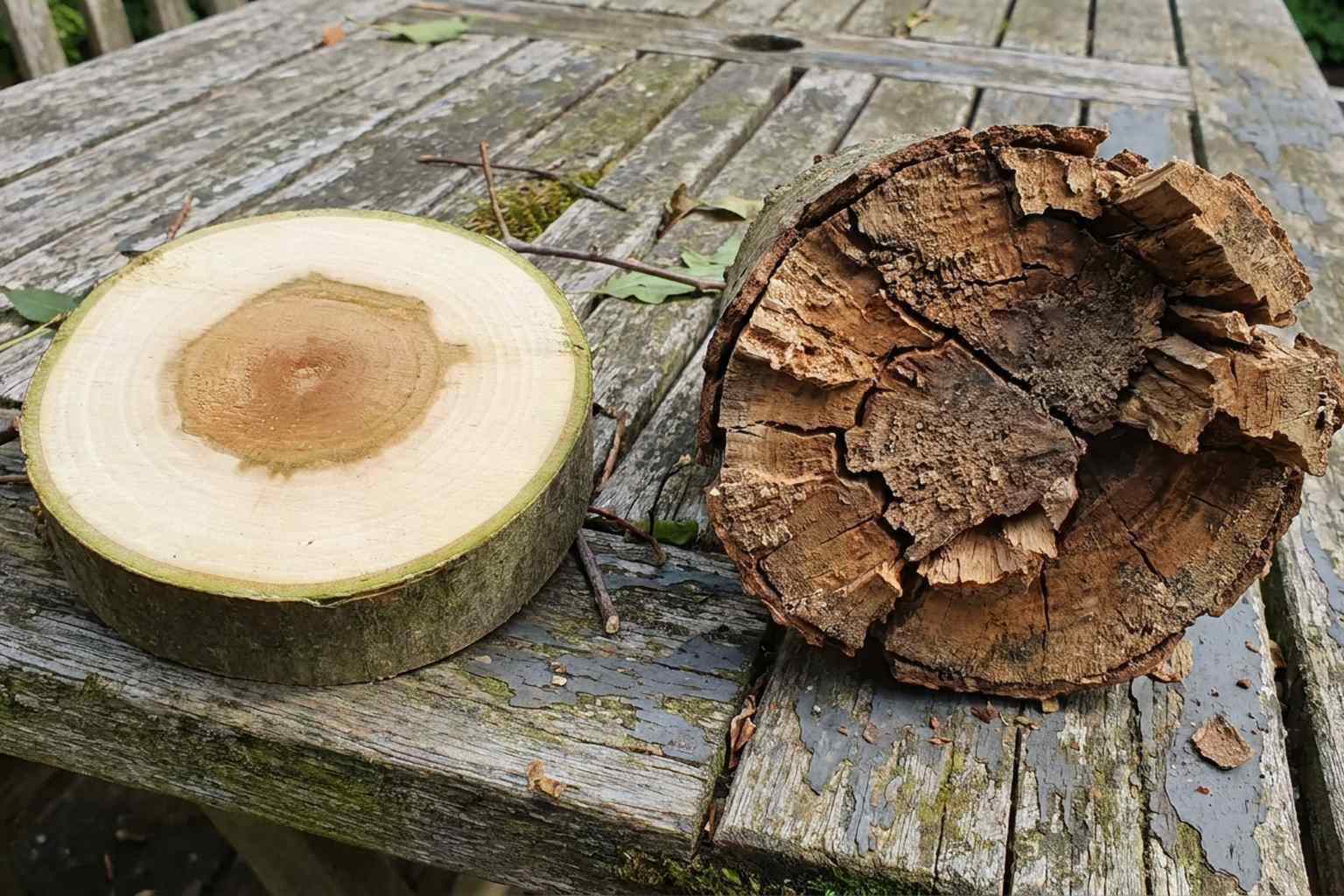
Dead Tree vs Dying Tree: What Is the Difference?
A dying tree is still alive and may be savable. Tree decline from drought, compacted soil, pests, or a single disease can sometimes be reversed with deep watering, soil care, tree trimming of dead limbs, and pest treatment.
A dead tree cannot be brought back. There is no treatment, no fertilizer, no spray. The only decision left is how and when to remove it safely. If the scratch test comes back brown everywhere, stop shopping for miracle cures and start planning removal.
What Kills Trees in Brooklyn and NYC?
Urban trees face stresses that suburbs never see. Street salt burns root systems. Restricted tree pits starve roots of water and oxygen. Dog waste, deicers, and pollution weaken bark. Summer droughts push stressed trees over the edge.
Construction is the other big killer in NYC brownstone neighborhoods. Renovations that cut roots for foundation work or a new sewer line can kill a 60-year-old oak two years later. If you are planning work near a mature tree, talk to an arborist before the excavator arrives.
Can You Save a Dead Tree?
No. Once a tree is dead, no product revives it. What you can save is money and risk by acting early. A dead tree that stands for years drops limbs, hosts pests, and gets more brittle every season. Removal costs rise too, because brittle wood is unpredictable and crews need more rigging.
How Long Can You Leave a Dead Tree Standing?
Dead trees do not follow a schedule. A sturdy oak might stand 5 years. A rotten silver maple might come apart in the first nor'easter. Every dead tree near a structure, sidewalk, or parking spot is a liability in waiting.
How to Remove a Dead Tree Safely
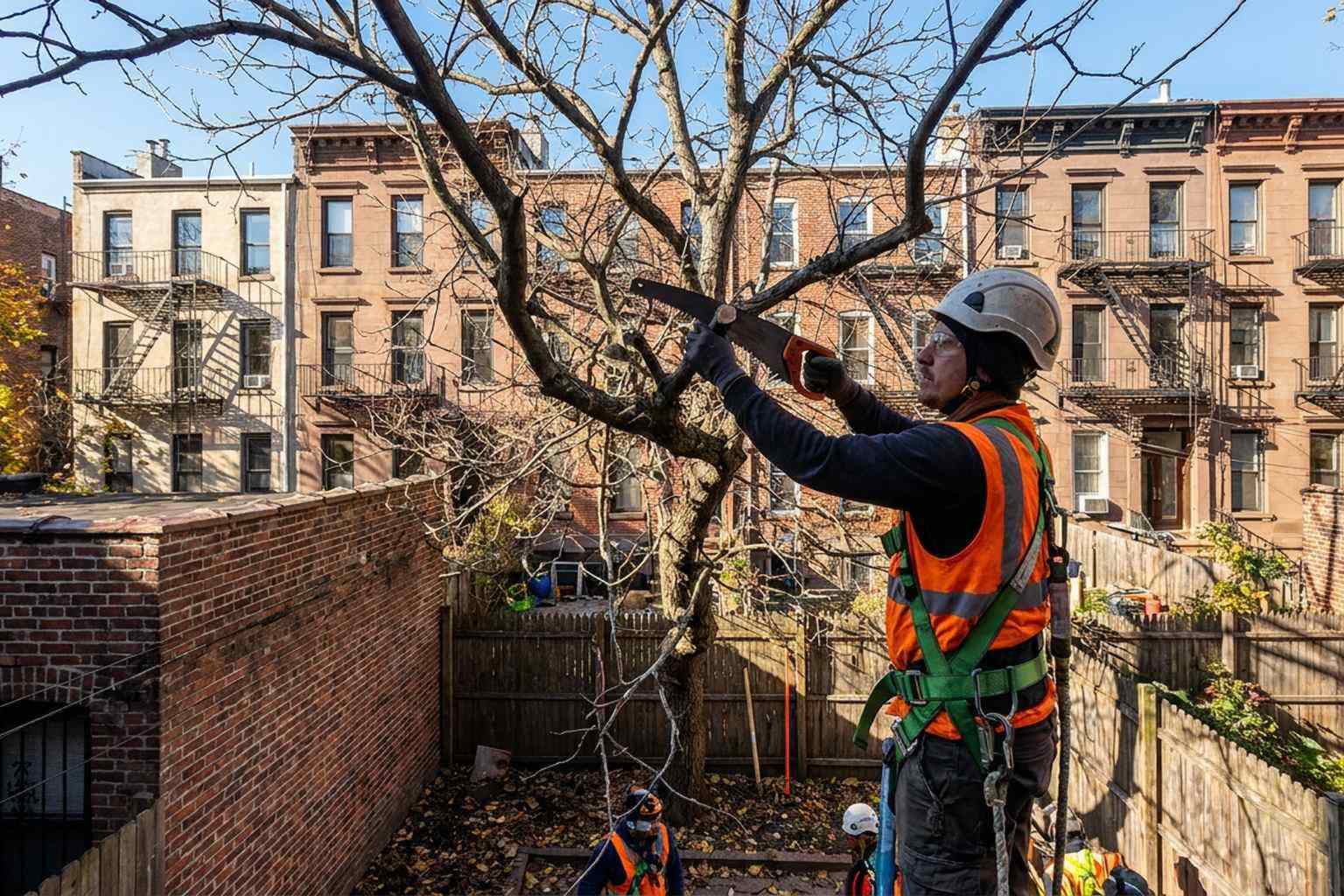
Dead wood snaps in ways that surprise even experienced crews. Branches that look solid can be pulp inside. Felling cuts behave unpredictably in brittle trunks. In Brooklyn yards, where the drop zone is 12 feet wide and your neighbor's brownstone sits 8 feet away, a DIY removal risks your house, your neighbor's house, and your insurance.
Professional crews use rigging to lower limbs in sections, crane support for tight spaces, and stump removal to finish the job. Tarzan Tree Removal handles dead tree removal in all 5 boroughs. Call (347) 833-5862 for a free on-site estimate.
Next Step: Get a Free Assessment
If your tree failed the tests above, do not wait for the next storm to make the decision for you. Tarzan Tree Removal inspects, trims, and removes hazardous trees across Brooklyn, Queens, Manhattan, the Bronx, and Staten Island. Call (347) 833-5862 or request a free quote from our certified arborists today.