Updated August 26, 2026
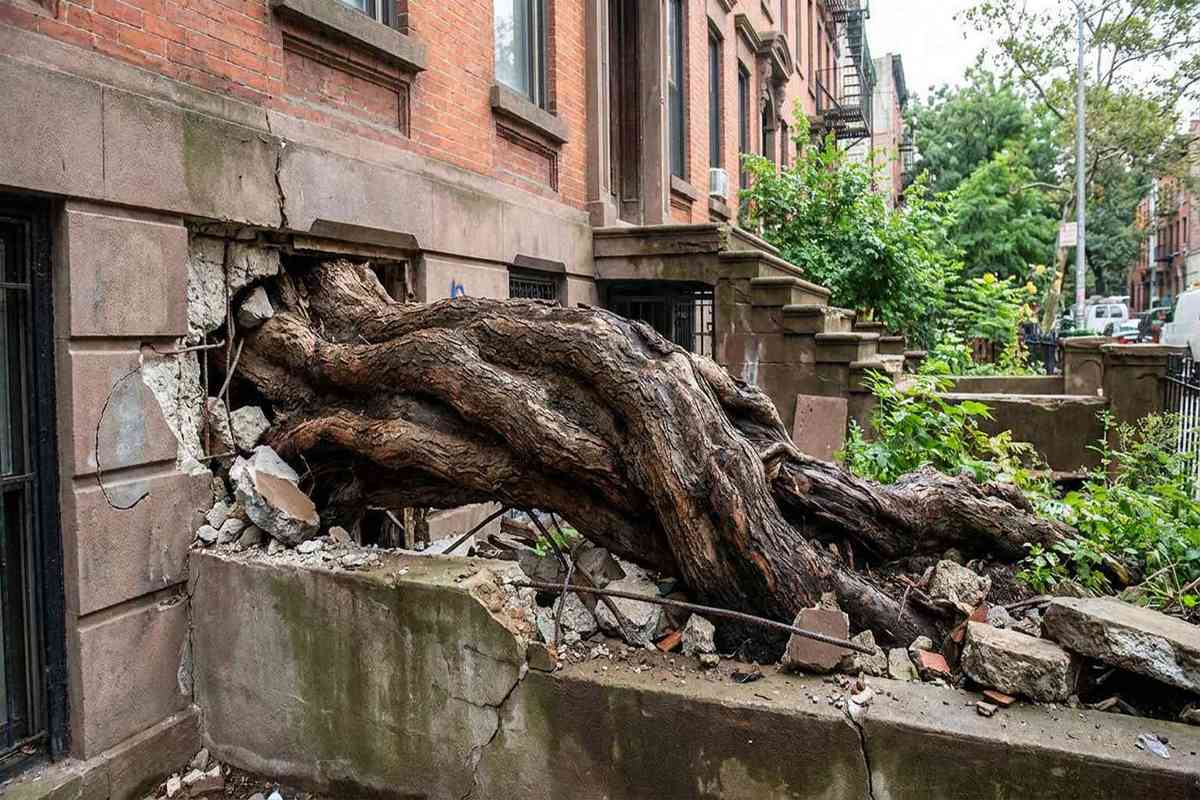
Noticing cracks spreading across your basement walls or doors that refuse to close properly? Tree roots damaging foundation structures is a real problem for Brooklyn homeowners, and at Tarzan Tree Removal, we see it all the time. Many older homes in Brooklyn neighborhoods have mature trees planted close to foundations, and those roots do not stop growing just because they hit concrete.
The good news is that root damage develops slowly. If you catch it early, you can prevent costly structural repairs. This guide covers the signs of root damage, which trees are most likely to cause problems, how to prevent it, and what to do if roots are already threatening your home.
Can Tree Roots Actually Damage a Foundation?
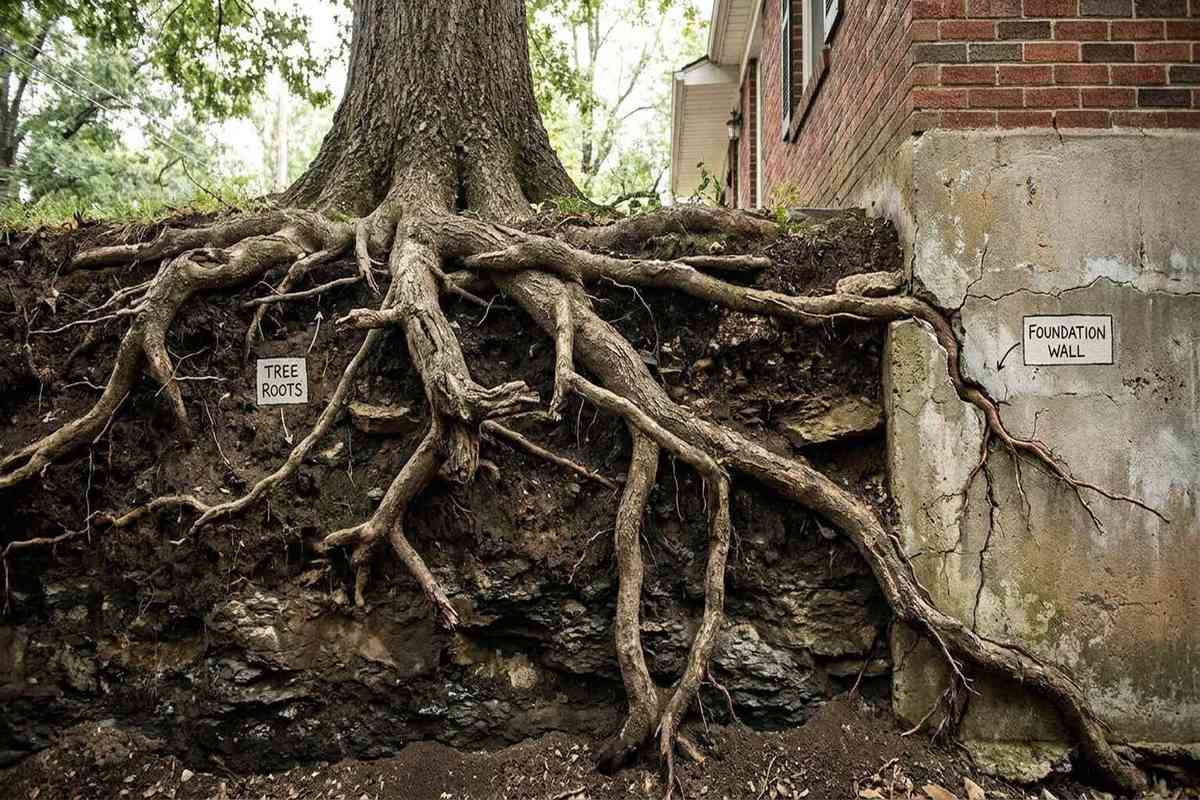
Yes, tree roots can damage foundations, though the mechanism often surprises people. Roots do not punch through solid concrete. Instead, they exploit existing cracks and gaps. Even hairline fractures in a foundation wall allow moisture to seep in. Roots sense that moisture and grow toward it, entering the crack and expanding as they thicken. Over years, this widens the crack and compromises the wall.
Roots also cause damage indirectly by removing moisture from the soil. In clay soils common to parts of Brooklyn, Queens, and Staten Island, roots draw water from the ground, causing the soil to shrink. This creates voids beneath the foundation, leading to settlement and cracking. The foundation drops as the ground beneath it contracts.
Research confirms that root damage is most severe in areas with expansive clay soils. Much of Brooklyn sits on clay-heavy glacial deposits, making local homes particularly vulnerable.
Signs of Tree Root Damage to Your Foundation
Catching root damage early saves thousands in repair costs. Here are the warning signs every Brooklyn homeowner should watch for:
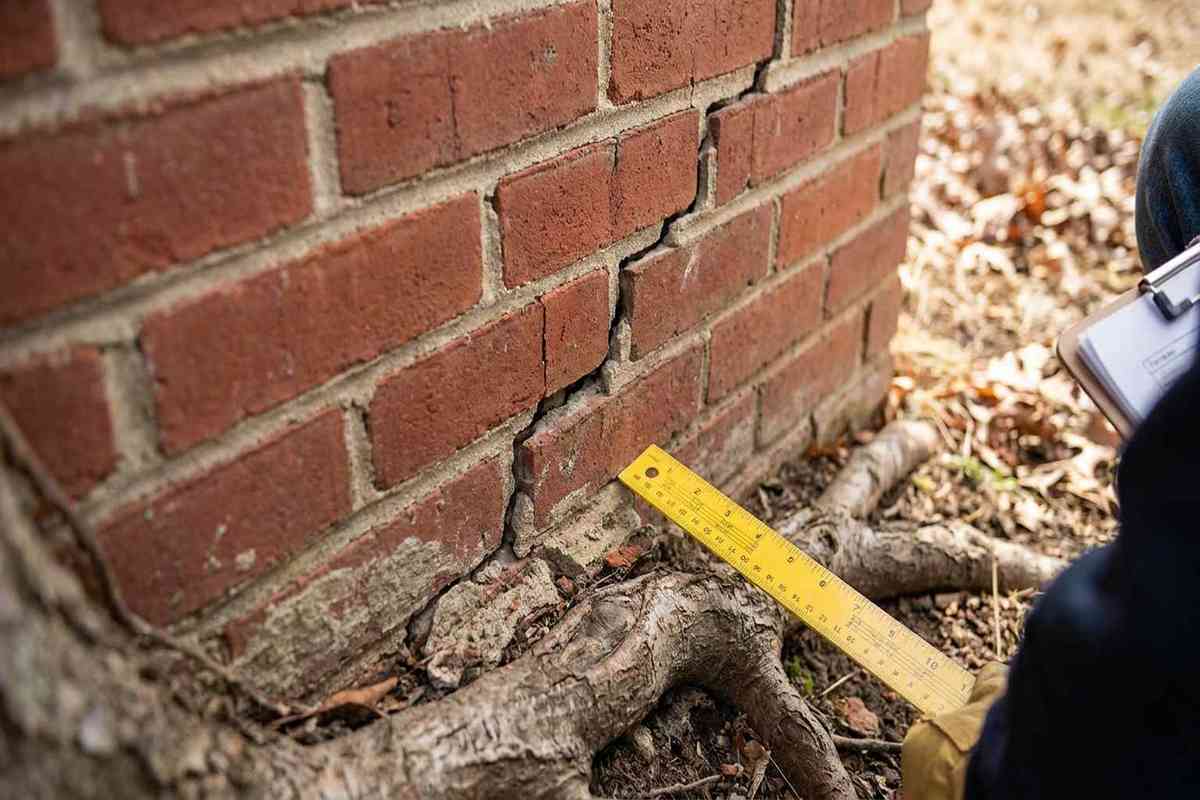
- Stair-step cracks in brick or block walls - These diagonal cracks follow mortar lines and often point toward the source of movement
- Vertical cracks in foundation walls - Especially ones that widen over time or show moisture staining
- Doors and windows that stick or will not close - Frame distortion means the foundation has shifted
- Uneven or sloping floors - Use a marble to test. If it rolls, your floor is not level
- Gaps between walls and ceilings - Separation at joints signals structural movement
- Cracked or lifted sidewalks and driveways - Roots pushing up pavement near your home may also be under the foundation
- Bowing basement walls - Walls that curve inward under pressure from roots and soil
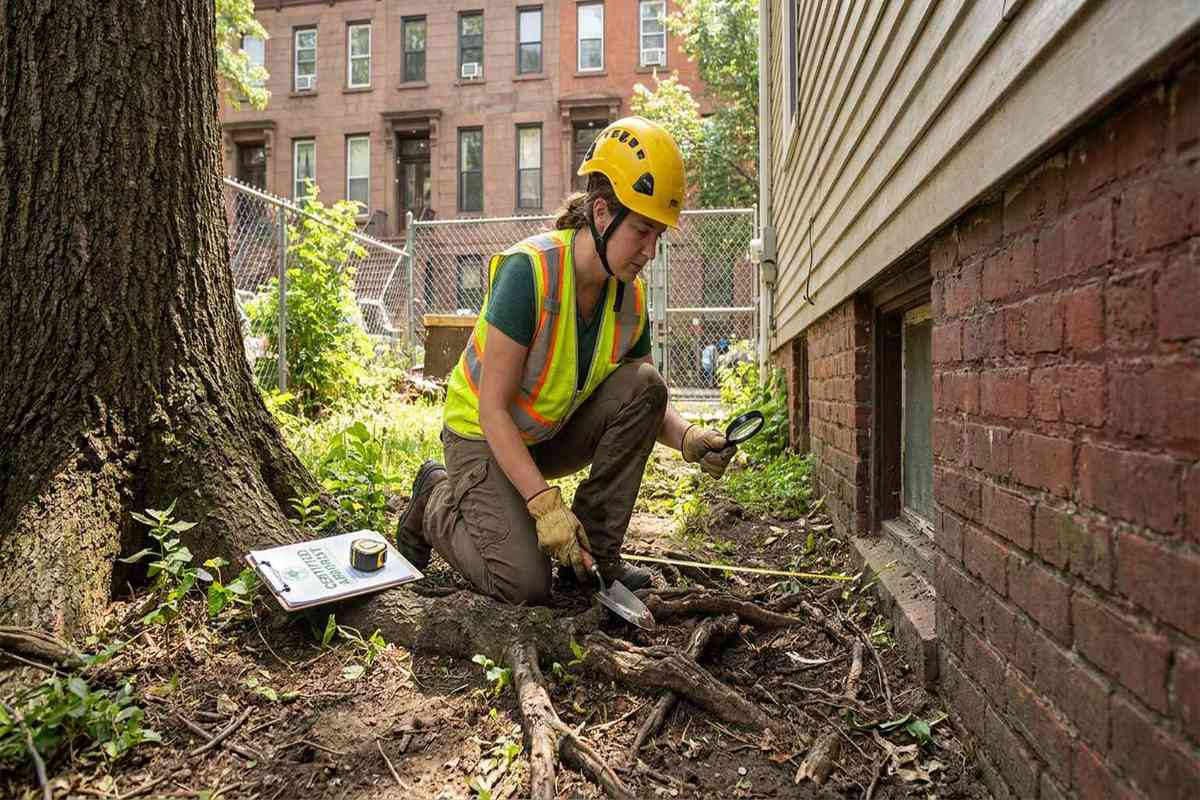
If you notice two or more of these signs, have a professional inspect your foundation. A certified arborist can determine whether nearby trees are the cause and recommend action before the damage worsens.
Which Trees Cause the Most Foundation Damage?
Not all trees pose the same risk. Trees with aggressive, fast-growing root systems planted close to foundations cause the most problems. In Brooklyn yards, these species are the biggest culprits:
- Silver maple - Shallow, fast-spreading roots that seek water aggressively. One of the worst trees to plant near a house
- Willow trees - Roots can travel 3 times the canopy width searching for moisture. They will find foundation cracks
- Poplar trees - Extensive root systems that spread quickly and intrude into pipes and foundations
- American elm - Shallow roots that lift pavement and press against foundations
- Boxelder - Weak-wooded tree with invasive roots that exploit any available water source
- Sycamore - Large roots that can extend well beyond the canopy, especially in dry conditions
Trees planted within 10 feet of a foundation are the highest risk. But some aggressive species like willow and silver maple can cause damage from 20 or even 30 feet away. If you have one of these trees near your home, regular inspections by a professional are essential.
How Tree Roots Interact With Soil and Foundations
Understanding how roots affect soil helps explain why foundation damage happens. There are two main mechanisms:
Direct Root Intrusion
Roots grow into existing cracks, joints, and gaps in foundation walls and floors. As the root thickens over years, it acts like a wedge, forcing the crack wider. This is most common with older foundations that already have small fissures from settling or weathering.
Soil Moisture Depletion
Roots absorb huge amounts of water from the surrounding soil. In clay soils, this causes the ground to shrink and pull away from the foundation. The foundation loses support and begins to settle unevenly. This is the most common cause of root-related foundation damage in Brooklyn, where clay-rich soil is widespread.
During dry spells, the problem intensifies. Roots desperate for water draw every drop from the soil, accelerating shrinkage. When heavy rain returns, the clay swells again, creating a cycle of expansion and contraction that gradually destroys foundation stability.
How to Prevent Tree Root Damage
Prevention is always cheaper than repair. Whether you are planting new trees or protecting an existing foundation, these steps help:
Plant the Right Tree in the Right Place
Choosing trees with non-aggressive root systems is the best prevention. Dogwood, redbud, and Japanese maple have compact roots and stay small. Plant large shade trees at least 20 feet from your foundation. Give willows and silver maples 30 feet or more.
Install Root Barriers
Root barriers are physical barriers installed between the tree and your foundation. They guide roots downward instead of toward your home. A high-density plastic barrier buried 36 to 48 inches deep forces roots below foundation level.
Have root barriers professionally installed. Improper installation can redirect roots into sewer lines. A certified arborist knows the right depth and placement for your soil type.
Manage Soil Moisture
Keep soil moisture consistent around your foundation. During dry periods, water the ground near your home to prevent the shrink-swell cycle. A soaker hose laid 18 inches from the wall provides steady moisture without soaking the foundation.
Regular Pruning and Root Pruning
Proper tree trimming keeps canopy size in check, which limits root spread. In some cases, professional root pruning cuts offending roots before they reach the foundation. This should only be done by an arborist, as cutting major roots can destabilize the tree.
What to Do If Tree Roots Are Damaging Your Foundation
If you suspect tree roots are already damaging your foundation, take these steps:
- Get a foundation inspection - A structural engineer can assess the extent of damage and recommend repairs
- Have an arborist evaluate the tree - A certified arborist determines whether root pruning can solve the problem or if tree removal is necessary
- Install root barriers - If the tree can stay, barriers redirect future root growth away from the foundation
- Repair foundation cracks - Fill cracks with epoxy or polyurethane injection to prevent water and root intrusion
- Consider tree removal - If the tree is too close, too large, or too aggressive, removal may be the only safe option
- Grind the stump - After removal, stump removal prevents remaining roots from continuing to grow
Does Homeowners Insurance Cover Tree Root Damage?
This is one of the most common questions we hear. The answer depends on your policy and how the damage occurred. Most standard homeowners insurance policies do not cover gradual foundation damage from tree roots. They consider it a maintenance issue rather than a sudden event.
However, if tree roots cause a pipe to burst or water damage occurs suddenly, some policies may cover the water damage portion even if they will not cover the foundation repair itself. Always check with your insurance provider and review your policy details.
If a neighbor's tree roots are causing damage to your property, you may have recourse. Document the damage with photos and a professional assessment. In New York City, property owners are generally responsible for damage caused by trees on their land. A conversation with your neighbor and your insurance company is the first step.
Tree Removal: When It Is the Only Option
Sometimes a tree is simply too close, too large, or too aggressive to keep near your foundation. Removing the tree is the safest long-term solution. Signs that removal is the right call:
- The tree is within 5 feet of your foundation and showing aggressive root growth
- Foundation damage is actively worsening despite root barrier installation
- The tree is a high-risk species like silver maple or willow near an older foundation
- Root pruning would remove more than 25 percent of the root system, destabilizing the tree
- The tree is already in decline, diseased, or structurally compromised
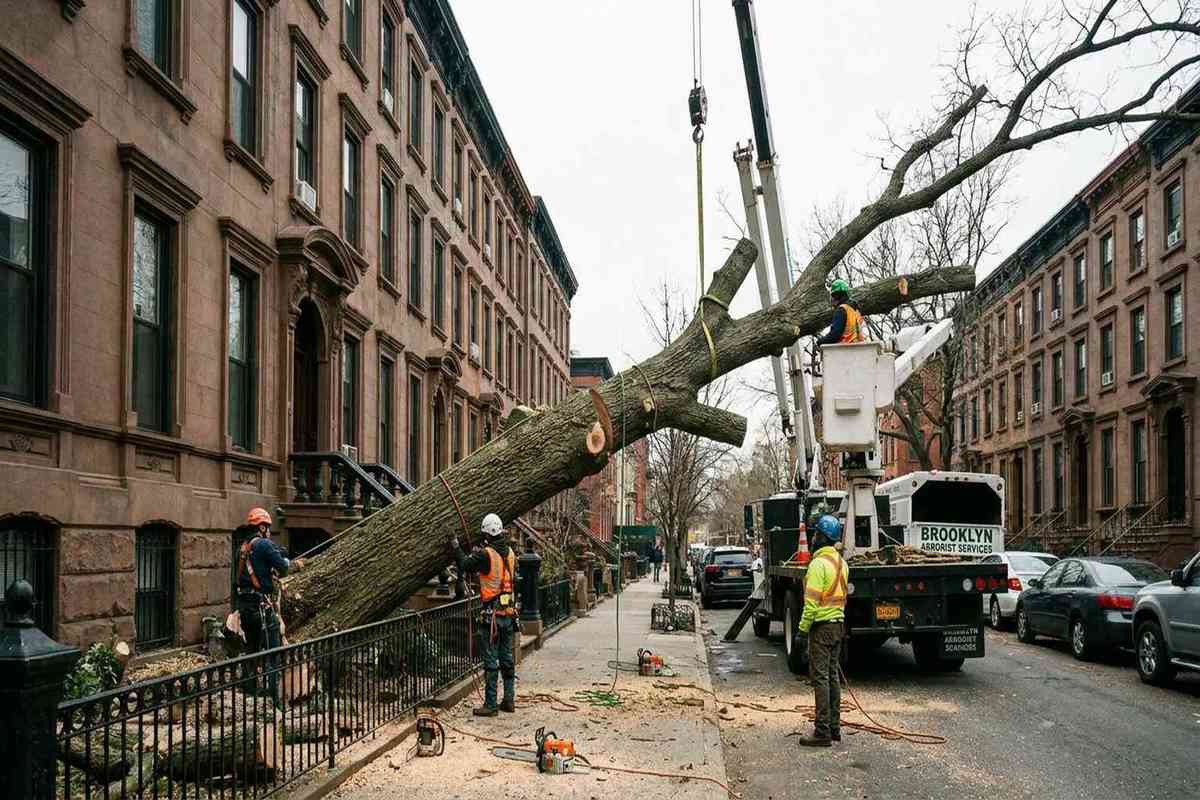
Removing a tree near a foundation requires skill. Our team specializes in tight-space removals common in Brooklyn, where trees grow between brownstones, fences, and utility lines. If the tree poses immediate danger to your home, our emergency tree service is available 24/7.
Call us at (347) 833-5862 for a free assessment. We will tell you honestly whether the tree can stay with mitigation or needs to go.
Protecting Your Brooklyn Home
Brooklyn homes face unique risks when it comes to tree root damage. Neighborhoods like Park Slope, Carroll Gardens, and Bay Ridge have mature trees planted decades ago, before anyone understood the risk to foundations. Brownstone foundations, often made of older brick and mortar, are especially vulnerable to root intrusion.
Here is what Brooklyn homeowners can do to protect their property:
- Inspect annually - Walk your basement and exterior walls each spring for new cracks
- Know your soil type - Clay-heavy soil means higher risk. Test kits are available at hardware stores
- Maintain consistent soil moisture - Use soaker hoses during dry summer months
- Monitor large trees - Have an arborist assess any tree within 20 feet of your home every 2 to 3 years
- Act fast on signs of damage - Cracks, stuck doors, and uneven floors are not problems that fix themselves
Why Brooklyn Homeowners Trust Tarzan Tree Removal
Tarzan Tree Removal has served NYC since 2012. Our team started during Hurricane Sandy, helping neighbors clear downed trees across Brooklyn. That community spirit still drives us today.
- Certified arborists - We have the training to assess root damage and recommend safe solutions
- 24/7 emergency response - Hazard trees do not wait for business hours
- Same-day service - We can often inspect your tree the same day you call
- Free estimates - No charge to assess your tree and explain your options
- Transparent pricing - No hidden fees, ever. You know the cost before we start
- Tight-space specialists - We safely remove trees near buildings, fences, and power lines
- 100% satisfaction guarantee - We do not leave until the job is done right
- Family-owned - Deep Brooklyn roots and local knowledge
Call us at (347) 833-5862 to schedule your free tree assessment. We serve Brooklyn, Queens, Manhattan, the Bronx, and Staten Island.