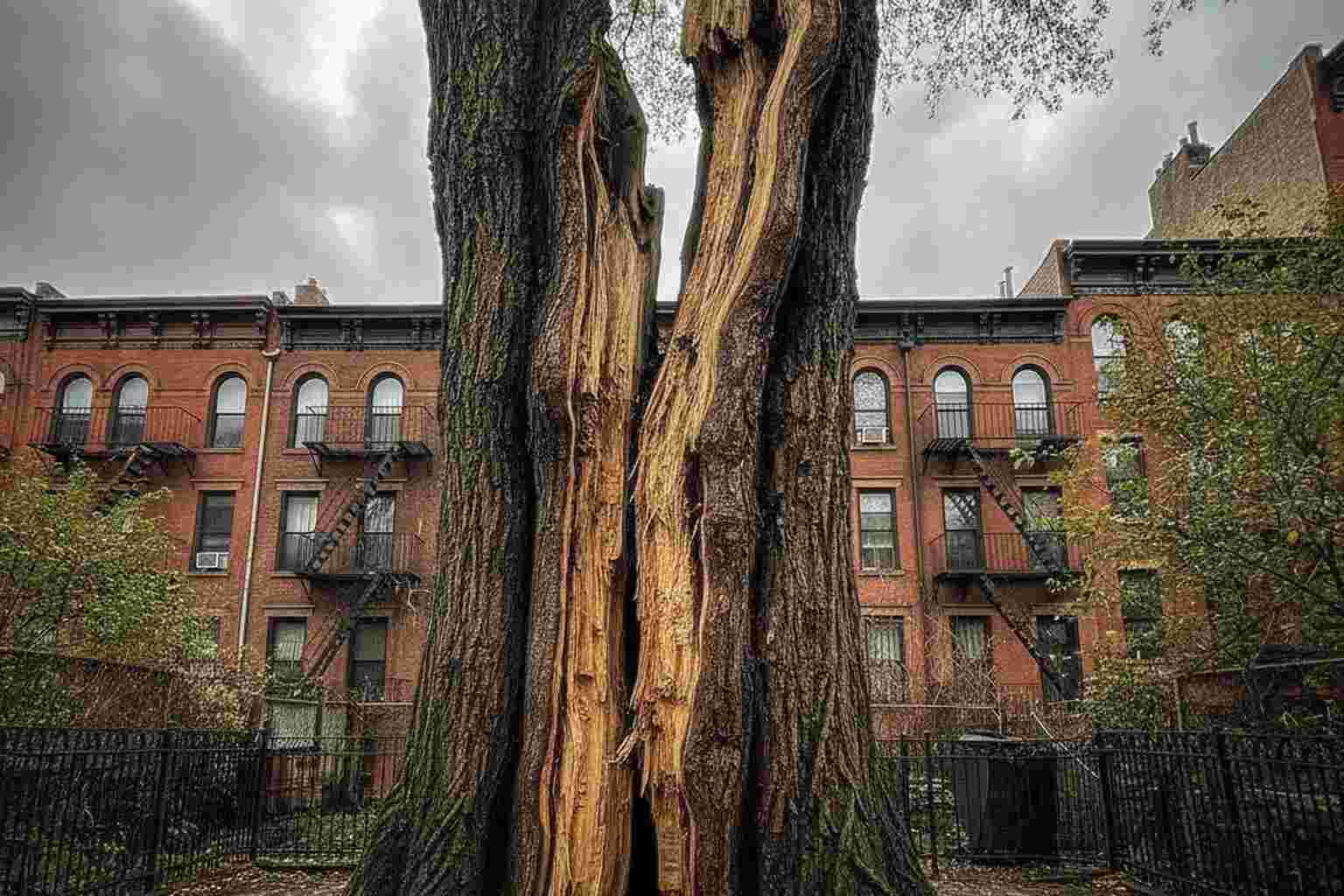
You walk outside and see a crack running straight up the trunk of your tree. A tree split trunk is one of the scariest sights a homeowner can face, and it is one of the most common emergency calls we get at Tarzan Tree Removal. The split might have appeared overnight after a storm, or it may have been widening slowly for months.
The question every homeowner asks is the same: can the tree be saved, or does it need to come down? The answer depends on the size of the split, the tree species, how much of the trunk is involved, and what surrounds the tree. A split oak in the middle of Prospect Park is different from a split maple leaning over a Park Slope brownstone.
What Causes a Tree Trunk to Split?
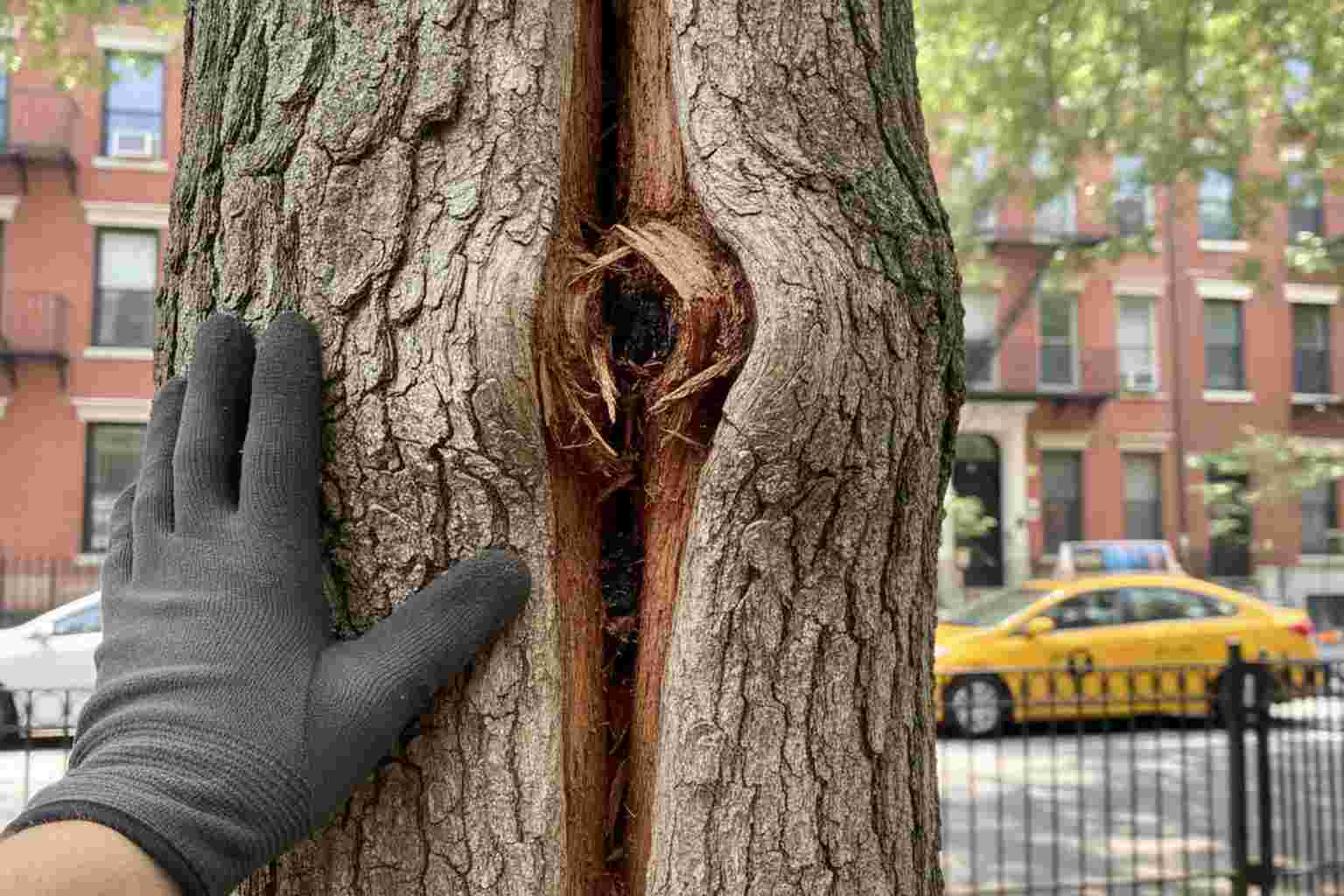
Tree trunks split for several reasons. Understanding the cause helps determine whether the tree can be repaired or needs removal.
- Codominant stems - Two or more main trunks growing from the same point create a weak union. Bark grows between the stems instead of wood fusing them together. This is the number one cause of trunk splits in NYC.
- Storm damage - High winds, heavy snow, and ice accumulation put enormous pressure on trunks. A single nor'easter can split a healthy tree.
- Temperature swings - Rapid freeze-thaw cycles in NYC winters cause frost cracks. Water inside the trunk expands when it freezes, splitting the wood vertically.
- Internal decay - Rot weakens the trunk from the inside. A tree that looks solid from outside may be hollow, and the first sign is a split under normal wind load.
- Improper pruning - Bad cuts that leave stubs or remove too much canopy at once stress the tree and can lead to cracking.
If your tree has any of these risk factors, tree trimming by a certified professional can reduce the load and prevent future splits.
Signs Your Split Tree Is a Hazard
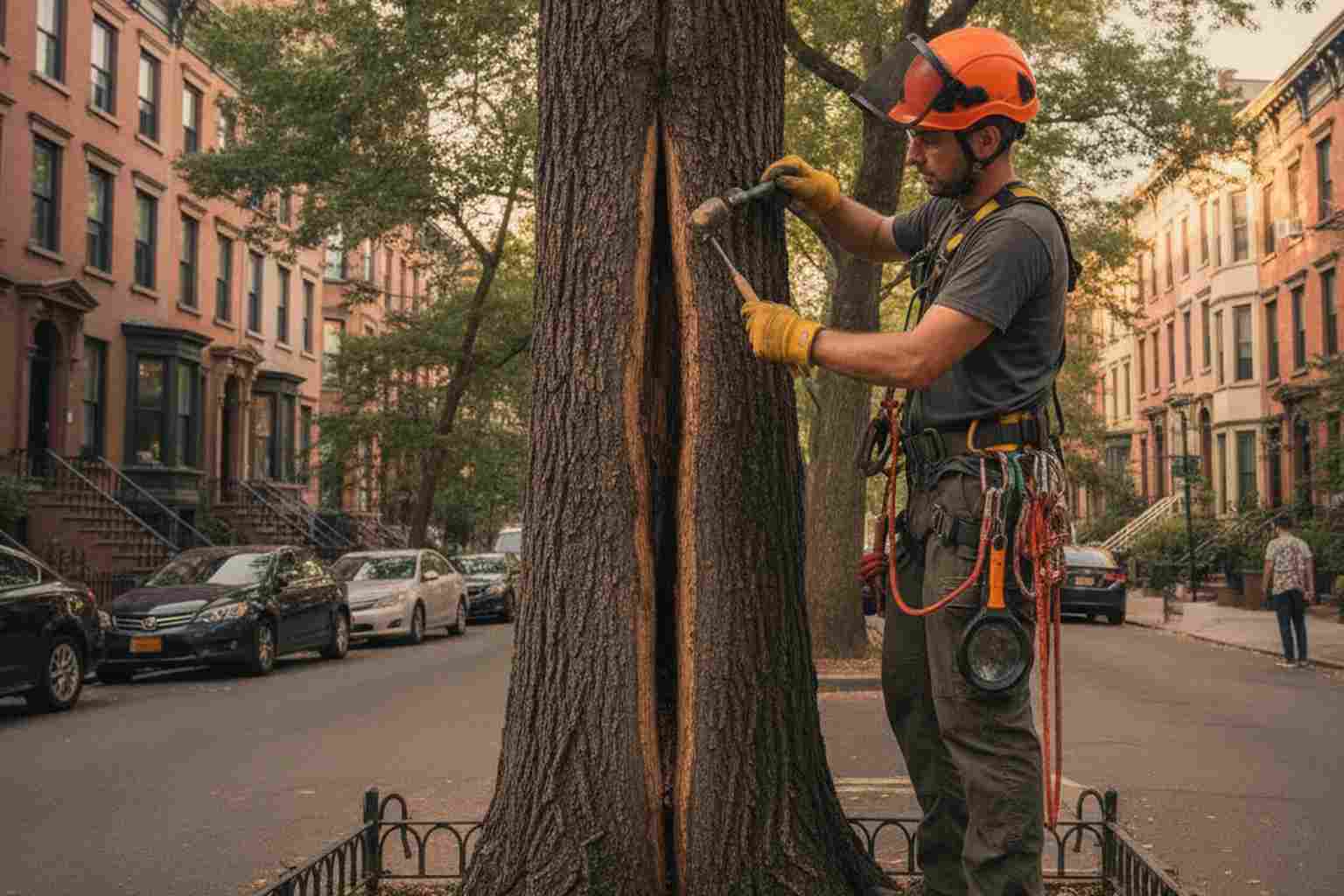
Not every crack means your tree will fall. But certain signs tell you the split is serious:
- The crack extends more than one-third of the trunk circumference
- The split goes deep into the wood, not just the bark
- The tree is leaning toward a house, car, or power line
- You hear creaking or popping sounds when the wind blows
- The split is widening over days or weeks
- Mushrooms or fungal growth appear near the base, indicating internal decay
- A section of the canopy is drooping or has lost leaves
If you notice any of these signs, the tree may fail without warning. A split trunk near a Brooklyn sidewalk or between buildings can cause serious injury or property damage.
Can a Tree Survive a Split Trunk?
Whether a tree can recover depends on the extent of the damage. Here is how we assess survival odds:
When a Split Tree Can Be Saved
- The split is shallow and affects less than 25 percent of the trunk
- The crack is recent and the wood inside is still healthy
- The tree is young and vigorous enough to compartmentalize the wound
- The split is on a branch, not the main trunk
When Removal Is the Only Option
- The trunk has split completely down the middle
- More than 50 percent of the trunk circumference is involved
- The tree is leaning and the split is on the tension side
- Internal decay extends below the split point
- The tree is near a structure, sidewalk, or power line
A certified arborist can inspect the split and tell you which category your tree falls into. Do not guess when safety is on the line.
How to Repair a Split Tree Trunk
Repair is possible for minor splits, but it is not a DIY job. Professional repair methods include:
Cabling and Bracing
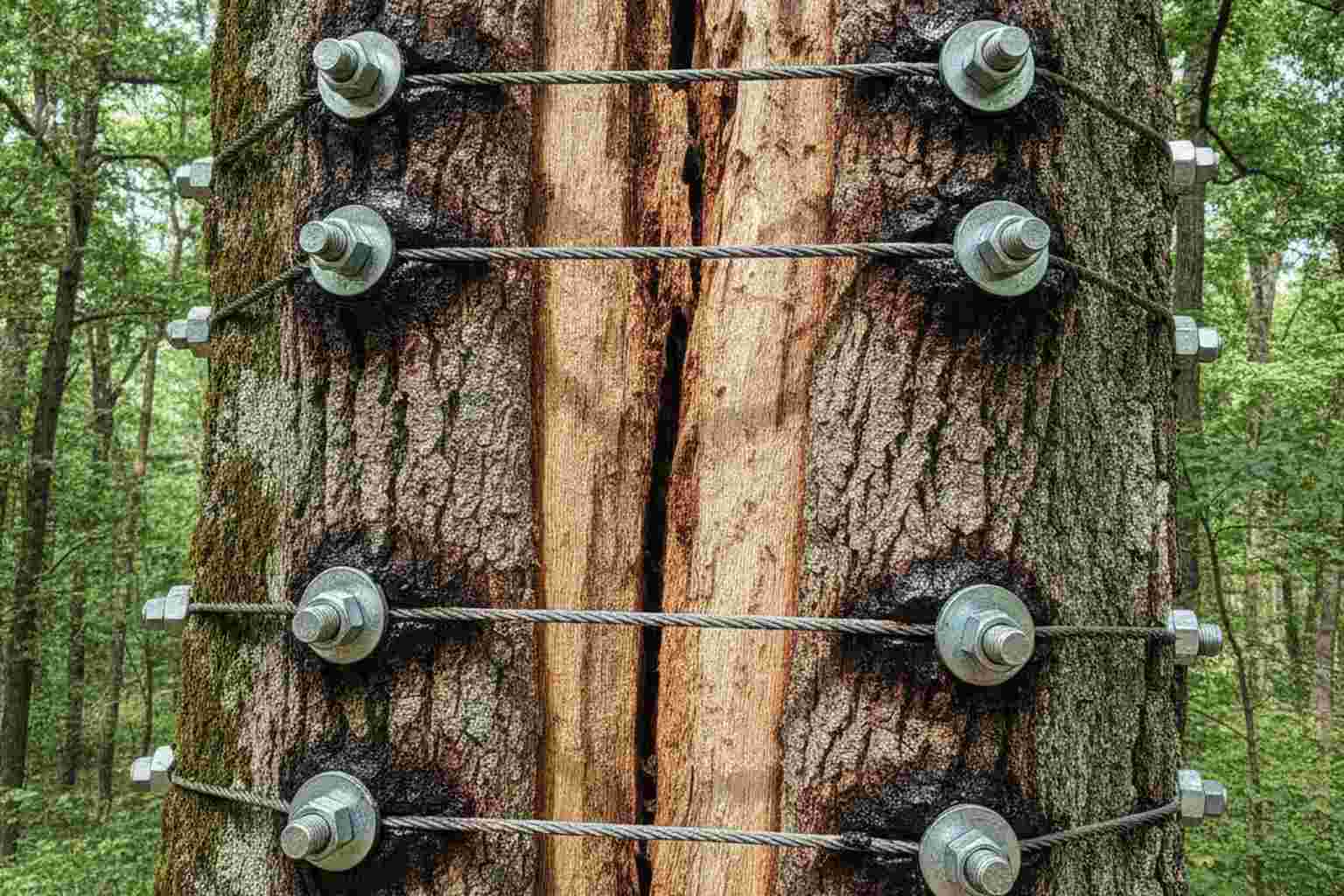
Steel cables are installed high in the canopy to hold the split sections together. Threaded steel rods can be placed through the trunk below the split to mechanically bolt the halves together. This system lets the tree continue growing while preventing the split from widening.
Bolting
For vertical cracks, long bolts are drilled through the trunk on either side of the split. Washers and nuts hold the crack closed. Multiple bolts may be needed for long splits, spaced 12 to 18 inches apart.
Wound Care
The edges of the split are cleaned with sharp tools to remove loose bark and splinters. This helps the tree form a callus over the wound. Do not use wound paint or tar - these trap moisture and promote decay.
When to Remove a Split Tree
Removal becomes necessary when the tree cannot be safely repaired. In NYC, the decision is often driven by location. A split tree in a wide open yard may be monitored. A split tree between two Brooklyn brownstones or over a parked car on a narrow street does not get that luxury.
Signs that removal is the right call:
- The trunk has separated into two distinct halves
- The crack reaches the ground or the root flare
- The tree is a large species like oak or maple near a building
- The split happened during a storm and the tree is already leaning
- Internal rot makes the trunk feel soft or hollow
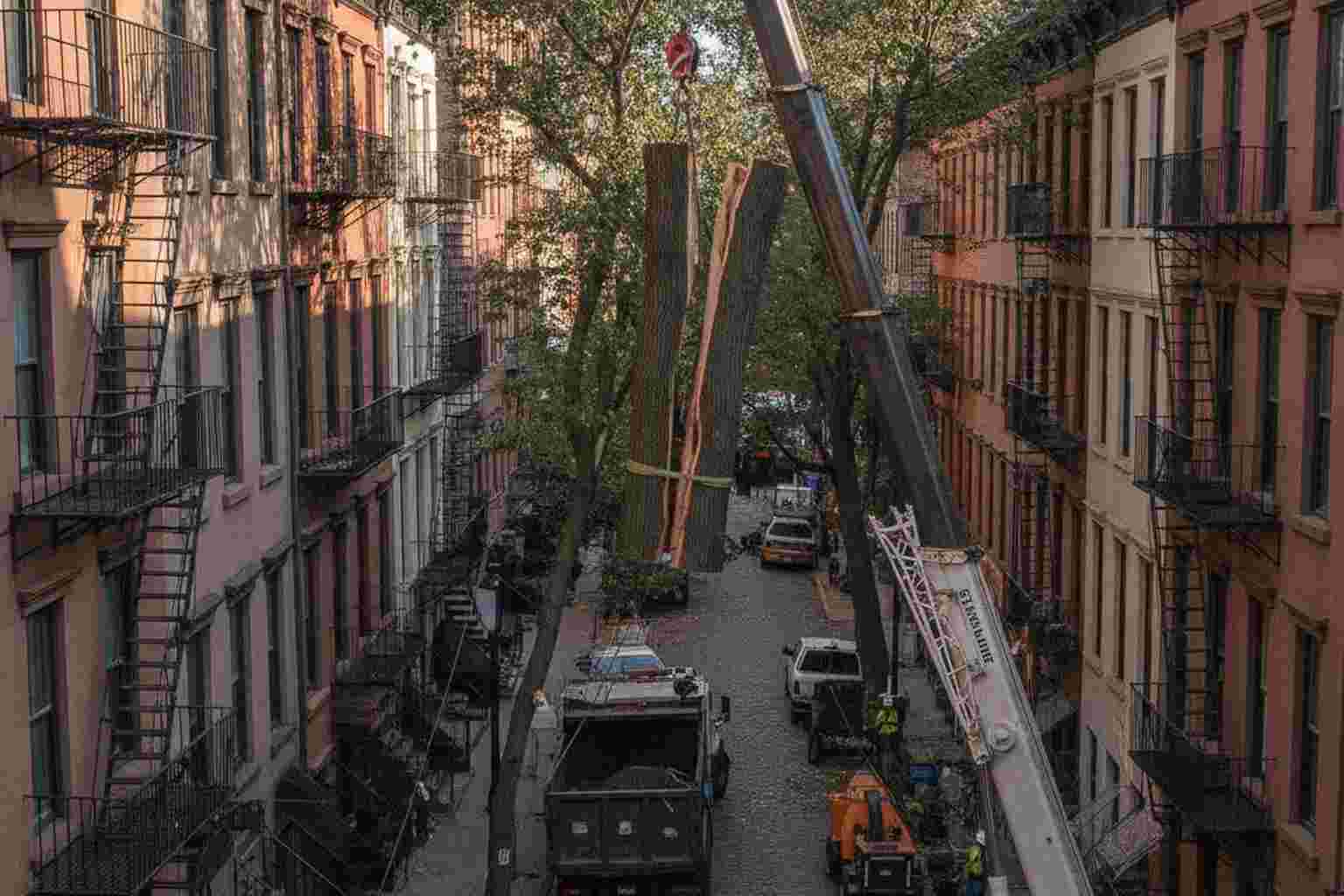
Professional tree removal in tight NYC spaces requires a crane and skilled rigging. Our team specializes in removing hazard trees from confined urban lots without damaging nearby structures.
Preventing Tree Trunk Splits in NYC Yards
Prevention is always cheaper than emergency removal. Here is how to protect your trees:
- Structural pruning early - Remove codominant stems when the tree is young. Selecting one dominant leader prevents the weak unions that cause most splits.
- Reduce canopy weight - Thinning heavy branches reduces wind sail and snow load on the trunk.
- Install support cables proactively - If your tree has a double leader but has not split yet, cabling can prevent the split from ever happening.
- Avoid construction damage - Trenching, paving, or parking over roots weakens the tree and makes trunk splits more likely.
- Water during droughts - Stressed trees are more prone to cracking. Deep watering during dry NYC summers keeps the trunk healthy.
NYC Tree Split Emergencies: What to Do
If your tree splits during a storm, take these steps immediately:
- Keep people away - A split tree can drop limbs or fall at any moment. Rope off the area if possible.
- Do not climb the tree - Never try to assess or repair a split from a ladder. The tree is unstable.
- Call a professional - If the tree is near a structure, road, or power line, call emergency tree service right away.
- Document the damage - Take photos for insurance purposes before any work begins.
- Contact your insurance company - Some policies cover emergency tree removal when the tree threatens a structure.
Tarzan Tree Removal responds to split tree emergencies across Brooklyn, Queens, Manhattan, the Bronx, and Staten Island. Call (347) 833-5862 for same-day emergency service.
Cost of Split Tree Removal in NYC
The cost to remove a split tree in NYC depends on several factors:
- Tree size - Larger trees cost more due to the labor and equipment needed
- Location - Trees in tight spaces between buildings require cranes and rigging, which adds cost
- Urgency - Emergency after-hours removals carry a premium
- Stump removal - Adding stump removal to the job costs extra but prevents future issues
- Permits - NYC DOT permits may be required for street tree work or crane placement on public streets
We provide free estimates with transparent pricing. No hidden fees, ever. Call (347) 833-5862 to schedule your free assessment.
Why Brooklyn Homeowners Trust Tarzan Tree Removal
Tarzan Tree Removal has served NYC since 2012. Our team started during Hurricane Sandy, helping neighbors clear downed and split trees across Brooklyn. That community spirit still drives us today.
- Certified arborists - We have the training to assess split trunks and recommend repair or removal
- 24/7 emergency response - Split trees do not wait for business hours
- Same-day service - We can often inspect your tree the same day you call
- Free estimates - No charge to assess your tree and explain your options
- Tight-space specialists - We safely remove split trees near buildings, fences, and power lines
- 100% satisfaction guarantee - We do not leave until the job is done right
Serving Brooklyn, Queens, Manhattan, the Bronx, and Staten Island. We swing into action fast because tree problems do not wait.