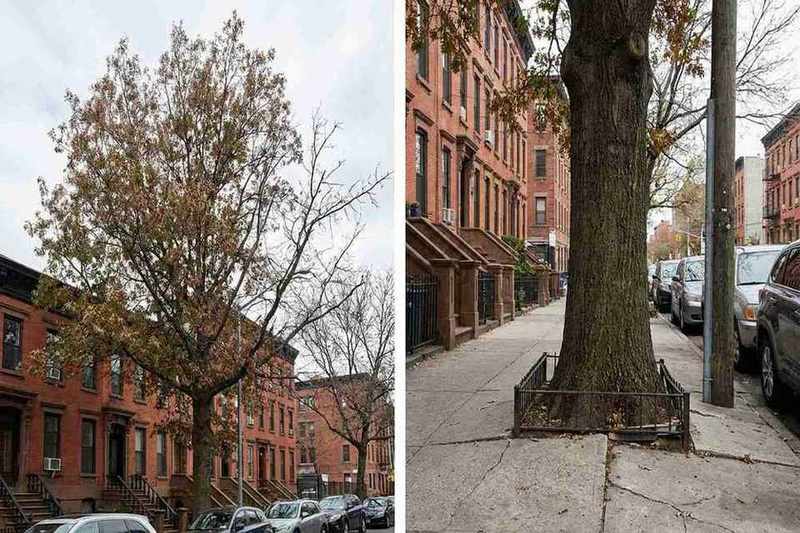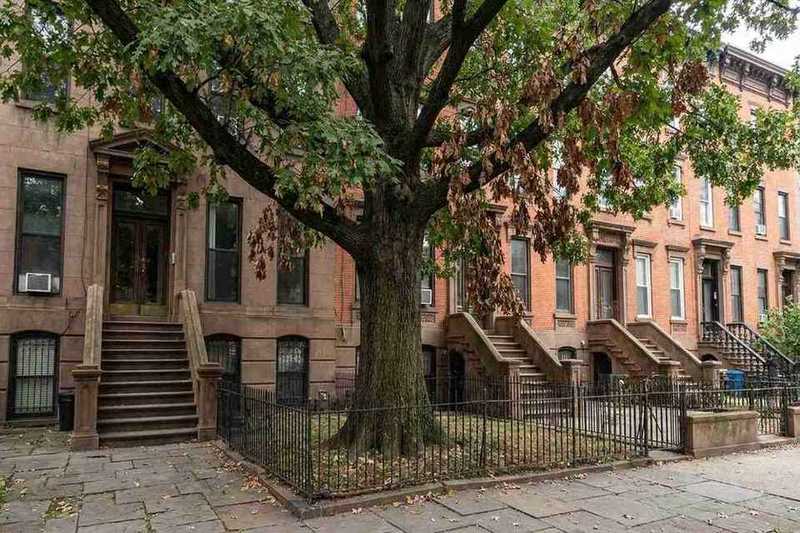
You walk outside and notice brown, curling leaves on your oak tree in late spring. Oak tree diseases can turn Brooklyn's most iconic shade trees into dangerous hazards faster than most homeowners realize. At Tarzan Tree Removal, our certified arborists diagnose and treat oak diseases throughout New York City, and when treatment is no longer an option, we handle safe tree removal before the tree threatens your property.
This guide covers the most common oak tree diseases found in Brooklyn and New York City, how to identify each one, which treatments work, and when calling a professional is the right move. If you see signs of disease on your oak, call (347) 833-5862 for a free assessment.
Most Common Oak Tree Diseases
Oak diseases fall into three categories: fungal infections, bacterial diseases, and environmental stress disorders. The most serious threats to NYC oaks include oak wilt, anthracnose, armillaria root rot, and hypoxylon canker. Each disease attacks different parts of the tree and spreads through different pathways, so identifying the specific disease is critical for effective treatment.
Early identification makes the difference between saving a tree and removing it. Brooklyn homeowners encounter these oak diseases most often:
Oak Wilt
Oak wilt is the most dangerous oak disease in the northeastern United States. It is caused by the fungus Bretziella fagacearum, which clogs the water-conducting vessels inside the tree. Once infected, red oaks can die in as little as four to six weeks. White oaks decline more slowly over one to two years, but they still succumb without treatment.
The oak wilt fungus spreads two ways: through root grafts between nearby oaks and by sap-feeding beetles that carry fungal spores from infected trees to fresh pruning wounds on healthy trees. In Brooklyn's dense neighborhoods, root grafts between closely planted oaks make oak wilt particularly aggressive. One infected tree can kill an entire row of oaks connected through shared root systems.
Symptoms of oak wilt:
- Leaves turn bronze or brown from the tips inward, starting at the top of the canopy
- Leaves wilt and drop prematurely, often while still partially green
- Brown streaks appear under the bark of infected branches when you peel back a small section
- Fungal mats may push through cracks in the bark, releasing a fruity odor
- Red oaks die within a single season; white oaks decline over several years
- Veinal necrosis appears as dark lines following the leaf veins
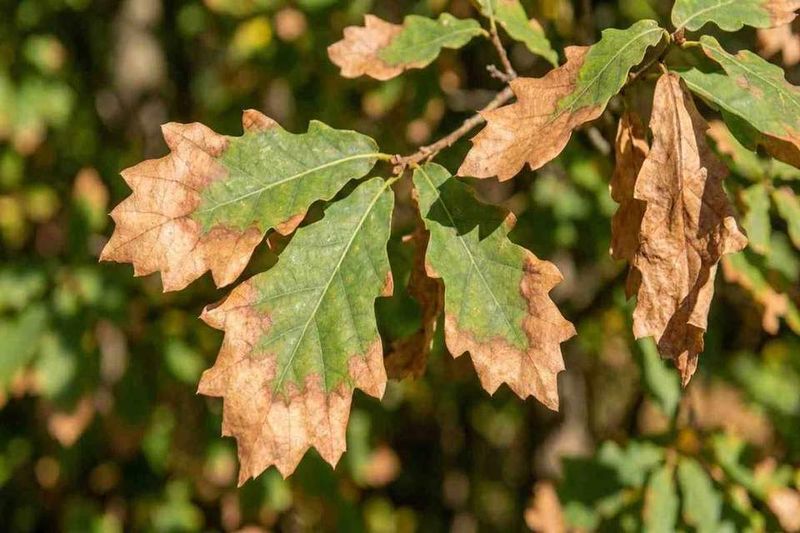
Oak Anthracnose
Oak anthracnose is a fungal disease caused by Apiognomonia quercina. Unlike oak wilt, anthracnose is rarely fatal but can severely disfigure the tree and weaken it over repeated growing seasons. It thrives in cool, wet spring weather, which is common in New York City, especially in shaded yards with poor air circulation.
Symptoms of oak anthracnose:
- Irregular brown blotches along leaf veins, especially on the lower canopy
- Leaves curl and shrivel, particularly during wet spring weather
- Defoliation in late spring or early summer, leaving the tree bare
- The tree typically produces a second flush of leaves by midsummer
- Twig cankers that girdle and kill small branches
Anthracnose rarely kills mature oaks but weakens them year after year, leaving them vulnerable to secondary infections, wood-boring insects, and structural failure during storms.
Armillaria Root Rot
Armillaria root rot, also called oak root fungus, attacks the roots and lower trunk of oak trees. The fungus Armillaria mellea spreads through root contact and can persist in soil for decades after an infected tree is removed. This makes armillaria a recurring problem in Brooklyn yards where oaks have grown for generations. If you remove an oak with armillaria and plant another oak in the same spot, the new tree will likely become infected.
Symptoms of armillaria root rot:
- Clusters of honey-colored mushrooms at the base of the trunk in fall
- White fungal mats called mycelial fans under the bark at the root flare
- Gradual dieback of branches starting from the top of the canopy
- Loose, crumbling wood when you probe the base of the trunk with a screwdriver
- Leaves turn yellow and drop earlier than normal
- Black shoestring-like rhizomorphs visible on infected roots
Hypoxylon Canker
Hypoxylon canker is a fungal disease that targets stressed or wounded oaks. The fungus Hypoxylon atropunctatum enters through bark injuries and decays the wood beneath. It is most common on oaks already weakened by drought, construction damage, or soil compaction, all frequent stressors in NYC yards. Hypoxylon canker is a sign that the tree has been declining for years before the fungus becomes visible.
Symptoms of hypoxylon canker:
- Sunken, discolored cankers on the trunk or major branches
- Bark falls away exposing dusty, brownish-black spore masses underneath
- Wood beneath the canker is decayed and crumbly
- Canopy thinning and progressive branch dieback
By the time hypoxylon canker shows visible symptoms, internal decay is often extensive. An arborist assessment is critical to determine if the tree can be saved or needs removal.
Bacterial Leaf Scorch
Bacterial leaf scorch is caused by Xylella fastidiosa, a bacterium that blocks water movement in the tree's vascular system. It spreads by leafhopper insects and through root grafts. There is no cure for bacterial leaf scorch, but management can extend the tree's life for several years.
Symptoms:
- Leaf margins turn brown and scorched while the center stays green
- Browning starts on older leaves and progresses upward through the canopy
- Symptoms worsen each year until the tree dies, typically within five to seven years
How to Identify Oak Tree Diseases
Spotting oak disease early gives you the best chance of saving the tree. Walk around your oak regularly and look for these warning signs:
- Leaf changes: Discoloration, spotting, wilting, or premature leaf drop all signal potential disease. Compare leaves from different parts of the canopy
- Bark problems: Cracks, peeling bark, cankers, oozing sap, or fungal growth on the trunk
- Branch dieback: Dead branches in the upper canopy, especially when they appear on one side first, indicate vascular problems
- Root issues: Mushrooms at the base, soil heaving, or visible root decay point to armillaria or other root diseases
- Sap oozing: Wet spots on the trunk that attract insects, particularly during summer
- Unseasonal leaf drop: Leaves falling in spring or early summer before they should
Different diseases share similar symptoms. Oak wilt and bacterial leaf scorch both cause leaf browning, but oak wilt kills the tree much faster. Anthracnose and drought stress both cause leaf curling. A certified arborist can run diagnostic tests including tissue culture and DNA analysis to tell the difference.
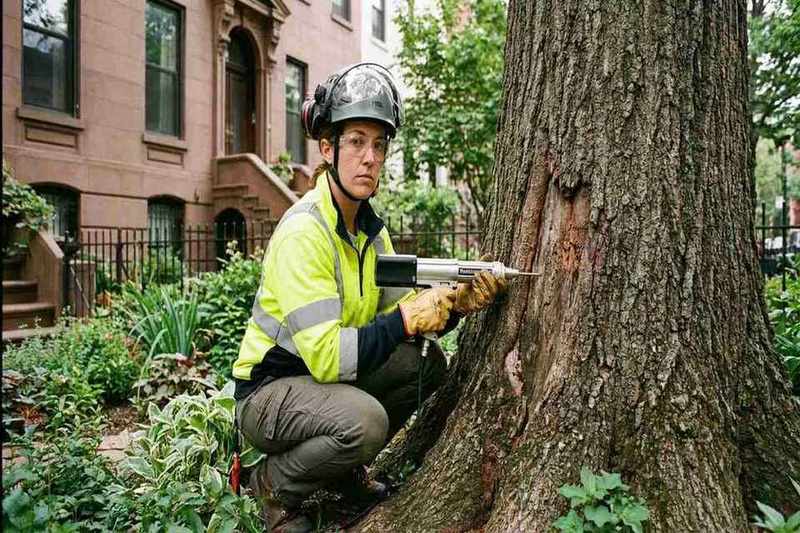
Preventing Oak Tree Diseases
Prevention is always cheaper and more effective than treatment. These practices help keep your oak healthy in Brooklyn's challenging urban environment:
- Prune during dormancy: Never prune oaks between April and October when sap-feeding beetles are active and oak wilt spreads most easily. Winter pruning from November through March is safest for oaks
- Seal all wounds: Apply pruning sealer to any cuts or broken branches immediately during the growing season to prevent beetle-vectored infections
- Avoid soil compaction: Keep heavy equipment, vehicles, and foot traffic off the root zone, which extends well beyond the drip line
- Water during drought: Deep water established oaks during extended dry periods, especially young trees and those in sidewalk pits
- Mulch properly: Apply a 3-to-4-inch layer of organic mulch from the trunk flare to the drip line, keeping mulch pulled away from the trunk itself
- Inspect regularly: Walk around your oak at least once a month during the growing season and note any changes
Professional tree trimming by a certified arborist removes diseased branches, improves airflow through the canopy, and reduces the risk of infection spreading to healthy wood.
Oak Tree Disease Treatment Options
Treatment depends on which disease your oak has and how far it has progressed. Not every diseased oak can be saved, but early intervention improves the odds significantly.
Oak Wilt Treatment
Oak wilt requires aggressive action because it spreads quickly and kills red oaks within weeks:
- Propiconazole injections: Fungicide injections can protect healthy oaks near an infected tree when administered before symptoms appear on the tree being treated
- Root barrier trenching: Cutting root grafts between infected and healthy oaks prevents underground spread, which is the primary way oak wilt moves through Brooklyn's closely planted trees
- Immediate removal: Infected red oaks should be removed and destroyed before the fungus produces spore mats that attract beetles
Anthracnose Treatment
Anthracnose rarely requires chemical treatment:
- Rake and destroy fallen leaves to reduce fungal spores that reinfect the tree next spring
- Improve air circulation through pruning to reduce humidity in the canopy
- Apply fungicide in early spring if the tree has been defoliated two or more years in a row
- Water at the base during dry periods to reduce drought stress that makes the tree more susceptible
Armillaria Root Rot Treatment
Armillaria is difficult to treat once established:
- Remove soil from the root flare to expose the infection to air and sunlight
- Cut away infected bark and wood down to healthy tissue
- Apply fungicide to the exposed area and surrounding soil
- Improve drainage and reduce soil moisture around the base
- Do not replant another oak in the same location without soil treatment
In many cases, an oak with advanced armillaria root rot needs removal to prevent it from falling on structures or people.
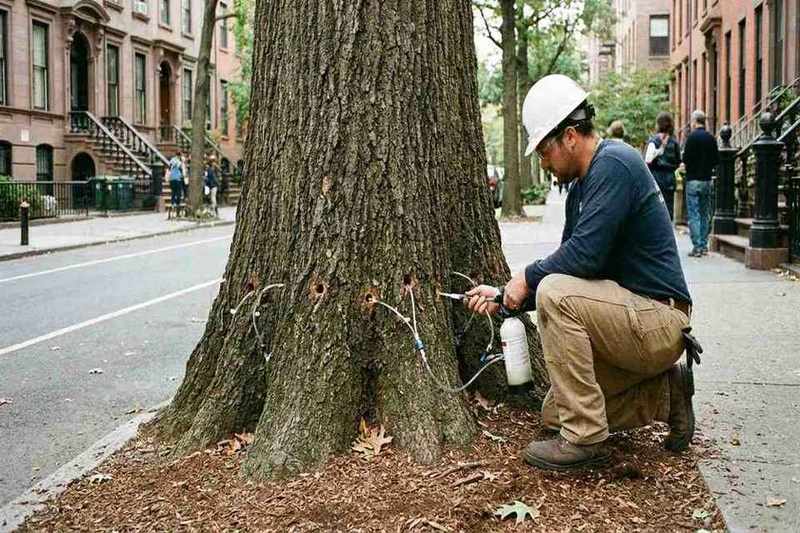
When to Remove a Diseased Oak Tree
Not every diseased oak needs removal. But some situations make removal the safest and most responsible choice:
- More than 50 percent canopy death: When over half the canopy is dead, the tree cannot recover and becomes a structural hazard
- Advanced internal decay: If a screwdriver pushes easily into the trunk or large cankers cover more than 40 percent of the trunk circumference
- Severe root rot: Extensive armillaria infection that has compromised the root system and caused soil heaving
- Leaning or heaving: A diseased oak that starts leaning or shows soil heaving at the base may fall without warning
- Oak wilt in red oaks: Red oaks infected with oak wilt should be removed quickly to protect nearby healthy oaks from root graft transmission
- Proximity to structures: A diseased oak near your house, garage, car, or power lines is a liability that needs professional assessment
Removing a large oak in Brooklyn's tight spaces requires specialized equipment and experience. Our team at Tarzan Tree Removal has handled hundreds of oak removals in backyards, side alleys, and along sidewalks across all five boroughs. We use crane assistance when needed and always protect your property during the process. Call (347) 833-5862 for stump removal and complete site cleanup.
Oak Tree Diseases in NYC and Brooklyn
New York City's urban environment creates unique challenges for oak trees. Street trees face soil compaction from foot traffic, road salt in winter, limited root space between sidewalks and foundations, and air pollution. Private yard oaks deal with construction damage, improper mulching, and soil contamination from decades of urban life.
The most common oak diseases Brooklyn arborists see include:
- Oak wilt: Detected in several NYC neighborhoods, especially where red and pin oaks dominate the streetscape. Root grafts between closely planted street trees accelerate its spread
- Anthracnose: Widespread during wet springs, particularly in parks and shaded yards with poor airflow
- Bacterial leaf scorch: A slow-moving but ultimately fatal disease found in street oaks throughout Brooklyn and Queens
- Hypoxylon canker: Common on stressed street trees and construction-damaged yard oaks
NYC requires permits for tree removal on private property when the trunk diameter exceeds specific thresholds. If emergency tree service is needed after a storm damages your oak, call (347) 833-5862 immediately. We advise on permit requirements and handle the paperwork.