Walk through Prospect Park or down any tree-lined block in Brooklyn and you will pass oaks, maples, and London planes that have been standing longer than most buildings on the street. Some predate the Civil War. A few survived Hurricane Sandy. Knowing how old a tree is matters for more than trivia. Tree age tells you about structural risk, pruning schedules, and whether that leaning giant in your backyard is nearing the end of its life. At Tarzan Tree Removal, our certified arborists get asked about tree ages constantly, so here is a straightforward breakdown of the methods that actually work.
Counting Tree Rings: The Gold Standard
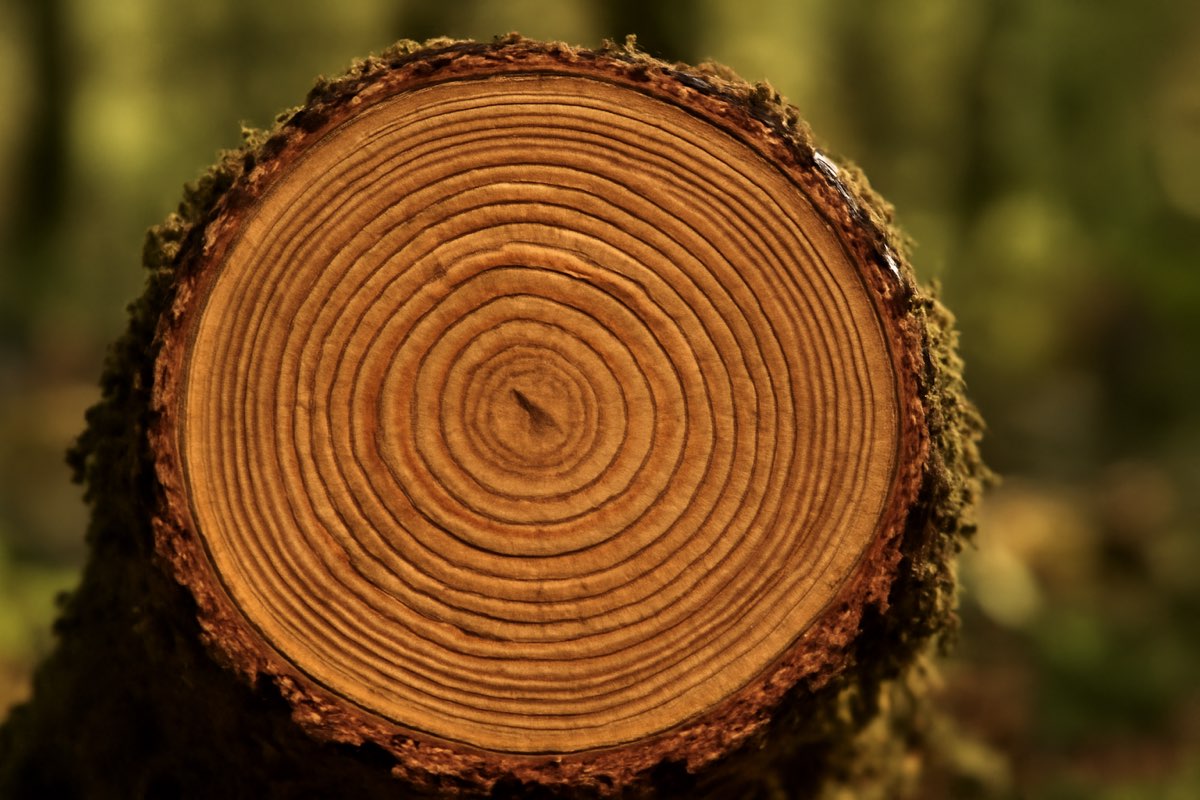
The most reliable way to determine tree age is counting the rings on a cross section of the trunk. Each year a tree grows two distinct layers of wood - a light band of earlywood formed in spring and a dark band of latewood formed in late summer. Together, one light and one dark band make up a single annual ring.
This science is called dendrochronology. Researchers use it to date wooden structures, reconstruct past climates, and study forest ecology. For a homeowner with a freshly cut tree stump in the yard, it is simple. Sand the cut surface smooth, count the dark rings from the center outward, and you have your tree's age.
A few things make ring counting tricky. Trees do not always produce one clean ring per year. Drought years can create false rings. Severe stress can skip a ring entirely. On a tree stump that has been weathering for months, the outer rings may have rotted away. Count carefully and look for the clearest section of the cross section.
Using an Increment Borer on a Standing Tree
You do not need to cut a tree down to learn its age. An increment borer is a hollow steel tool that arborists twist into the trunk to extract a pencil-thin core sample. That core shows the full sequence of rings from bark to pith.
The process sounds invasive but it is not. The hole left behind is small - about the width of a drinking straw - and healthy trees seal it with resin and new growth within a season. A trained arborist using an increment borer can pull tree cores from a standing oak or maple without harming the tree.
This is the method we use when a homeowner in Queens or Staten Island wants to know whether a mature tree is safe to keep or getting too old to stand through another winter. The core sample tells us the age, and the ring spacing tells us how fast the tree has been growing. Tight rings in recent years can signal decline.
The Growth Factor Formula: Estimating Age by Species
When you cannot count rings and do not want to bore into the trunk, you can estimate tree age with a simple math formula:
First, measure the tree trunk's circumference at chest height (about 4.5 feet off the ground). Divide by pi (3.14) to get the diameter in inches. Then multiply by the growth factor for that species.
Growth factors vary because different trees grow at different rates. Here are common ones for species you will find across NYC:
- Red maple: growth factor of 4.5
- White oak: growth factor of 5.0
- Red oak: growth factor of 4.0
- London plane: growth factor of 4.0
- American elm: growth factor of 6.0
- Pine (white): growth factor of 5.0
So a red oak with a 20-inch diameter would be roughly 80 years old (20 × 4.0). A white oak at the same diameter would be about 100 years old (20 × 5.0). Same trunk size, different tree ages, because the species follow different growth curves.
The growth factor formula is an estimate, not a precise count. Urban trees deal with compacted soil, road salt, limited root space, and reflected heat from pavement. They often grow slower than their forest cousins. A Brooklyn oak with a 15-inch diameter might be older than the formula predicts because city conditions slowed its growth. Treat the formula as a ballpark, then factor in the site.
Estimating Tree Age by Species and Site
Beyond the formula, experienced arborists read clues that a tape measure cannot capture. Tree age shows up in the bark, the branching structure, and the overall form.
Mature oaks develop thick, deeply furrowed bark and broad spreading crowns. Old maples show ridged bark and heavy lateral branches. A tree with a lot of deadwood in the upper crown, hollow sections, or mushrooms at the base is likely old and in decline. These signs matter as much as any ring count because they tell you what the tree is likely to do next.
NYC Parks maintains a street tree census every few years, and their data shows the city holds over 700,000 street trees across the five boroughs. Many are 60 to 100 years old. The oldest tend to be in parks and older neighborhoods where the soil has not been repeatedly disturbed. If you live near an established block in Brooklyn or Manhattan, the mature trees out front may have been planted before your building went up.
Why Tree Age Matters for NYC Homeowners
Knowing tree age is not just academic. It drives real decisions about your property and safety.
Old trees are beautiful, but they are also the ones that fail in storms. A 90-year-old oak with a hollow trunk is a hazard during a Nor'easter. A mature maple with heavy limbs over your roof is a risk you want to understand before December, not after. That is why we offer tree removal for trees that have reached the end of their safe lifespan, and tree trimming to reduce weight on aging limbs that still have years left.
Regular pruning extends the life of mature trees. If you have not already, read our guide on pruning your tree for practical steps. And if you are replanting after a removal, our post on the fastest-growing trees covers species that establish quickly in NYC yards.
Age also matters for stump decisions. An old tree stump from a tree that came down years ago can attract fungus, rot, and pests. Our stump grinding service clears the base so you can replant or reclaim the space.
When to Call a Certified Arborist
Reading rings on a fallen log is one thing. Assessing a 80-foot oak hanging over a Brooklyn duplex is another. That is where certified arborists come in.
Our team includes about eight certified arborists who have spent years reading tree growth, tree health, and structural risk across all five boroughs. We have been doing this work since the days of Hurricane Sandy relief, when founder Joseph Messina started clearing storm-damaged trees across the city. That effort grew into Tarzan Tree Removal Service, and since 2012 we have built a reputation for showing up fast, working clean, and telling homeowners the truth about their trees.
We have earned Best of Brooklyn twice and carry a 4.1-star rating across more than 60 reviews. We are licensed and insured, and we cover Brooklyn, Queens, Manhattan, the Bronx, Staten Island, and Long Island.
If a tree on your property is showing its age - dead limbs, hollow sounds, lean, fungus at the base - do not wait for the next storm. We offer emergency tree service 24 hours a day for situations that cannot wait until morning.