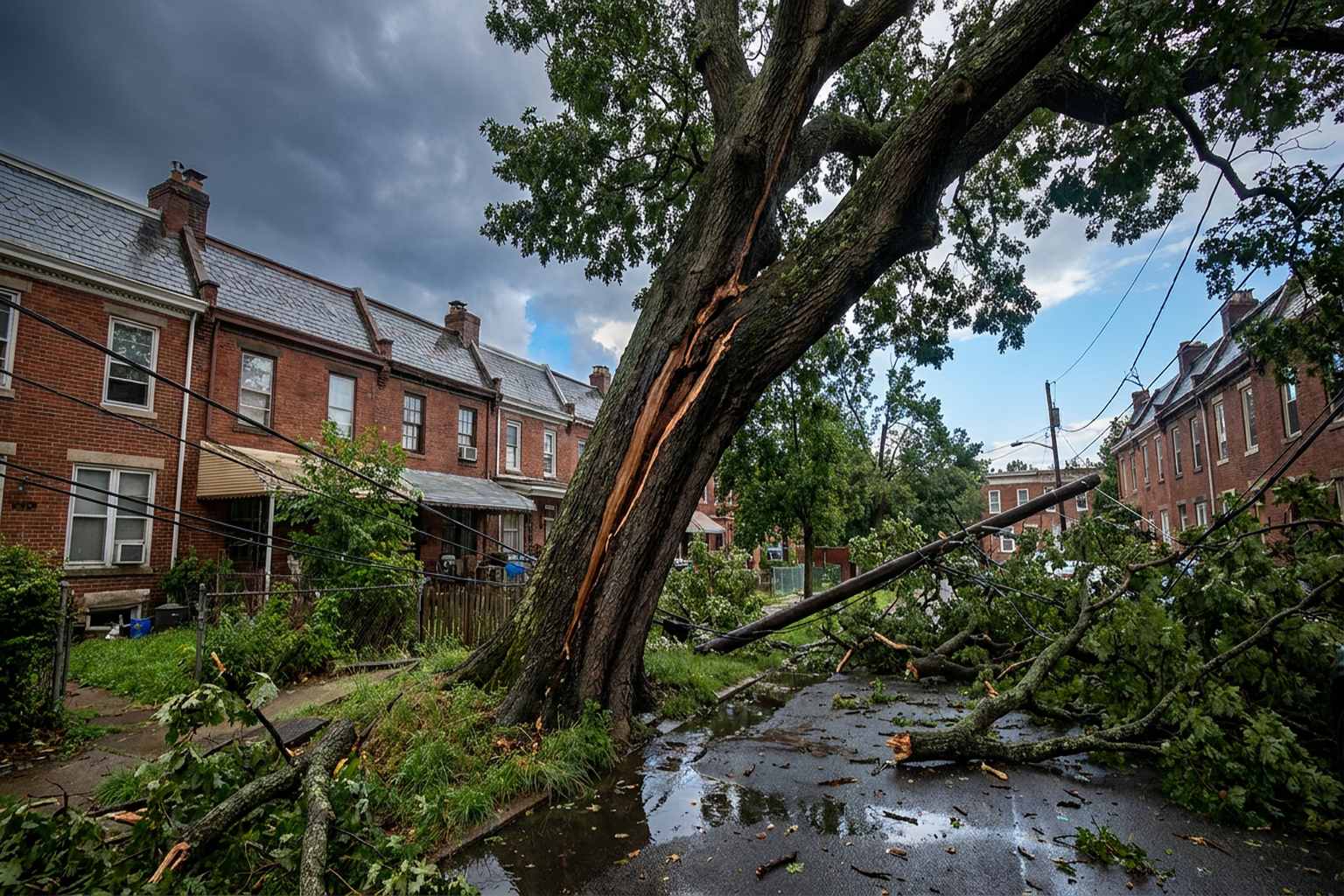
When a nor'easter or summer thunderstorm tears through Brooklyn, your trees take the hit. Cracked trunks, hanging limbs, and fallen trees can turn a quiet block into a hazard zone in minutes. At Tarzan Tree Removal, we handle storm damaged tree removal across all five boroughs, and we move fast because storm damage does not wait.
Storm cleanup is not just about hauling branches off your yard. A damaged tree can look fine and still be one gust away from dropping a limb on your roof, your car, or a pedestrian. This guide walks you through what to check after a storm, what you can handle yourself, and what removal typically costs in NYC.
Why Storm-Damaged Trees Are So Dangerous
A tree that survived the storm is not automatically safe. Wind can crack limbs high in the canopy where you cannot see them, and those broken branches can hang for days before dropping without warning. Saturated soil loosens root plates too, so a tree can keep tipping for hours after the sky clears.
Watch for these hazards on your property:
- Hanging limbs - Broken branches caught in the canopy can fall at any moment
- Cracked trunks - A vertical split or twist in the bark means the structure is failing
- Exposed roots - Heaving soil or lifted roots on one side signal the tree is tipping
- New lean - A tree leaning after a storm has a damaged root system
- Power line contact - Any limb touching a wire is an immediate emergency. Never approach it
If you spot any of these, keep people and pets away from the tree. A hazardous tree near a house, sidewalk, or parked car is an emergency, not a weekend project. Call us at (347) 833-5862 and our storm crews will secure the area, often the same day.
What Storm Damaged Tree Removal Involves
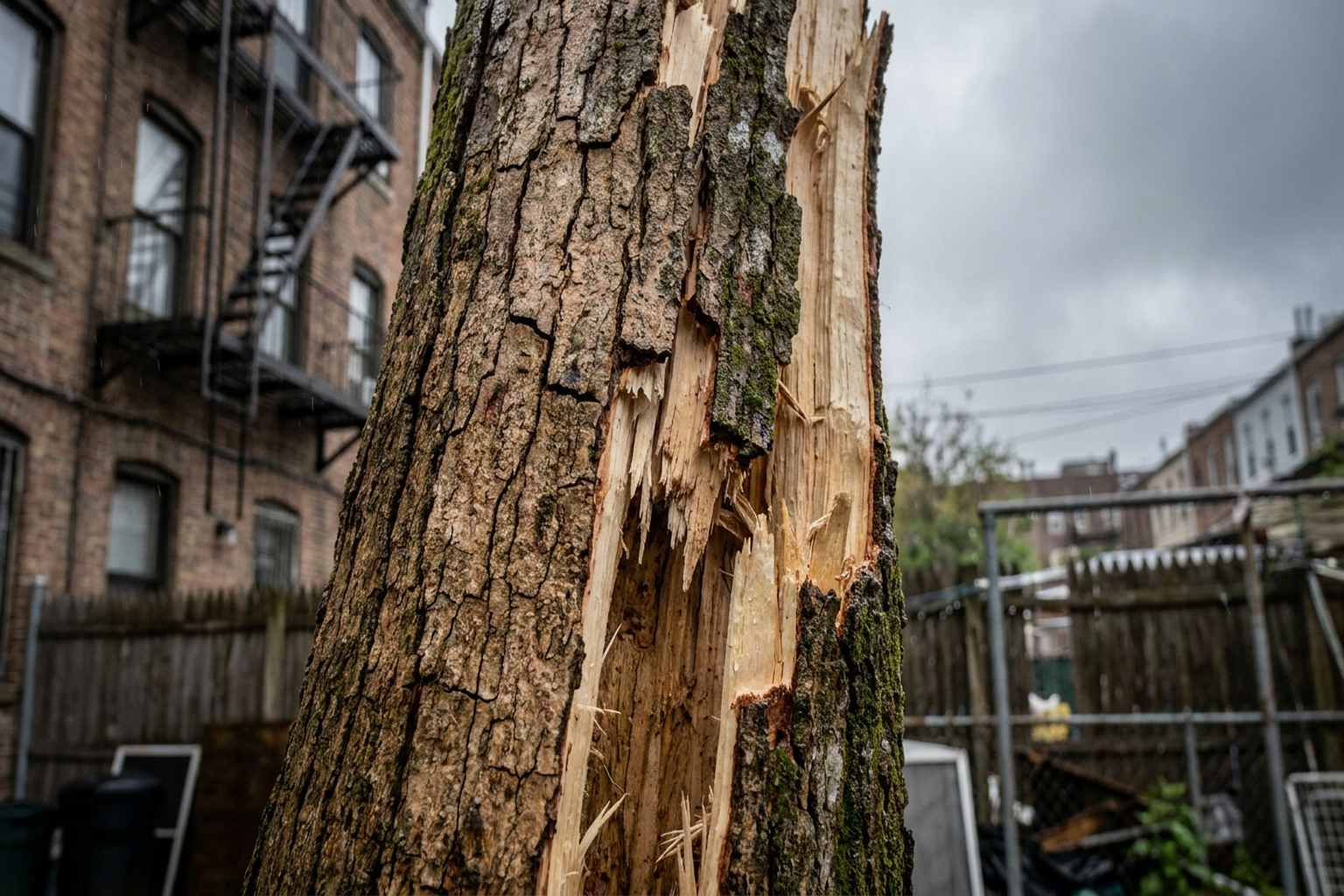
Professional storm damaged tree removal is a controlled process, not a guy with a chainsaw. A tree removal crew from a professional tree removal company works in a set order:
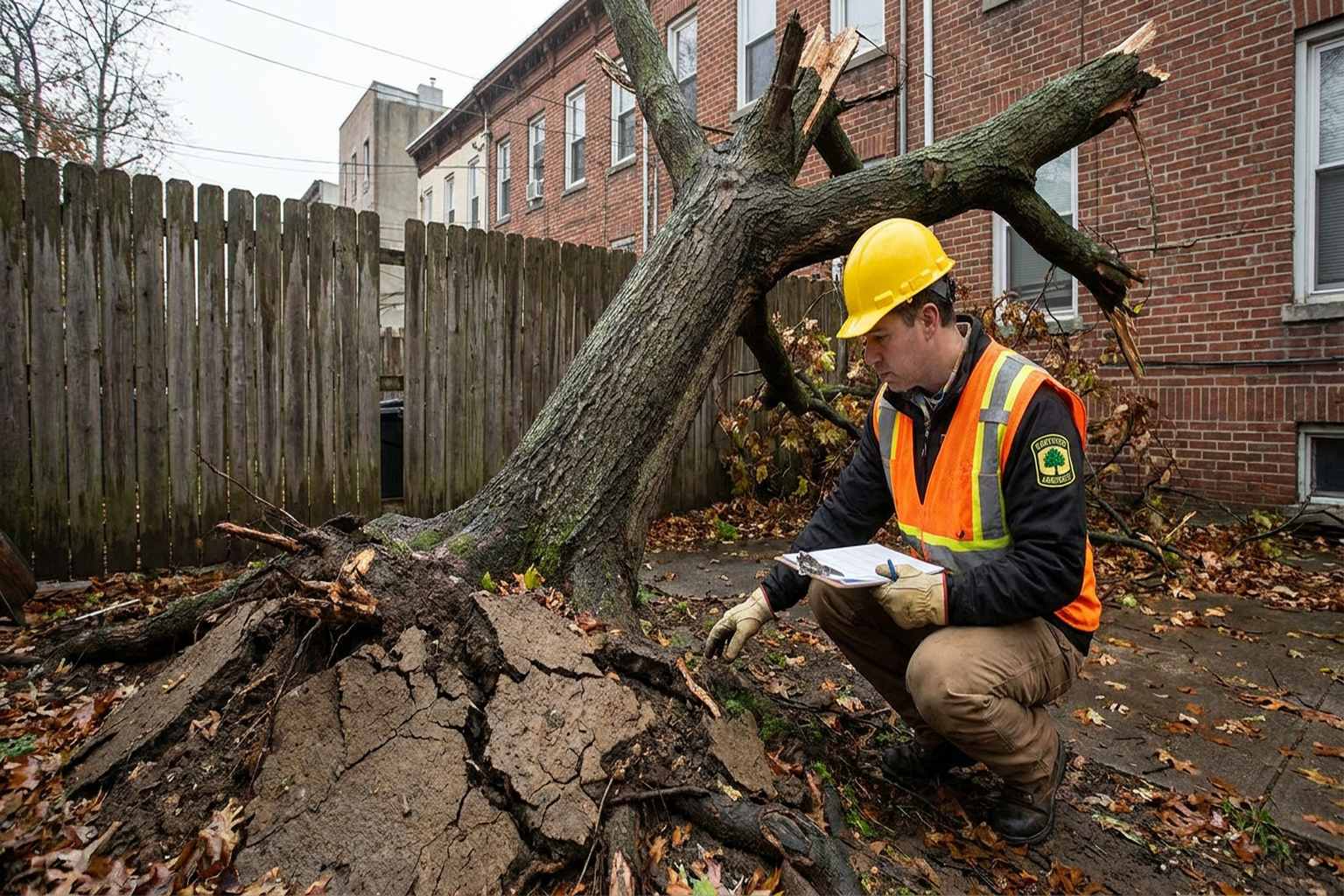
- Damage assessment - A certified arborist inspects each tree and decides what can be saved and what must come down
- Priority ranking - Trees pressing on structures or near power lines get handled first
- Sectional dismantling - Crews cut the tree in small pieces and lower them with ropes to protect nearby homes and fences
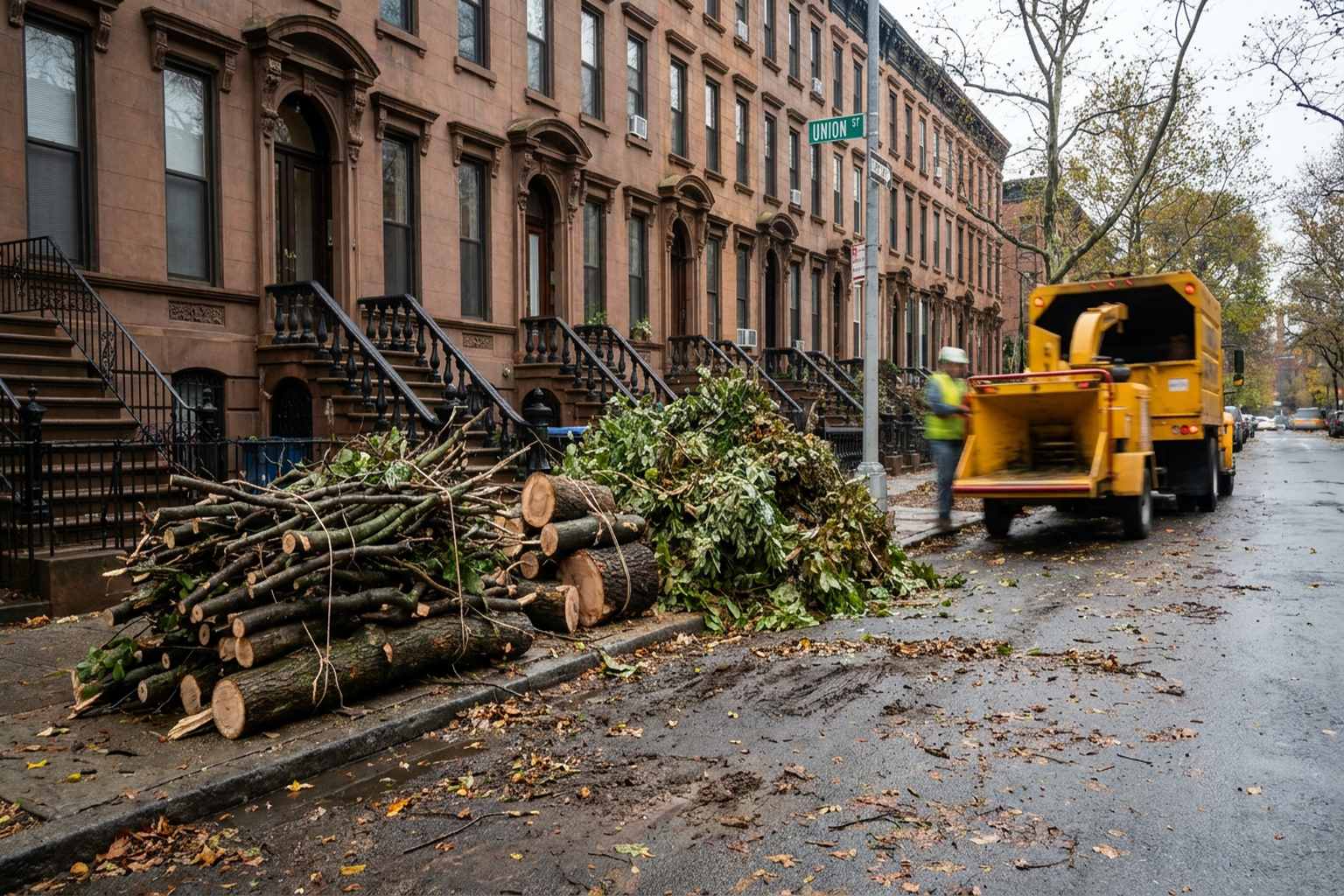
- Debris cleanup - Storm debris is chipped and hauled so your yard is left clean
- Stump removal - Optional grinding leaves the spot level and ready for replanting
Brooklyn lots are tight. A tree wedged between two brownstones takes rigging skill, not luck. If a tree is on your roof right now, read our guide on what to do if a tree falls on your house, then call for stump removal service once the emergency is under control.
How to Inspect Your Trees After a Storm
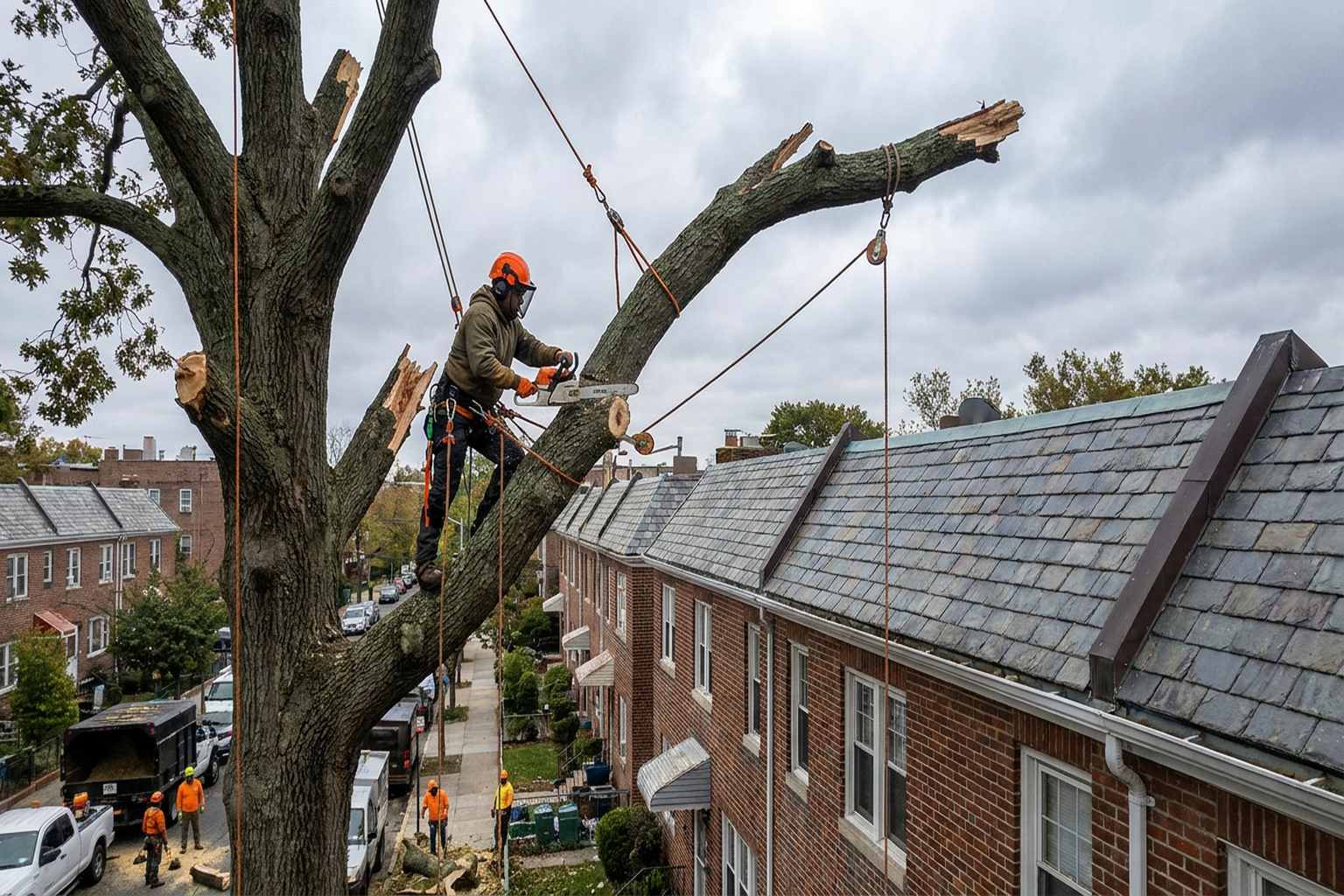
Once it is safe outside, walk your property and check every tree. Photograph anything that looks wrong so you have a record for insurance or the city before cleanup starts.
Signs of tree damage to document:
- Cracks or splits in the trunk or major limbs
- Bark torn away where limbs ripped off
- New lean or a lifted root plate
- Soil heaving on one side of the base
- Sap bleeding from cracks, which can be normal or a stress signal depending on the season
Small wounds often heal on their own. Large splits, more than a third of the canopy gone, or root damage usually mean the tree should have the damage inspected by a certified arborist before you decide its fate. A quick professional look costs nothing with our free assessment, and it catches the difference between a tree that will recover and one that will fail in the next storm. Curious about seepage after a crack? Our what is tree sap guide explains when it is harmless and when it points to deeper tree damage.
What You Can Clean Up Yourself vs When to Call a Pro
Some storm cleanup is safe for homeowners. The rule is simple: keep both feet on the ground and stay out of the drop zone.
You can handle:
- Raking small twigs and leaf litter from lawns and sidewalks
- Stacking loose small branches at the curb for pickup on your collection day
- Photographing damage for insurance claims
Leave to a professional:
- Anything overhead, including cutting with a ladder or chainsaw above shoulder height
- Limbs tangled in power lines or touching the service drop to your house
- Trees leaning on buildings, fences, or cars
- Large limbs still attached but cracked, which can spin or kick when cut
Every year, homeowners are seriously hurt cutting storm-damaged trees they should never have touched. Our emergency tree service crews carry the rigging, saws, and insurance to do that work safely.
Can a Storm-Damaged Tree Be Saved?
Not every storm-damaged tree needs to come down. Clean breaks on a healthy tree can be corrected with proper pruning cuts, and small trunk wounds often close on their own. The decision comes down to structure: if the trunk is intact, the roots are anchored, and less than half the canopy is gone, an arborist may save it with corrective pruning and follow up tree care.
Split trunks, exposed root plates, and major bark loss usually cannot be fixed. When removal is the only safe option, we take the tree down without tearing up your yard, and we will tell you honestly which category your tree falls into before quoting any work. The whole damage assessment is free, so you never pay just to find out where you stand.
What Storm Damage Tree Removal Costs in Brooklyn
Costs move with tree size, condition, and access. Small ornamental trees generally run a few hundred dollars. Mid size yard trees typically land between 800 and 2,000 dollars. Large oaks and sycamores that need a crane in a tight lot can run 3,000 dollars and up. Trees on structures usually start around 1,500 dollars because the work is slow and technical.
Insurance often covers removal when a tree hits your house or a covered structure, but not when it falls harmlessly across the lawn. Document the damage before anything is moved, and call us for a free estimate if you are unsure where you stand.
Preventing Storm Damage Before the Next Storm
Brooklyn gets nor'easters, summer thunderstorms, and the occasional hurricane remnant. The cheapest storm cleanup is the one you never need.
- Structural pruning - Removes weak, crossing, and dead limbs before storms find them. Our tree trimming crews do this year round
- Dead tree removal - A dead tree is a standing hazard in every storm. Learn how to tell if a tree is dead before the next front rolls in
- Cabling and bracing - Supports weak branch unions on mature trees
- Root zone care - Avoid soil compaction and trenching near mature trees
- Yearly inspections - Have mature trees near homes or power lines looked at every year or two
Why Brooklyn Homeowners Trust Tarzan Tree Removal
We started this company cleaning up after Hurricane Sandy, when whole blocks of Brooklyn needed help overnight. Neighbors count on us for reliable emergency tree removal services because our certified arborists have extensive experience with storm work in tight city lots.
- 24/7 emergency response - Storm crews on call around the clock
- Same day estimates - Free damage assessment, usually the same day you call
- Honest calls - We tell you when a tree can be saved instead of selling removals
- Tight space specialists - Cranes and rigging for row house and zero lot line yards
- Full cleanup - Debris chipped, hauled, and swept before we leave
- 5 borough coverage - Brooklyn, Queens, Manhattan, the Bronx, and Staten Island
When a storm leaves your property a mess, call (347) 833-5862 or reach us through our contact page for a free assessment. We swing into action fast because storm damage does not wait.