Updated September 2, 2026
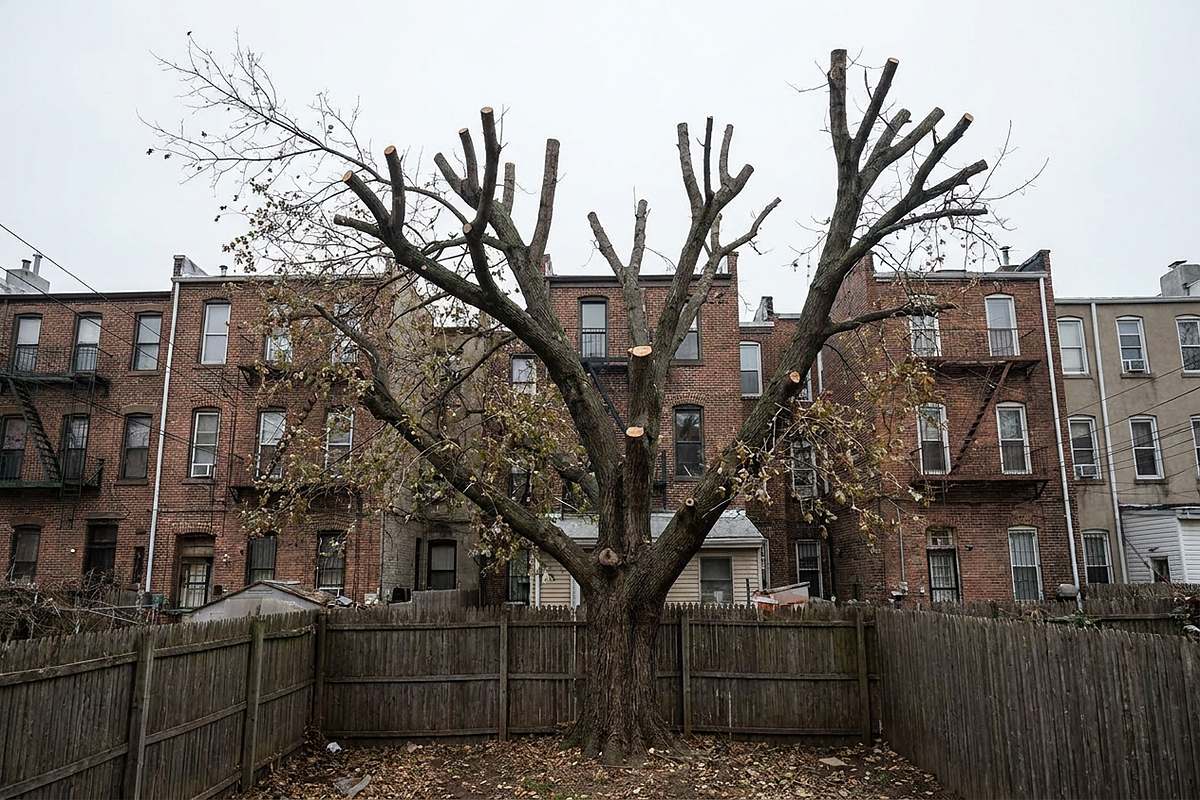
A tree crew offered to flat cut the whole top off your tree to make it shorter? That practice is called tree topping, and it is one of the most damaging things you can do to a healthy tree. At Tarzan Tree Removal we get called after crews finish topping trees across Brooklyn every season, and nearly every job traces back to the same shortcut. Your tree usually has better options, from proper tree trimming to a careful crown reduction.
Here is what topping does inside a tree, why it costs more money in the long run, and what Brooklyn homeowners should do instead.
What Is Tree Topping?
Tree topping is the practice of cutting a tree's crown back to stubs, slicing the main trunk or largest limbs to an arbitrary height with no regard for structure. Crews do it to drop height fast, clear utility lines, or keep leaves out of gutters. The method is always the same: blunt cuts straight across the top, leaving stubs the tree cannot seal.
A classic arboriculture textbook calls topping the senseless brutalizing of trees, and the industry never softened that language. The ANSI A300 pruning standard states plainly that topping is not an acceptable practice. A topped tree is not a smaller, safer tree. It is a starving tree on borrowed time.
Why Tree Topping Hurts Your Tree
Four things happen inside a topped tree, and none help it survive NYC weather.
Topping Starves the Tree
Leaves are the kitchen of a tree. Topping strips 50 to 100 percent of the leaf bearing crown in one pass, so the tree suddenly cannot make enough food to feed itself. Topping stresses the tree so badly that it burns stored energy just to survive the season. Older trees take the hit hardest because they hold less reserve energy than young ones.
Topping Creates Dangerous Regrowth
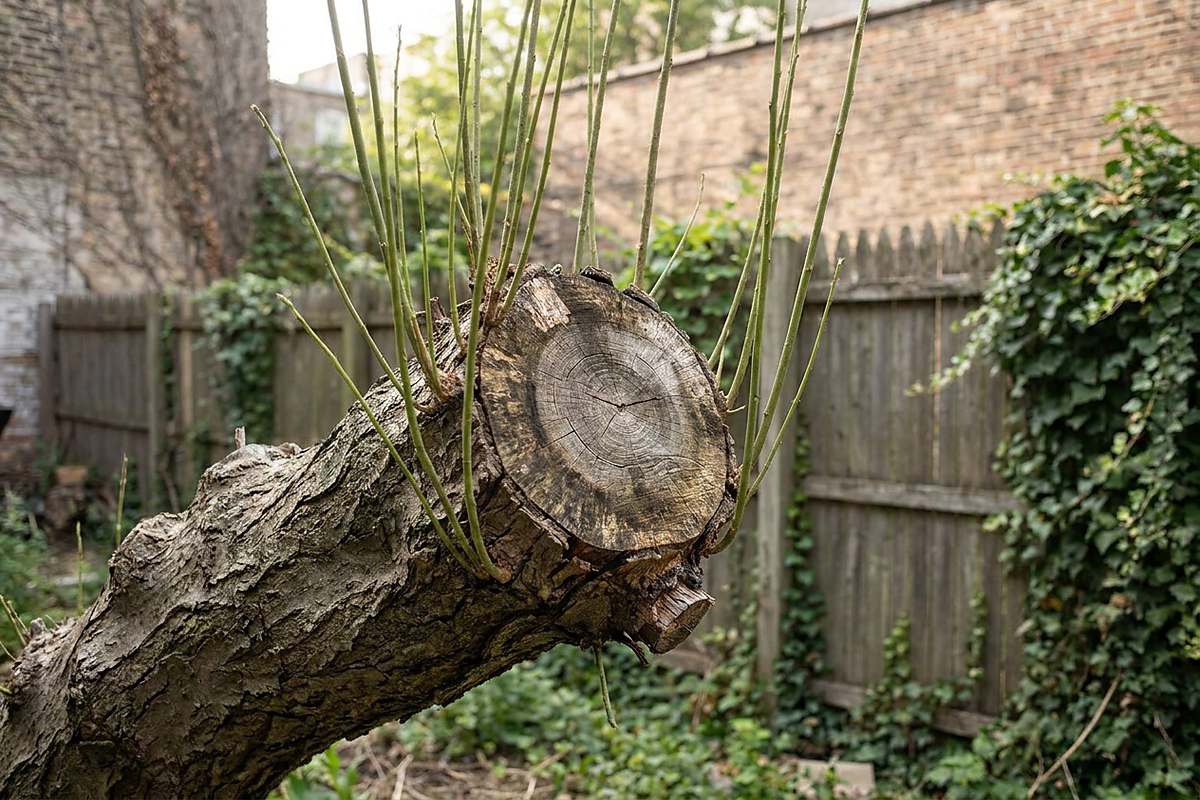
Within weeks the stubs push out dense clusters of thin shoots called water sprouts. It looks like recovery, but sprouts attach only to the outer layers of the branch, not solid wood. They stretch several feet in a season and snap under wind and ice. Topping makes the tree tall again in a few years while every new branch stays weaker than what was cut.
Topping Creates Entry Points for Rot and Insects
A tree seals a small clean cut made back to the branch collar. It cannot seal a flat stub the width of a dinner plate. Decay fungi move into the open wood and the rot spreads down the trunk. Insects follow, and a topped tree often becomes a hazard from the inside out. That is how topping creates removal jobs later.
Sunburn on Exposed Bark
A shade tree grows its bark behind the protection of its own canopy. Strip the crown and the upper bark takes summer sun it was never built for. The tissue scorches, cracks, and peels, opening more doors for decay. Our tree bark peeling guide covers what that damage means.
Why Brooklyn Homeowners Ask for Topping Anyway
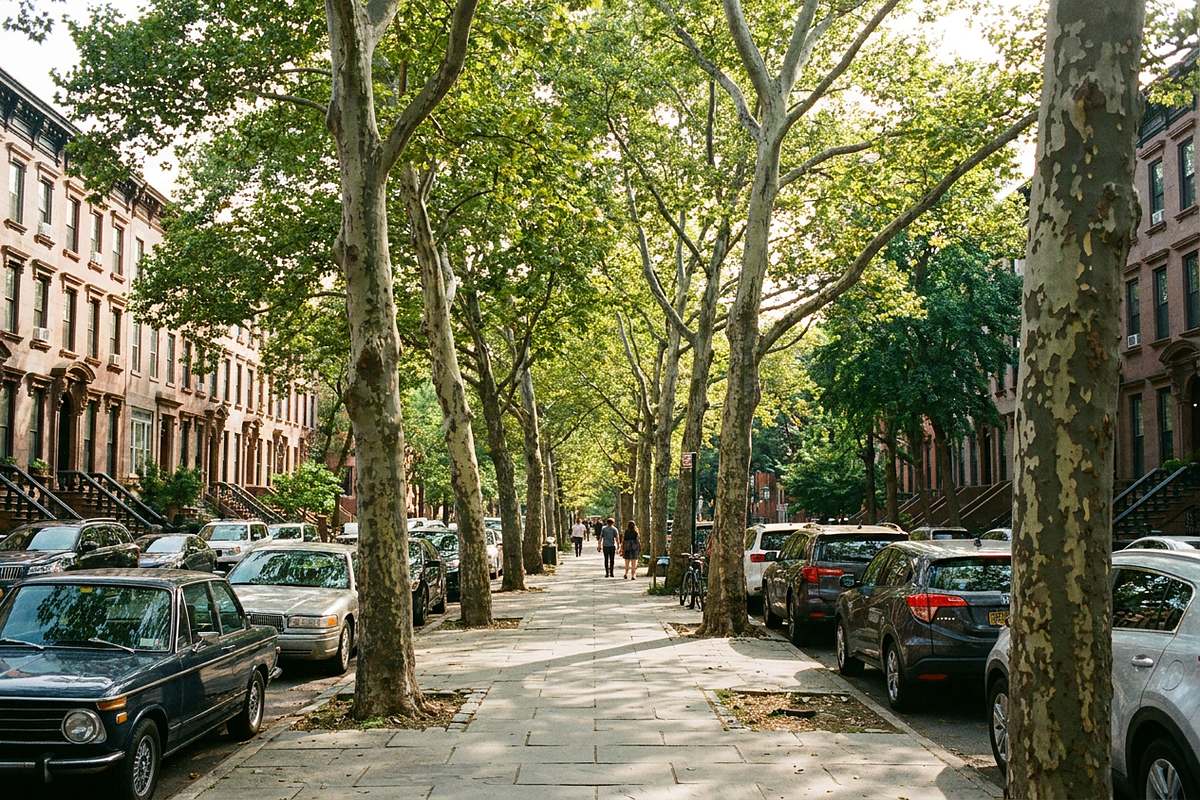
Most topping requests start with fear, not neglect. Blocks in Brooklyn neighborhoods like Park Slope and Ditmas Park carry 100 year old Norway maples and London planes planted feet from brick walls. Storm memory runs deep here since Sandy dropped trees across whole blocks. Add shade complaints, clogged gutters, and a limb over the roof, and cutting the top off feels like control.
The catch is that topping never delivers control. The tree returns taller, brushier, and weaker. When regrowth splits, those calls reach us as emergency tree service jobs, and the bill runs higher than proper pruning would have.
Tree Topping vs Pruning, Pollarding, and Crown Reduction
These words get used interchangeably at the kitchen table, but they are different techniques with opposite results.
Topping vs Proper Pruning
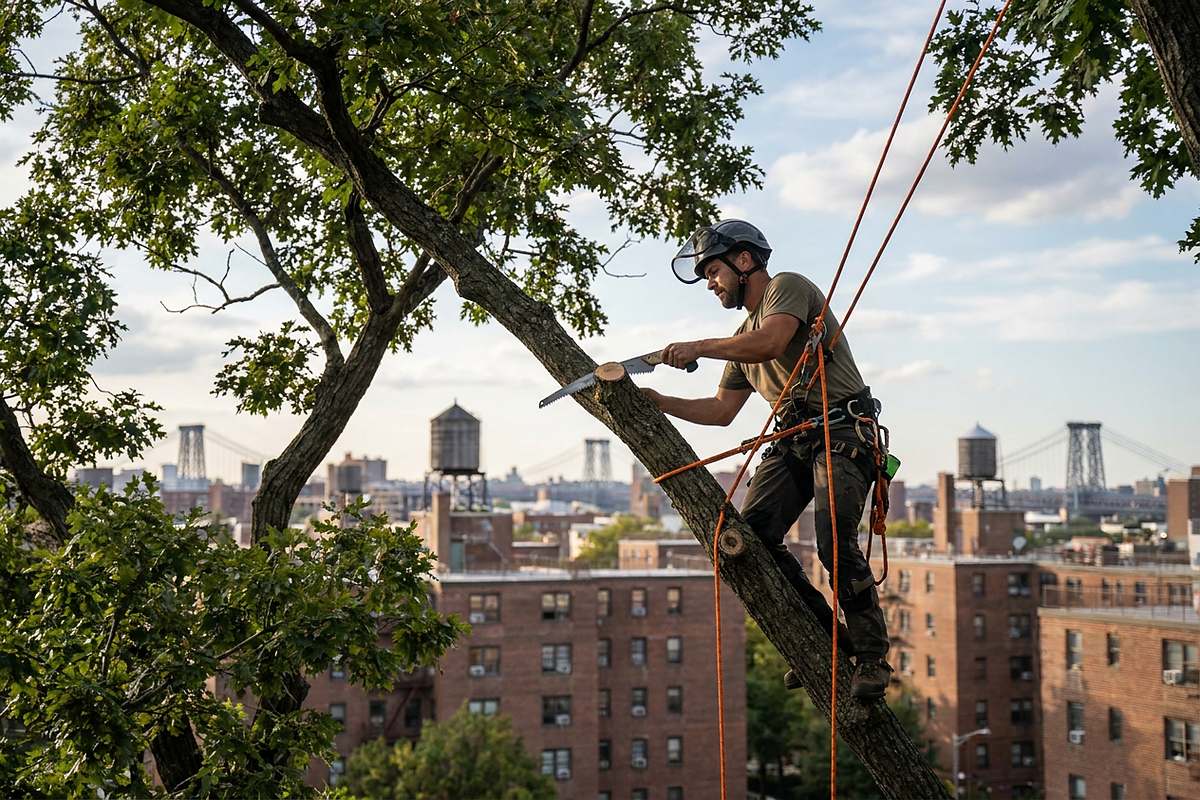
Proper pruning works with the branch structure instead of against it. Every cut lands just outside the branch collar, back to a lateral limb, so the tree keeps enough foliage to feed itself while it seals the wound. Certified crews use tree pruning techniques like thinning and reduction cuts to let light in, raise crowns off roofs, and shape growth over seasons. Topping ignores structure and cuts everything to a line.
Topping vs Pollarding
Pollarding can look like topping to an untrained eye, but it is the opposite discipline. Pollarding starts on a young tree, makes cuts at set points called knuckles, and repeats every winter with small cuts the tree can handle. Topping attacks a mature tree with big stubs once and walks away. One is a managed pruning art form. The other is an amputation.
Crown Reduction: The Right Way to Make a Tree Smaller
When a tree truly outgrows its spot, crown reduction is the professional answer. The crew shortens the crown by cutting leaders back to strong lateral branches, keeping a natural shape and a live canopy. Every species has a specific limit to how much crown it can lose in one season, and an arborist knows where that line sits. Reducing height this way takes more skill per cut than topping, but the tree stays structurally sound. Consulting a certified arborist first tells you whether reduction is realistic or the tree has to come out entirely.
What Happens to a Tree After It Gets Topped
Year one looks fine. The stubs scab over, a few leaves return, and the tree seems to have survived. Year two brings the sprout explosion. By years three to five the internal rot catches up, stubs start cracking, and pieces begin dropping in ordinary weather.
Can a topped tree recover? Sometimes, partially. Restoration pruning can thin the sprout clusters and rebuild a scaffold over several seasons if the rot has not spread far into the trunk. Heavy sap bleeding from the stubs in spring pulls in insects too, which we explain in our guide to tree sap. Trees that cannot be restored end up as removals, and waiting only makes that job riskier.
What Tree Topping Costs vs Proper Care
The cheap topping offer on a flyer usually runs a few hundred dollars for a large tree, and it feels like a win until the math catches up. Crown reduction costs more up front because it takes trained climbers and real cutting decisions instead of a flat cut. Then the topping side keeps billing you: sprout cleanup within two years, a repeat topping because the tree regrew, then a hazardous removal costing multiples of any pruning bid, plus stump removal when it is gone. Some outfits spend every fall topping tree after tree and counting on exactly this cycle.
Compare bids on the five year picture, not the day of service. Ask each crew what the tree will look like, and cost, in year three.
Tree Topping Rules in NYC and Brooklyn
Before any blade touches bark, know who owns the tree. Trees in the sidewalk strip are New York City property, managed by the NYC Parks forestry team. Private crews cannot prune or top street trees without a free Parks permit, and a topped street tree can earn the owner a violation. Call 311 for any work on a sidewalk tree.
On private property, the rules sit with your co-op board or management company. Limbs near power lines belong to Con Edison or utility approved crews, never a general landscape or tree services crew with a chainsaw.
The Better Plan for Your Brooklyn Tree
Skip the flat cut and give the tree a real plan instead:
- Get an inspection first - A certified arborist looks at species, decay, and targets before recommending anything
- Ask for crown reduction or thinning - Height and shade problems usually have structural fixes
- Space the work out - Heavy work spread over seasons is safer for the tree than one brutal pass
- Budget for structure, not just height - A tree that handles storms beats a shorter one
- Plan removal honestly - If the tree is past saving, a controlled removal beats an emergency one
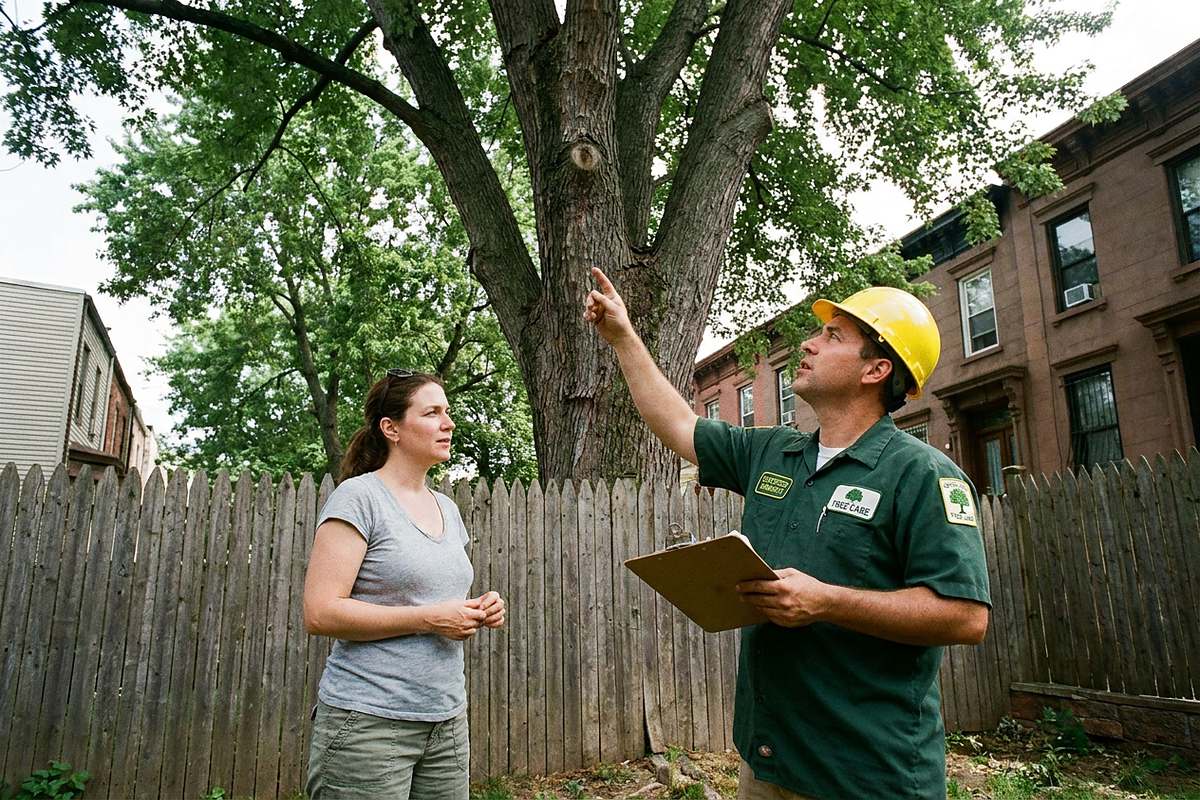
If the tree does have to come out, our crews handle tree removal in tight rowhouse yards every week. Reach us through the contact page or call (347) 833-5862 for a free assessment.
Why Brooklyn Homeowners Trust Tarzan Tree Removal
Tarzan Tree Removal started during Hurricane Sandy, cutting trees off neighbors' roofs, and that community-first approach never left. Every crew follows ANSI A300 pruning standards: no topping, no lion tailing, no stub cuts.
- Certified arborists - Trained diagnoses before cuts, not flat bids over the phone
- 24/7 emergency response - Storms in NYC do not wait for morning
- Free estimates - We tell you what the tree needs and what it costs
- Tight-space specialists - Brownstone yards, alleys, and fence lines handled daily
- Five borough service - Brooklyn, Queens, Manhattan, the Bronx, and Staten Island
Call (347) 833-5862 to have a certified arborist look at your tree before anyone tops, thins, or touches it.