Last Updated: September 9, 2026
# Why Is My Tree Leaking Sap? Common Causes and Fixes
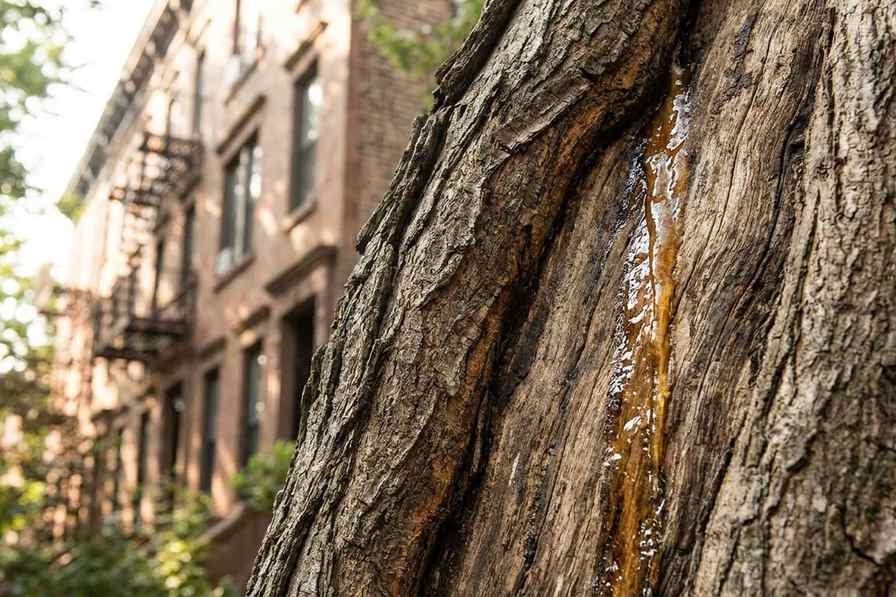
A wet, sticky streak running down your tree's trunk is impossible to ignore. If your tree is dripping sap onto a Brooklyn sidewalk, car, or backyard patio, you want answers fast. At Tarzan Tree Removal, our certified team diagnoses sap leaks across all five boroughs every week, and our tree removal crews see what happens when the warning signs get ignored. Here is the good news: most leaking sap has a simple cause and a simple fix. A few cases point to serious tree health problems that need professional attention before the tree becomes a hazard.
Sap is one of the top calls we get from Brooklyn homeowners. The sticky ooze attracts bees, wasps, and ants, stains car paint, and creates a slip hazard on walkways. This guide walks through what causes oozing sap, which trees leak naturally, and when the drip means you need help from a certified arborist.
What Is Tree Sap and Why Do Trees Leak It?
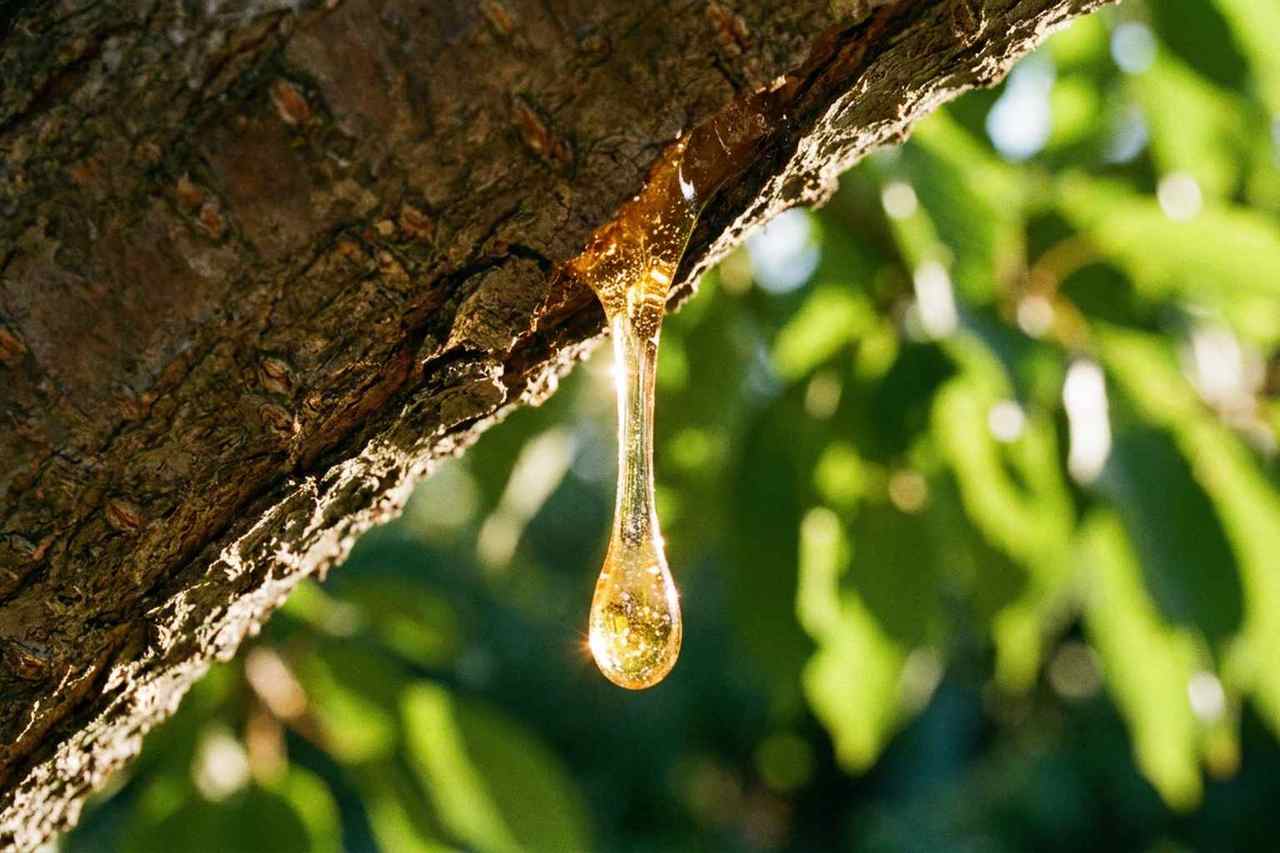
Sap is the fluid that moves through a tree's vascular system. Xylem carries water and minerals up from the roots. Phloem carries sugars made in the leaves down to feed the trunk and roots. When bark cracks, insects drill holes, or pressure builds inside the trunk, that fluid escapes and you see shiny sap on the bark. We explain the full science in our guide on what tree sap is.
A healthy tree seals small wounds on its own. The sap flows to the injury, dries, and closes the gap. That is why a few beads of sap after pruning are usually nothing to worry about. The problems start when sap keeps flowing from the same spot for weeks, smells foul, comes with sawdust, or appears alongside dying branches. That combination tells you something is damaging the tree faster than it can heal.
Sap leaking in one small area is a wound response. Sap seepage all over the tree bark, dark oozing stains, or a steady drip that never stops is a symptom of a bigger issue like bacterial wetwood or a borer infestation.
Common Causes of a Tree Leaking Sap
Slime Flux and Bacterial Wetwood
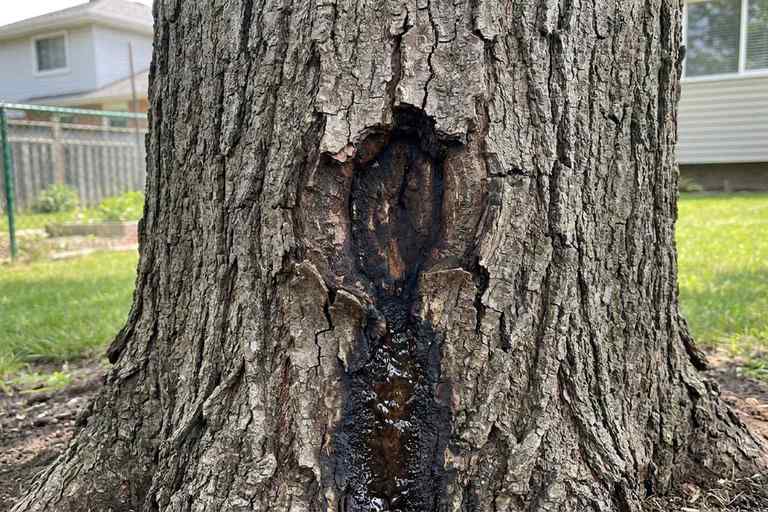
Slime flux, also called bacterial wetwood, is the most common cause of oozing sap on elm, oak, willow, and maple trees in NYC. Bacteria enter the trunk through wounds and ferment the sap inside. Pressure builds until the sap oozing out forces its way through cracks in the bark, often near the base of the trunk. The ooze is dark, slimy, and smells sour or rotten. Flies, ants, and fungi are drawn to it fast.
Wetwood oozing looks alarming, but most mature trees live with it for years. The slimy discharge can kill grass or bleach bark where it pools, though, and a heavily infected young tree can decline. A certified arborist can drill a relief hole to lower the internal pressure, which is a job for a professional, not a drill and a Saturday afternoon.
Alcoholic Flux
Alcoholic flux shows up as thin, white or gray frothy ooze that smells like fermented fruit. It usually appears on the trunk after a hot day and is caused by yeast breaking down sap sugars. Stress is the trigger, and a tree that has been water-stressed during a dry NYC summer is a prime candidate. The condition usually stops on its own once the tree recovers. Watering deeply during dry spells and refreshing mulch around the root zone help the tree bounce back.
Borer Insects
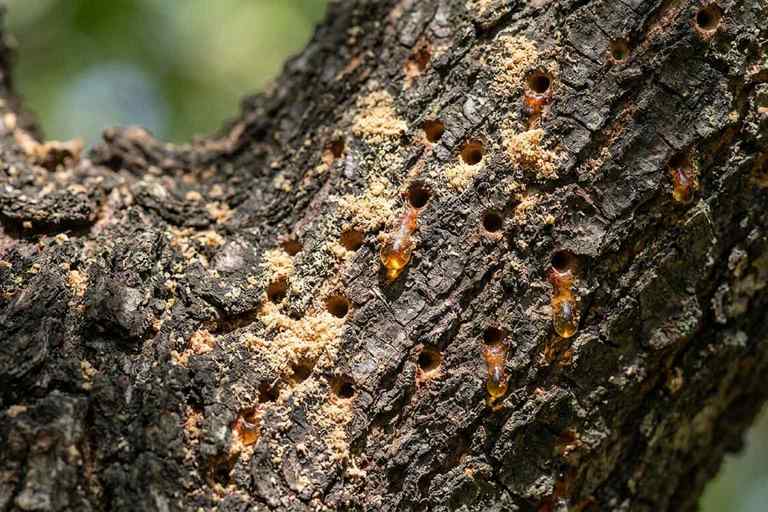
Small round holes in the bark with sap dripping out and sawdust collecting below are the signature of a tree borer problem. Borers are beetle larvae that tunnel under the bark and feed on the living tissue. As they chew, sap runs out of the entry holes and fine frass, which looks like sawdust, falls to the ground. Heavy feeding cuts off the flow of water and nutrients, and sections of the canopy start thinning or dying.
Cankers and Disease
A canker is a sunken, dead patch on the trunk or a branch where fungi or bacteria killed the bark. The dead bark cracks, sap oozes from the edges, and the wound slowly spreads. Cankers often follow mechanical damage or winter injury. If the bark around a wet, sticky wound looks loose, sunken, or discolored, the canker may already be girdling the branch. Our guide to oak tree diseases covers how fast some of these infections spread.
Aphids and Sucking Insects
Aphids do not drill into bark, but they pump out plenty of sticky fluid. Large aphid colonies feed on leaves and excrete honeydew, a sugary liquid that coats branches, leaves anything beneath the tree, and feeds black sooty mold. If your car or patio is sticky but the trunk is dry, aphids on the canopy are likely to blame. Honeydew is not technically tree sap, but it is the reason most people look up and start asking questions. Heavy infestations also cause leaves to curl and drop early.
Mechanical Damage
Bumping the trunk with a mower, a car door on a street tree, dog scratches, and bad pruning cuts all open the bark and start sap seepage. Brooklyn street trees take a beating. Loose car chains, bike locks, and string lights left wrapped around trunks cut into the bark as the tree grows. Any wound that breaks the bark lets sap out and lets infection in. Clean pruning cuts made by our tree trimming crew heal in weeks, while torn bark wounds leak sap and invite borers all season.
Trees That Commonly Leak Sap
Some species ooze by nature and some are magnets for specific sap problems:
- **Wild cherry and peach tree** - Members of the Prunus family, including cherry, peach, and plum trees, are famous for gummosis, a heavy flow of gummy amber sap from the trunk and branches. In a peach tree, gummosis usually points to borers, cankers, or cold injury, so the cause is worth diagnosing rather than ignoring.
- **Elm and oak** - Both are prone to bacterial wetwood. A mature oak tree with wetwood can ooze at the same spot for a decade.
- **Maple and birch** - Both run heavy sap in late winter. Maple sugaring depends on this predictable spring flow, and a small drip from a maple after a pruning cut is normal.
- **Willow and poplar** - Soft-wooded and fast-growing, they wound easily and ooze in response.
Knowing your tree species is the fastest way to judge how worried to be. A gummosis flow from a peach tree deserves an inspection. The same flow on a birch in March is just a season.
Is Sap a Sign of Good or Bad Tree Health?
Sap can go either way. A slow, clear bead from a pruning cut or a light spring drip from a maple means the tree's plumbing is working and the wound response is normal. A tree with no sap flow at all after a major branch break is actually the bigger worry, because dead wood does not bleed.
Watch for these red flags that shift oozing sap from normal to urgent:
- Foul smell, slimy texture, or dark staining that spreads down the trunk
- Sap combined with small holes and sawdust, which means borers are active
- Loose, peeling, or sunken bark around the wet spot
- Oozing from multiple spots or near the root flare
- Thinning leaves, dying branches, or mushrooms near the base
If you spot two or more of those signs together, the tree health issue is bigger than a leak, and an inspection should happen soon. A tree that is leaking sap near a walkway, a parked car, or a brownstone wall becomes a falling hazard once internal rot sets in, and that is when a leaky tree turns into an emergency.
How to Stop Sap From Seeping Out of Wood
You cannot and should not try to caulk a living tree. What you can do is remove the cause so the tree can seal itself:
- **Identify the source first.** Look for holes, cracks, loose bark, or a wound above the wet spot. Sap runs downhill, so the injury is usually higher than the stain.
- **Skip the sealants.** Wound paint and tar trap moisture against the wood and slow healing. Research on wound dressings consistently shows trees close clean cuts better on their own.
- **Clean gently around the site.** On ornamental Prunus trees, pruning out dead or cankered wood with sterile tools stops the infection from spreading. Disinfect tools between cuts.
- **Manage wetwood with an arborist.** For persistent slime flux, an arborist can install a drain tube to relieve pressure. Do not drill into a trunk yourself, since a bad hole creates a new wound and a new leak.
- **Control the insects.** Aphids wash off with a steady hose spray. Borers on a valuable tree may need a professional treatment plan timed to the insect's life cycle.
- **Reduce stress on the tree.** Deep watering during summer dry spells, a two to three inch mulch ring, and avoiding trunk damage do more to stop sap than anything you can apply to the wound.
If the tree is beyond saving, removal done by a professional protects your property. Our crews handle tight Brooklyn yards from start to finish, including stump removal so the spot is ready for new landscaping.
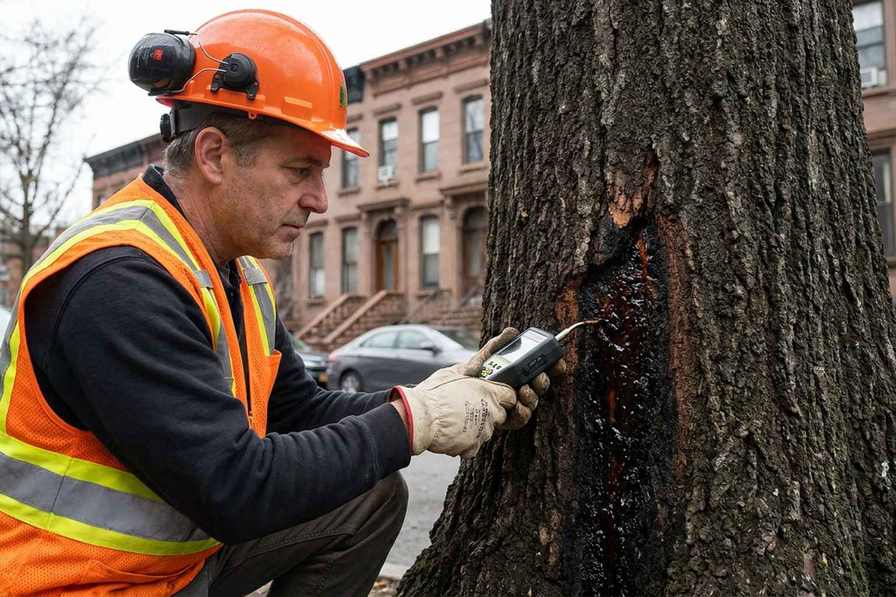
When to Call a Certified Arborist
Call a professional when sap comes with any of these situations:
- The ooze is slimy, smelly, or spreading, which points to wetwood or a deep infection
- You see borer holes, sawdust, or dying branches in the canopy
- The wet spot is at the base of the trunk near the root flare
- The tree leans, drops limbs, or stands close to your house, a neighbor's fence, or power lines
- The same spot has oozed for more than a full season
Brooklyn trees grow in compacted soil, tight pits, and constant foot traffic, so problems advance faster here than in a suburban yard. Our arborists assess whether the tree can be treated, needs careful pruning, or requires full removal. When a limb is already hanging over a sidewalk or roof, our emergency tree service team responds 24/7 across all five boroughs. For sap that ends up on your vehicle instead, our tree sap removal guide for cars shows safe cleanup methods. Good tree care prevents most sap problems before they start, and our expert crew gives you straight answers on solutions that fit your yard and your budget.
Why Brooklyn Homeowners Trust Tarzan Tree Removal
Tarzan Tree Removal got its start clearing downed trees after Hurricane Sandy, and we have served NYC ever since. We know borough trees because they are our trees.
- **Certified arborist assessments** - We diagnose sap leaks, borers, and disease before recommending any action
- **Free estimates** - You know the price before we start, with no hidden fees
- **Tight-space specialists** - We remove and treat trees near brownstones, rowhouses, fences, and power lines
- **24/7 emergency response** - Hazard trees do not wait for business hours
- **Five-borough service** - Brooklyn, Queens, Manhattan, the Bronx, and Staten Island
Call us at (347) 833-5862 for a free assessment, or call (347) 833-5862 any time a tree emergency hits after hours. We swing into action fast, because your leaking tree will not wait.